
The most popular groodle haircut is the teddy bear cut, where the coat is scissored to an even length all over with a rounded, fluffy face that makes the dog look like a soft toy. Across the 298 style-tagged groodle photos on Groomably, the teddy bear cut accounts for 42% of them, more than any other style. The four other groodle haircuts worth knowing are the puppy cut, the kennel (or summer) cut, the lamb cut, and the novelty lion cut. Which one suits your dog comes down to coat type and how much brushing you’re realistically going to do at home.
If you’re reading this from the US, a quick note on names. A groodle is the same dog you’d call a goldendoodle, a golden retriever crossed with a poodle. The cuts are identical, just the dog’s name changes depending on which side of the Pacific you’re standing on. Everything below applies whether your dog is a groodle or a goldendoodle.
Groodle grooming by the numbers
These aren’t estimates. Groomably classified every photo in its Australian salon library, and the groodle subset is large enough to be worth quoting:
- We hold 671 groodle photos from 506 Australian salons — one of the biggest single-breed sets in the library.
- 243 of those photos carry a grooming-style tag, and 125 of them (51.4%) are teddy bear cuts — against a 38.6% share across all breeds. Groodle owners ask for the teddy bear more often than the average owner does.
- The rest of the groodle mix: full groom 98, bath-and-dry 48, de-shedding 11, creative grooming 6, scissor cut 5.
- De-shedding is close to absent at 11 of 243 (4.5%). A groodle’s fleece coat doesn’t shed out — it grows and mats, which is why almost everything here is a haircut rather than a coat treatment.
Source: Groomably’s own photo classification of 18,376 salon photos from 2,099 Australian salons, analysed June 2026. A photo may carry more than one style tag.
Why coat type matters more than the style name
Before we get into the five cuts, here’s the thing most owners don’t realise. Groodles don’t all have the same coat. Some take after the poodle side with a tight, curly, wool-like coat. Others take after the golden retriever with a looser, wavier, almost flat coat. And plenty land somewhere in the middle with a wavy fleece coat.
The curlier the coat, the faster it matts and the more brushing it needs between grooms. A wavy fleece groodle might cope with a longer style, while a tight curly groodle will matt close to the skin if you skip a few weeks of brushing. So when a groomer suggests a particular length, they’re usually reading your dog’s coat, not just following a trend. Trust that read.
If you want to see what these coats actually look like once they’re done, the groodle breed page on Groomably pulls together real photos from salons around the country, and the wider grooming gallery is good for browsing styles across breeds.
1. The teddy bear cut
This is the one everyone wants, and the numbers back it up. It’s the most photographed groodle style by a wide margin.
The teddy bear cut keeps a medium, even length all over the body, usually somewhere between 25mm and 50mm, with the face scissored into a soft round shape. The legs are left full and rounded, and the ears blend into the face so the whole head looks like a plush toy.
What to ask the groomer: “I’d like a teddy bear cut, around a [length] comb all over, with a rounded face and full legs.” Bring a photo if you have a length in mind. Lengths vary, so a picture saves a lot of confusion.
Maintenance: This is a higher-maintenance look. You’ll need to brush and comb three or four times a week, right down to the skin, especially behind the ears, in the armpits and around the collar. Expect a groom every six to eight weeks to keep it tidy.
Suits which coat: Best on wavy and fleece coats. Tight curly coats can absolutely pull it off, but only if you’re committed to the brushing.
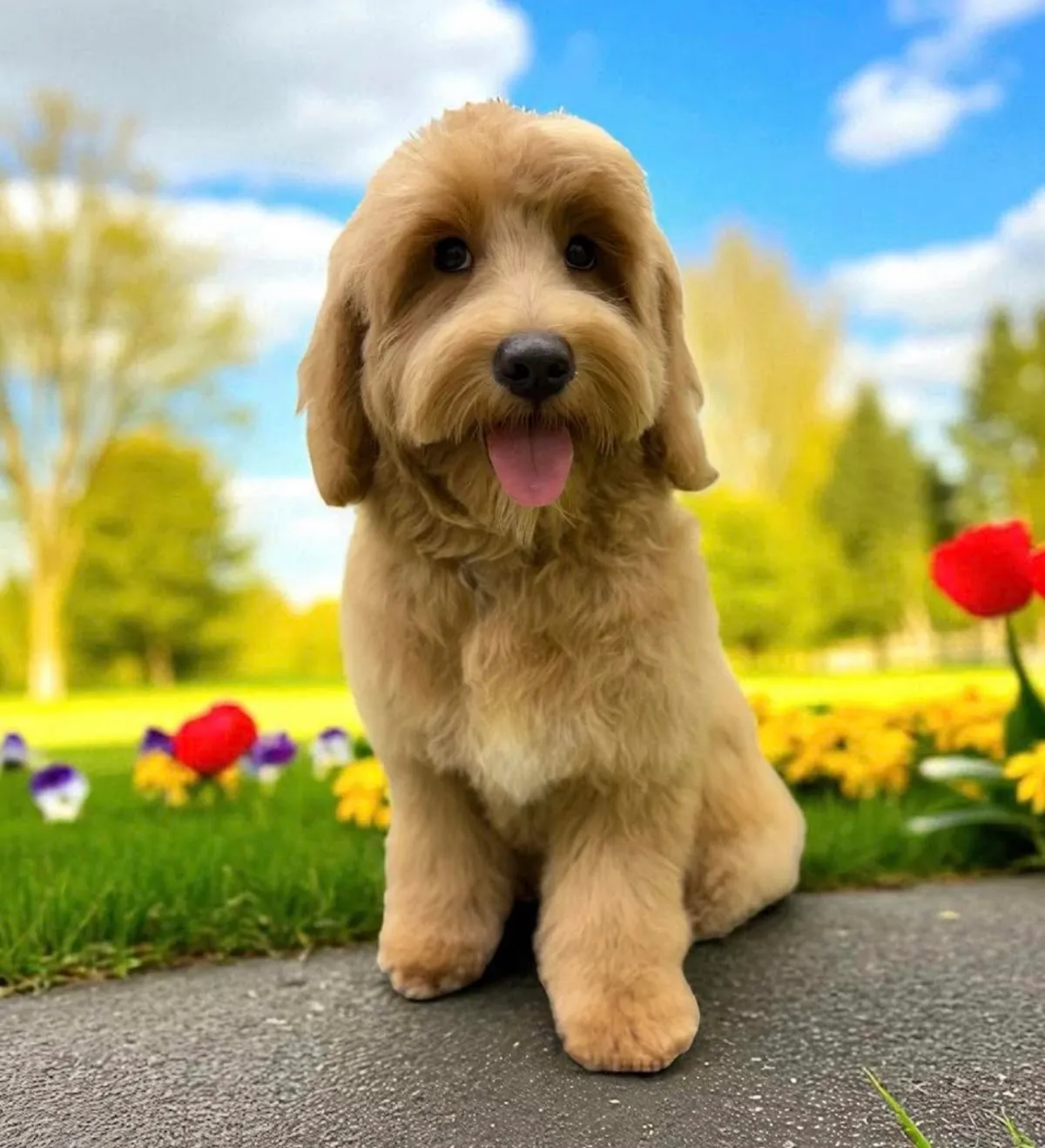 Photo: A & S Dog Grooming, Carseldine QLD — via Groomably
2. The puppy cut
The puppy cut is the teddy bear’s lower-maintenance cousin. It’s a short, even length all over, usually 10mm to 20mm, with a softer, less sculpted face. It’s called a puppy cut because it gives that fresh, fuzzy, just-a-pup look regardless of the dog’s age.
What to ask the groomer: “A puppy cut, short and even, easy to manage.” If you tend to fall behind on brushing, say so. A good groomer will go shorter to give you more breathing room between matts.
Maintenance: Much kinder on your schedule. A brush twice a week usually keeps it in check, and you can stretch grooms to every eight weeks or so.
Suits which coat: Works on every groodle coat type, which is part of why it’s so popular. If you’ve got a curly coat and you’re tired of fighting matts, this is often the sensible choice. Our puppy cut explainer goes further into lengths and how it differs from a teddy bear cut.
3. The kennel cut (summer cut)
The kennel cut, sometimes called a summer cut, is shorter again. The body is clipped down with a short blade, often 6mm to 10mm, while a little more length is usually left on the head and ears so the dog still looks like a doodle rather than a shorn sheep.
It’s a practical, hot-weather, low-fuss option. A lot of Australian owners book it heading into summer because it’s easier to keep clean after beach trips and muddy walks.
What to ask the groomer: “A kennel cut for summer, short on the body, a bit of length left on the head and ears.”
Maintenance: The lowest-maintenance of the longer styles. A weekly brush is usually plenty, and the short coat dries fast.
Suits which coat: Great for curly coats that matt easily, and for active dogs who are forever in the water or dirt. Just be aware a very short clip on a pale groodle means more sun exposure, so don’t leave them out in the midday sun without shade.
4. The lamb cut
The lamb cut keeps the body short while leaving the legs noticeably fuller and fluffier, so the dog has that woolly-legged, lamb-like silhouette. It’s a nice middle ground if you love the fluffy look but don’t want to brush a full-length coat everywhere.
What to ask the groomer: “A lamb cut, short body, full fluffy legs.” This one really benefits from a photo, because the contrast between body and legs is a matter of taste.
Maintenance: Moderate. The short body is easy, but those full legs still need regular brushing or they’ll matt where the legs meet the body.
Suits which coat: Wavy and fleece coats show it off best. The legs need enough coat to build up that fullness, so very short-coated groodles won’t get the full effect.
5. The lion cut (novelty)
The lion cut is the showy one. The body and back legs are clipped short while the chest, shoulders, head and the tip of the tail are left long, giving a mane-like look. It’s a novelty style, often done for fun, photos or a bit of personality.
What to ask the groomer: “A lion cut.” Be aware not every groomer offers it and it takes longer, so it may cost more. Ring ahead.
Maintenance: The long mane needs daily attention or it matts quickly, but the clipped body is easy. It’s a bit of a mixed bag.
Suits which coat: Honestly, this is about the look rather than the coat. It works best on dogs with enough coat density to build a convincing mane, which usually means the curlier or wavier groodles.
Quick comparison
| Style | Length | Brushing | Groom frequency | Best for |
|---|---|---|---|---|
| Teddy bear | Medium, even | 3–4x/week | 6–8 weeks | Wavy/fleece coats |
| Puppy cut | Short, even | 2x/week | 8 weeks | All coat types |
| Kennel/summer | Short body | Weekly | 6–8 weeks | Active dogs, curly coats |
| Lamb cut | Short body, full legs | 2–3x/week | 6–8 weeks | Wavy/fleece coats |
| Lion cut | Mane + short body | Daily on mane | 6–8 weeks | The look, not the coat |
How to choose, honestly
Be realistic about brushing. The single biggest cause of a groodle being shaved short isn’t the owner’s choice, it’s matting that’s gone too far to comb out. Groomers see this every week. If a coat is matted to the skin, clipping it off is the only humane option, and that decision gets made on the table whether you wanted it or not.
So pick the style that matches the brushing you’ll actually do, not the brushing you wish you’d do. A well-kept puppy cut looks far better than a teddy bear cut that’s quietly turning into a felt blanket underneath.
When you’re ready to book, the grooming gallery is worth a scroll to settle on a length and shape before your appointment, and the groodle breed page shows what local salons have done with the breed. Take a couple of photos along, be honest with your groomer about your routine, and you’ll both end up happier with the result.
If your dog is a different poodle mix, the doodle haircuts guide covers the whole family, and our bernedoodle haircuts guide covers the one doodle that often sheds more like its non-poodle parent.

