
A teddy bear cut is a soft, rounded dog haircut where the coat is clipped to an even length all over, usually about half an inch to an inch, and the face is trimmed into a full, fluffy circle so the dog looks like a plush toy. It’s not a breed-specific style. It’s a finish, achieved mostly with scissors rather than close clippers, and it works best on curly or wavy coats. It’s also the most popular grooming style in Australia by a wide margin, so if you’ve seen a fluffy doodle that made you smile, this is almost certainly the cut.
We can actually put numbers to that popularity. Across the 18,376 grooming photos from 2,099 Australian salons we analysed in June 2026, the teddy bear cut showed up in 1,845 photos, roughly one in every ten. Of the 4,783 photos that carry any style tag at all, it is the single largest group — ahead of a plain bath and dry (1,481) and ahead of a standard full groom (1,328). It’s the cut owners ask for most, and once you know what it is, you’ll spot it everywhere.
If you’ve arrived here searching “teddy bear haircut” rather than “teddy bear cut”, they’re the same thing. The two phrasings are used interchangeably by owners and groomers alike, and nothing below changes depending on which one you say at the counter.
The teddy bear cut by the numbers
Groomably classified every photo in its Australian salon library, so the popularity claim above is a count rather than an impression. From the 18,376 grooming photos we hold from 2,099 Australian salons:
- The 1,845 teddy bear cut photos come from 840 different salons — this is not a regional or boutique style, it is the national default.
- It accounts for 38.6% of every style-tagged photo in the library, ahead of bath-and-dry (31.0%) and full groom (27.8%).
- Poodles dominate it: 832 of the 1,845 teddy bear photos are poodles, followed by cavoodles (182), cavaliers (130), groodles (125), shih tzus (107), pomeranians (91) and maltese (80).
- Among poodle photos that carry a style tag, 832 of 1,141 (72.9%) are teddy bear cuts — for a poodle in an Australian salon, this is close to the house style.
- Among cavoodles it is 181 of 325 (55.7%), and among groodles 125 of 243 (51.4%) — every popular curly-coated breed sits well above the all-breed average.
Source: Groomably’s own photo classification of 18,376 salon photos, analysed June 2026. Figures count photos, and a photo may carry more than one style tag.
What makes a cut a “teddy bear” cut
The look comes down to three things working together.
First, the length is left longer than a standard summer clip. Instead of shaving the coat short, the groomer keeps roughly half an inch to an inch of fluff, which is what gives that soft, huggable density.
Second, everything is rounded. The legs are trimmed into even cylinders, the body is blended smooth, and there are no sharp lines or shaved patches. The whole dog reads as one soft shape.
Third, and most importantly, the face is scissored into a round, full shape rather than tidied close. The muzzle is kept fluffy and the cheeks are rounded out so the eyes peek out of a circle of fur. That face is the signature of the style, and it’s why people call it the teddy bear or “puppy face” cut.
 Photo: Nati Dog Grooming, Narangba QLD — via Groomably
The teddy bear face, in detail
Most of the disappointment we hear about this cut is about the face, not the body, so it’s worth being precise about what the groomer is doing up there.
A breed-pattern face has structure: a schnauzer keeps a beard and eyebrows, a poodle in a traditional trim has a clean shaved muzzle, a cocker spaniel gets a short, tidy face with long ears. A teddy bear face deliberately removes all of that structure. The muzzle hair is left the same length as the cheek hair, the cheeks are scissored outward rather than in, and the whole head is shaped as a sphere seen from the front.
Three decisions inside that sphere change the result more than any body length will:
- How short the muzzle sits. Left long, you get the full plush circle. Taken down slightly, the dog eats and drinks more cleanly and the face stays tidier between grooms. Say which you want.
- Whether the ears blend in or hang separately. Blended into the head, the circle reads as one shape. Left long, you get a rounder face with drop ears framing it — a different look entirely, and equally valid.
- How much is taken from above the eyes. Too little and the dog can’t see; too much and you break the circle. Most groomers thin rather than cut here.
None of these is a right or wrong answer. They’re just the three things nobody says out loud and everyone has an opinion about afterwards.
Which breeds suit a teddy bear cut
Because the style relies on fur holding a rounded shape, it suits curly and wavy coats far better than short or straight ones. Here is the full breed breakdown from our classified library — every breed with at least three teddy bear cut photos.
| Breed | Teddy bear cut photos |
|---|---|
| Poodle | 832 |
| Cavoodle (cavapoo) | 182 |
| Cavalier | 130 |
| Groodle (goldendoodle) | 125 |
| Shih tzu | 107 |
| Pomeranian | 91 |
| Maltese | 80 |
| Bichon frise | 68 |
| Yorkshire terrier | 44 |
| Schnauzer | 37 |
| Maltipoo | 24 |
| West Highland terrier | 21 |
| Chihuahua | 14 |
| Cocker spaniel | 13 |
| Border collie | 9 |
| Samoyed | 9 |
| Golden retriever | 8 |
| Bernedoodle | 5 |
| Labradoodle | 5 |
| Dachshund | 3 |
Poodles lead by a long way, which makes sense given their dense, curly coat is practically made for this look. Cavoodles (known as cavapoos in the US) come next and are the doodle most people picture when they imagine a teddy bear dog. Groodles (goldendoodles in the US), cavaliers and shih tzus round it out.
The tail of that table is as informative as the top. Eight golden retriever photos and nine samoyed photos, out of 547 and 188 photos of those breeds respectively, tells you plainly that double-coated dogs are not getting this cut — and shouldn’t be. The same goes for the three dachshund photos. If your dog has a coat that grows long and holds a wave or curl, the teddy bear cut is very likely on the table. If the coat sheds seasonally and sits in layers, it isn’t, and a de-shedding treatment is the honest alternative.
You can see plenty of real examples in our teddy bear cut gallery, which is the easiest way to find a length and shape you like before you book. Here’s the same cut on four different breeds, so you can see how much the coat — not the cut — changes the result.
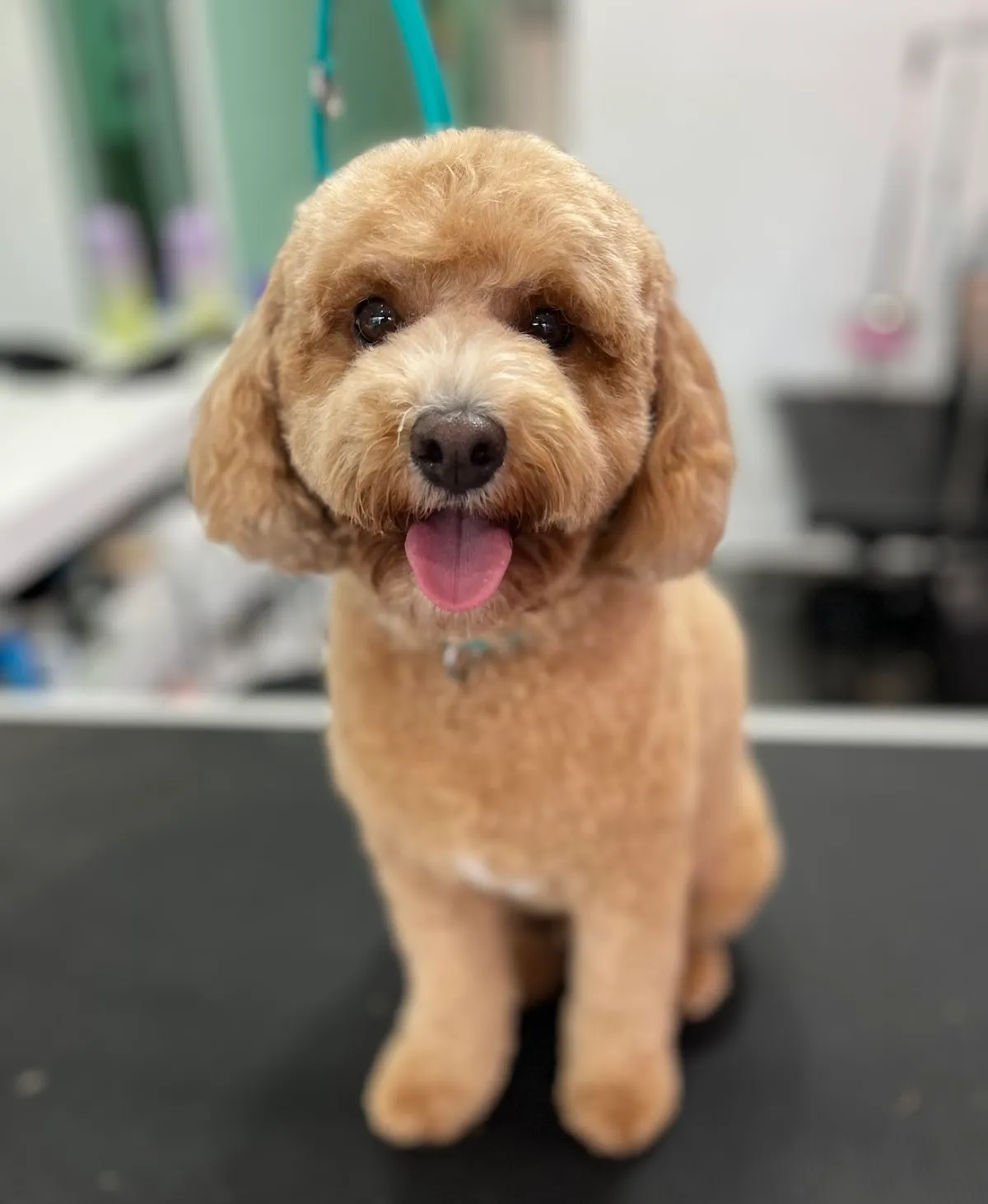 Cavoodle. Photo: Stitch and Grizz Dog Grooming, Coniston NSW — via Groomably
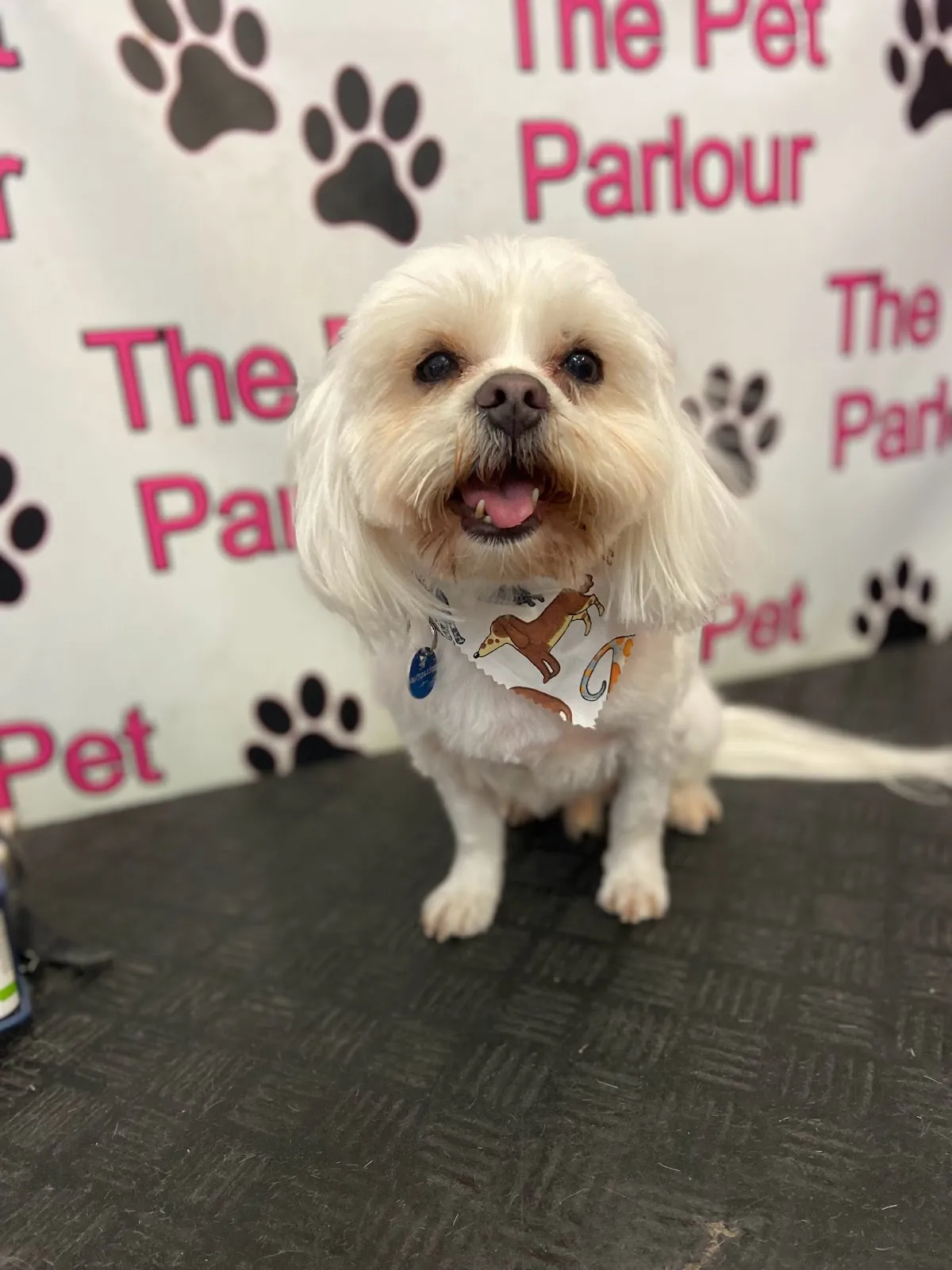 Shih tzu — a straighter coat, so the face reads round but the body sits flatter. Photo: The Pet Parlour, Raymond Terrace NSW — via Groomably
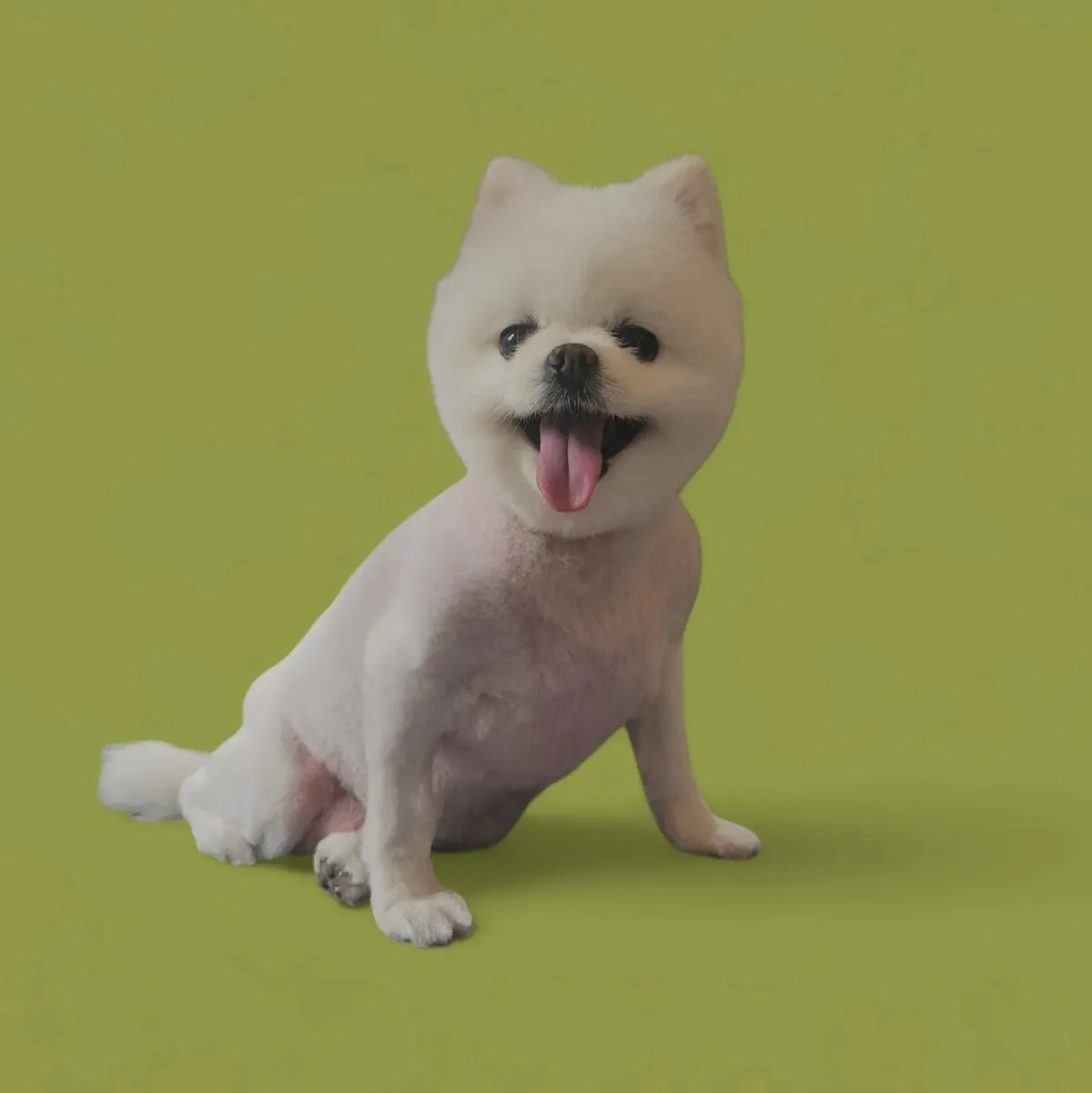 Pomeranian — scissored, not clipped. On a double coat that distinction matters. Photo: Petitude Grooming, Newington NSW — via Groomably
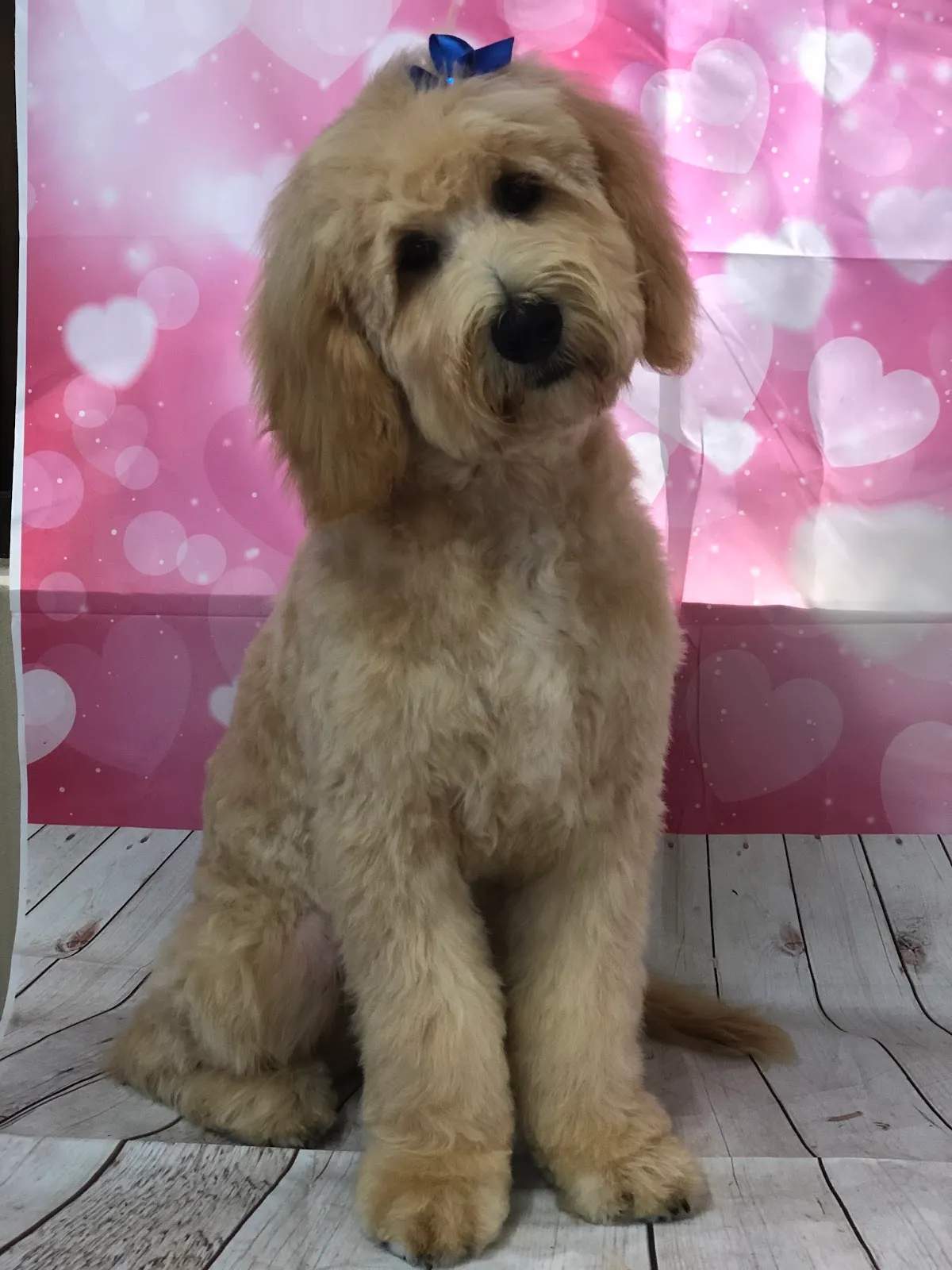 Groodle (goldendoodle) — a big frame needs more length for the same plush effect. Photo: Lei Lani Pet Spa, Terrigal NSW — via Groomably
The same cut on the small breeds
Doodles get the attention, but more than a third of the teddy bear photos in our library are small non-doodle breeds. The cut translates well, with one adjustment: on a small dog the head is a bigger share of the silhouette, so the face does more of the work and the body length matters less.
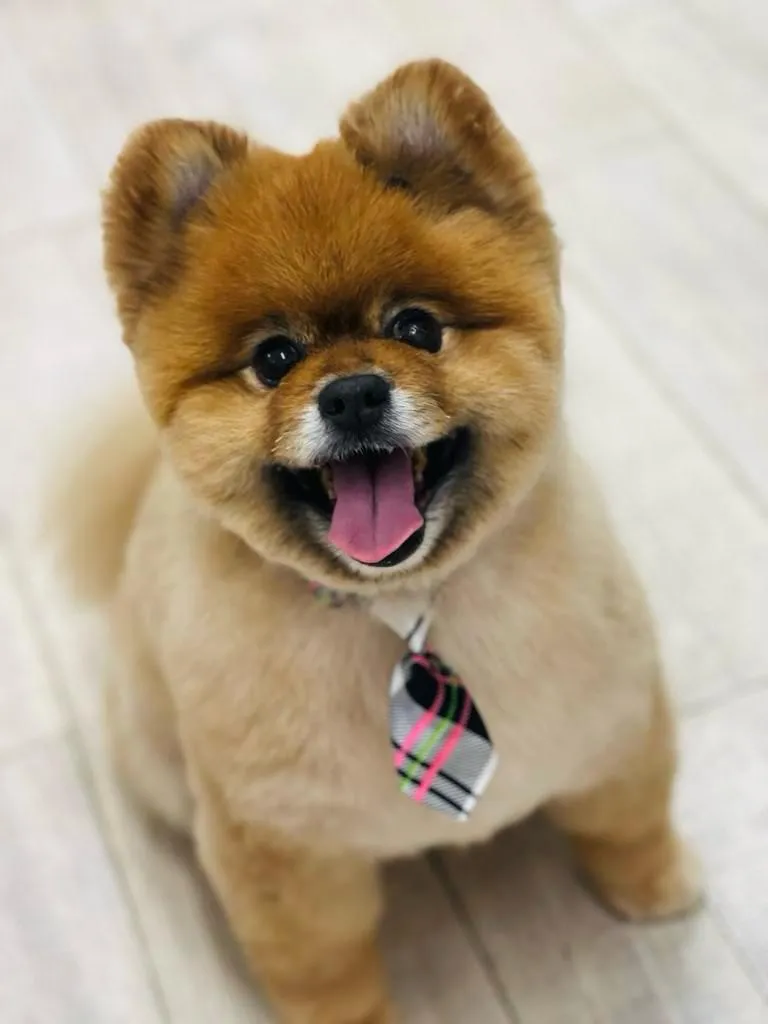 Pomeranian, scissored round. Photo: Dog N Grooming, Batesford VIC — via Groomably
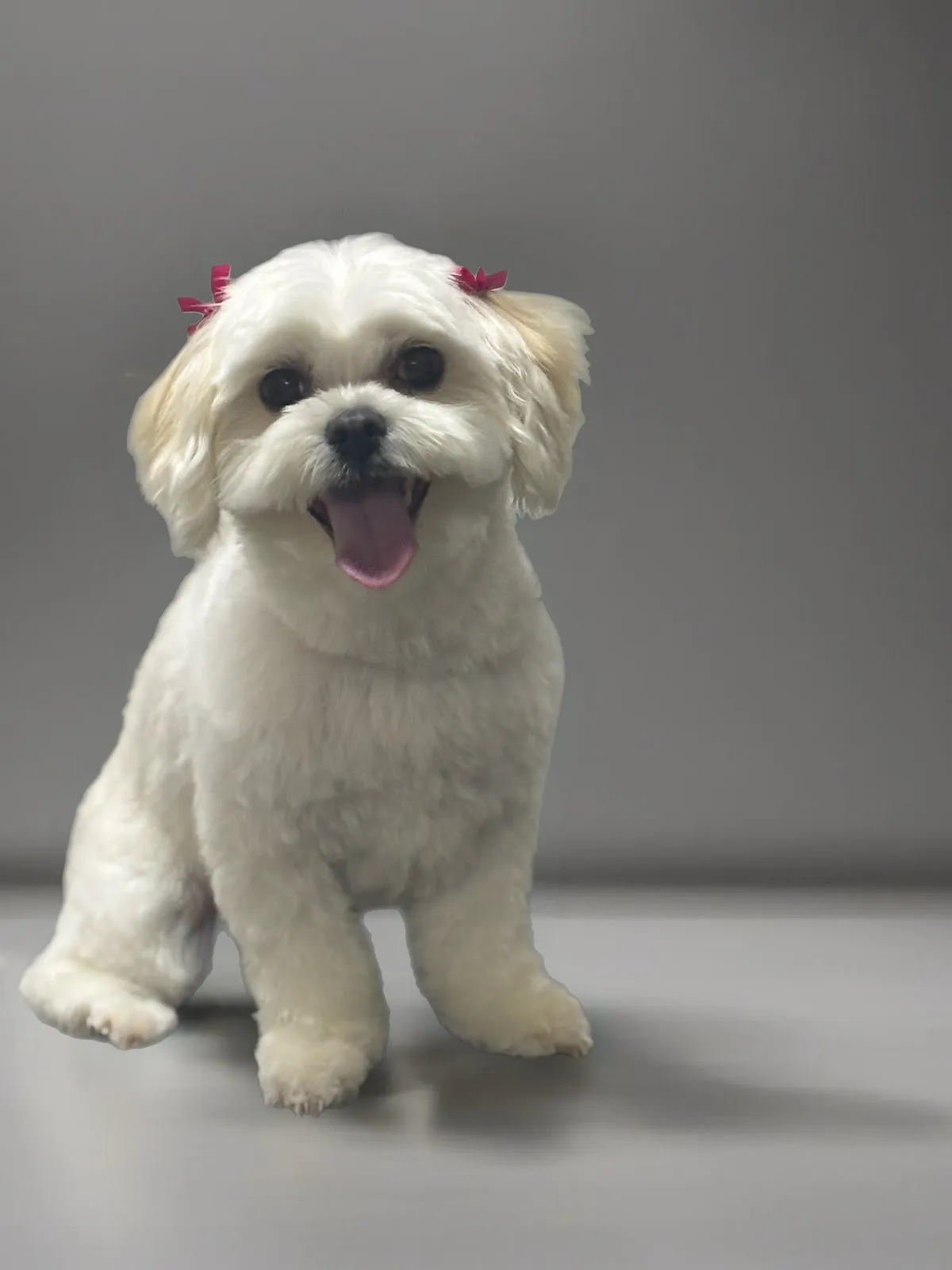 Maltese — a silky coat takes the shape beautifully and softens toward shaggy faster. Photo: The Dog Groomer Shellharbour, Flinders NSW — via Groomably
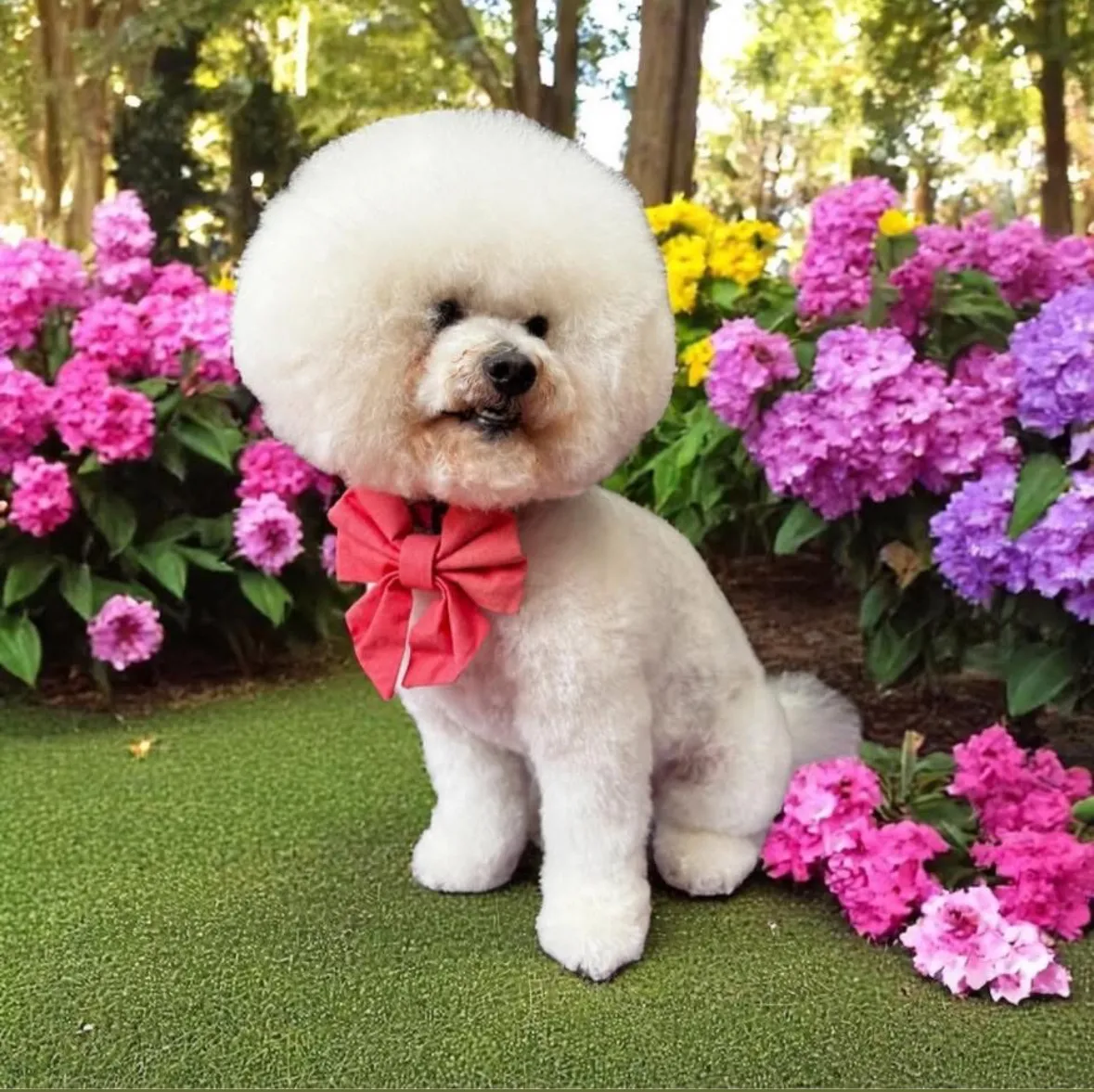 Bichon frise — the one breed whose show trim is already a sphere. Photo: Polished Pooches Montrose, Montrose VIC — via Groomably
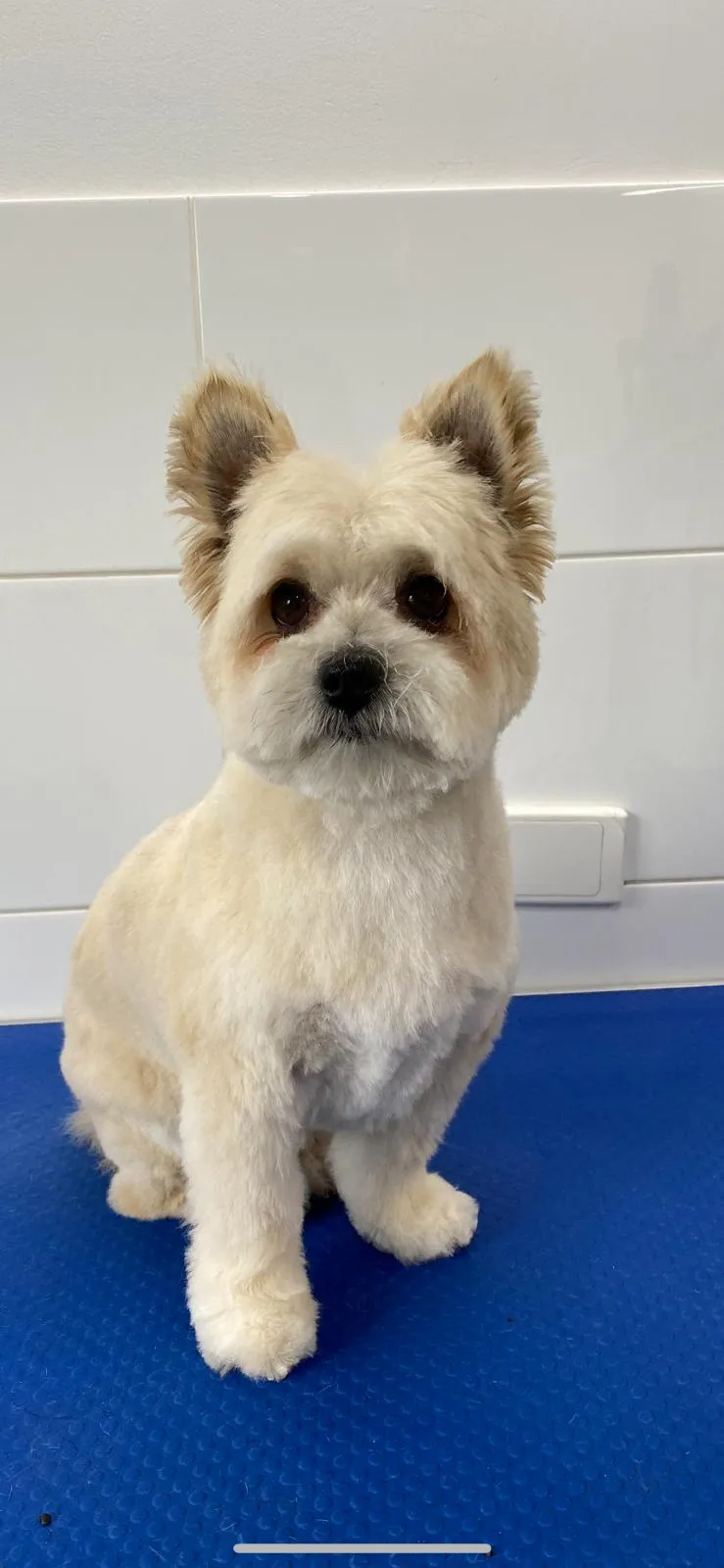 Yorkshire terrier — a full alternative to the long silky show coat. Photo: Dashing Designer Dogs, Mornington VIC — via Groomably
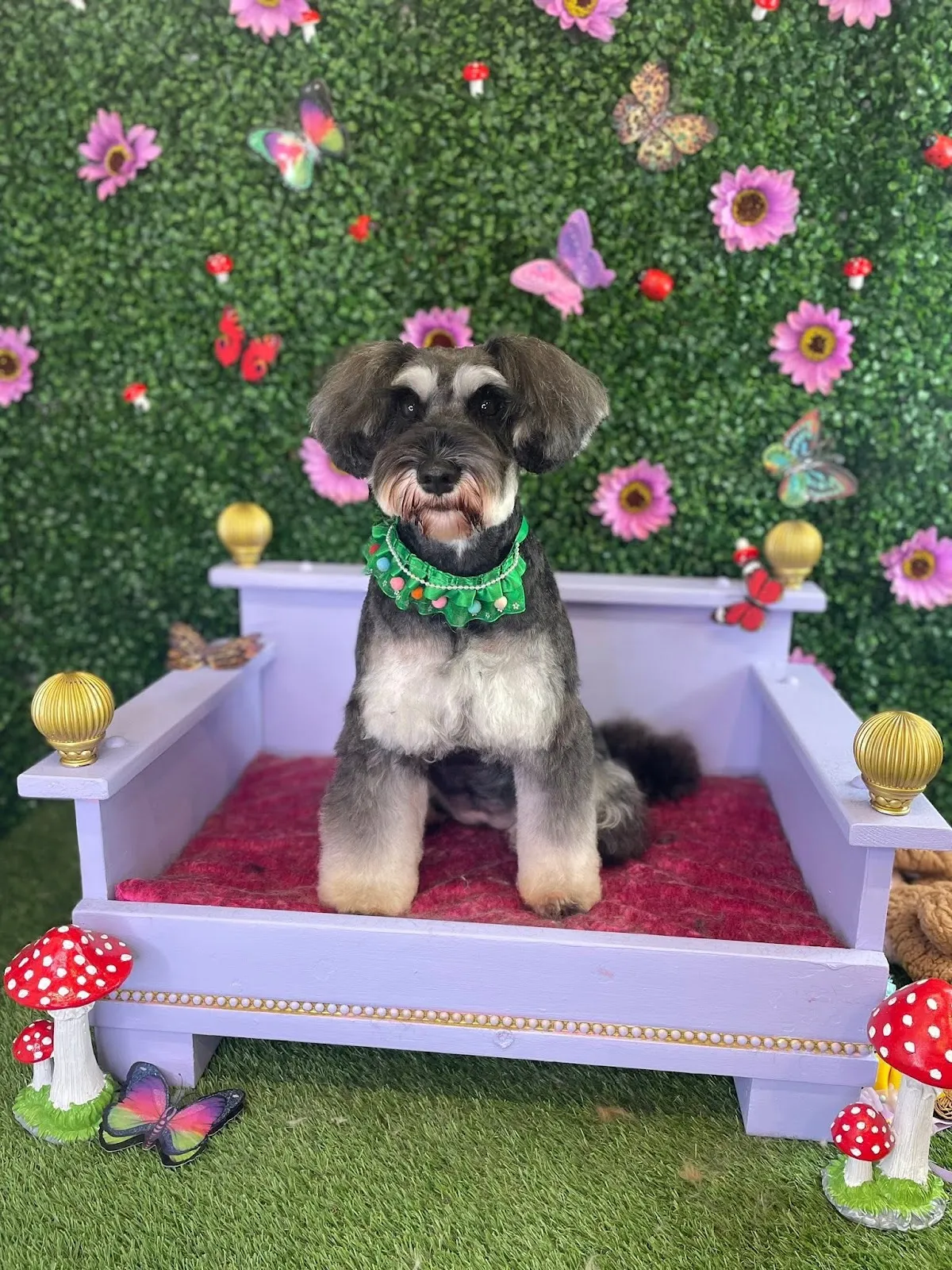 Schnauzer — this is the cut that removes the beard and brows. Ask deliberately. Photo: Michelle’s Dog Grooming, Williamtown NSW — via Groomably
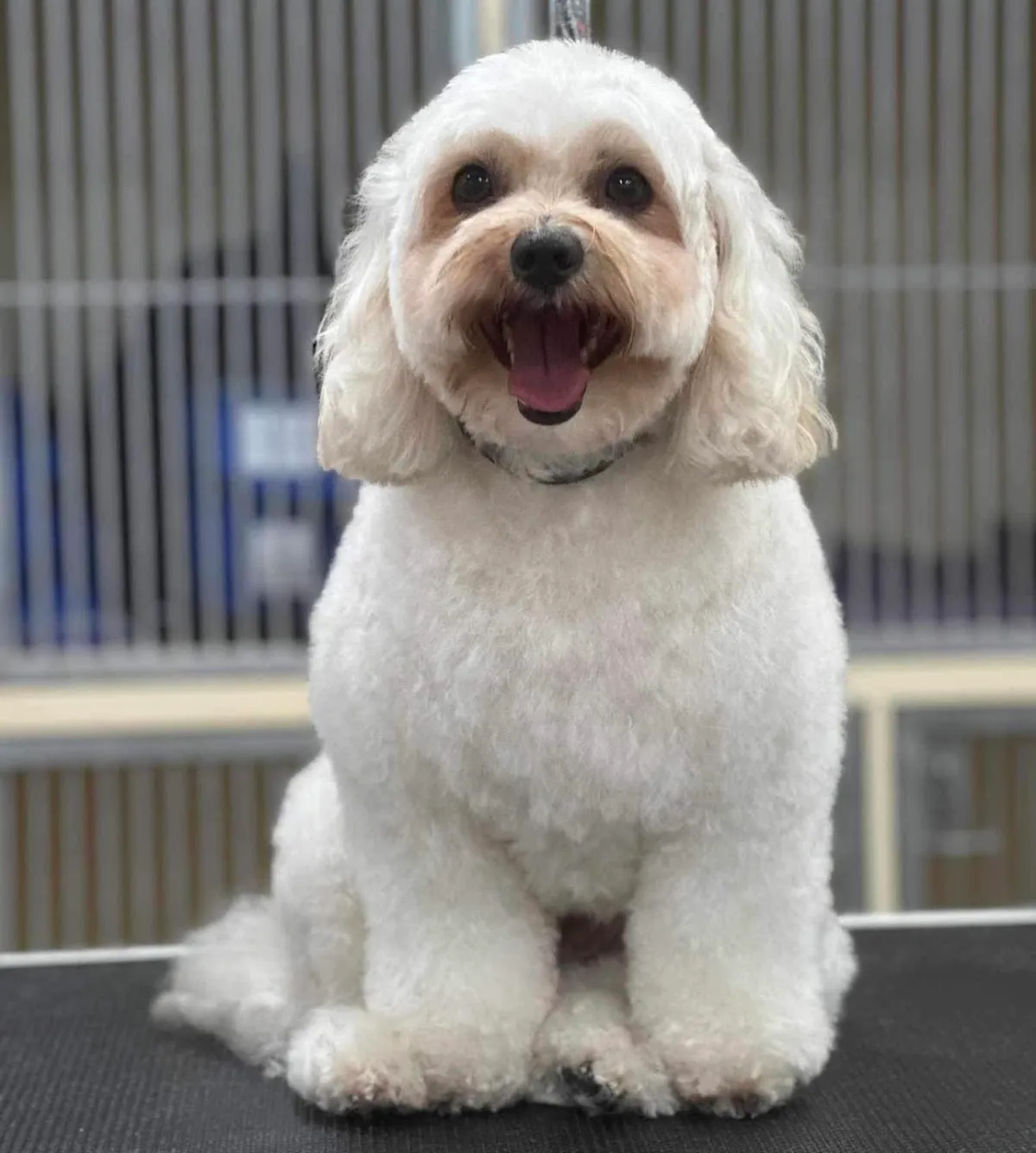 Maltipoo — 24 of our 35 style-tagged maltipoo photos are this one cut. Photo: Blossom Dog Grooming Salon, Newcastle NSW — via Groomably
The schnauzer photo is worth pausing on. A schnauzer’s breed trim is defined by the beard, the eyebrows and the harsh jacket on the back. A teddy bear cut removes all three. Plenty of owners want exactly that — it’s softer, friendlier and far less work — but it is a decision, not a default, and a groomer who knows the breed will ask you to confirm it before they start.
Teddy bear cut vs puppy cut vs kennel cut vs lamb cut
These four names get used loosely, swapped for each other, and argued about online. Here is how working groomers actually distinguish them.
| Cut | Body length | The face | Best for |
|---|---|---|---|
| Teddy bear cut | ½–1 inch, even all over | Scissored into a full round circle | Curly and wavy coats where the plush look is the whole point |
| Puppy cut | ½–1 inch, even all over | Tidied, not deliberately rounded | Owners who want the same easy length without the fluffy face |
| Kennel cut | ¼–½ inch, clipped short | Trimmed short and practical | Low maintenance, hot weather, coats that mat badly |
| Lamb cut | Short on the body, longer on the legs | Usually rounded | Doodles and poodles where leg shape carries the look |
The honest summary: a teddy bear cut and a puppy cut are frequently the same haircut, and the only reliable difference is the face. A kennel cut is genuinely shorter. A lamb cut is the only one of the four that uses two different lengths on the same dog.
Because groomers don’t agree on these definitions either, naming the length is always safer than naming the style. “Three-quarters of an inch all over, round face” cannot be misheard. “Teddy bear cut” can.
If the face is the part you’re unsure about, our guide to what a puppy cut actually is covers the lower-maintenance version in detail, and scissor cut vs clipper cut explains why a properly scissored teddy bear finish takes longer, and costs more, than a clipped one.
What length to ask for
Most teddy bear cuts land between half an inch and one inch of coat left on the body. Shorter than that and you lose the plush fullness that defines the style. Longer and it starts to need daily brushing to stay tidy.
A good middle ground for most owners is around three-quarters of an inch. It’s full enough to look soft and round, but short enough that you’re not fighting matts every week. If it’s summer or your dog loves the beach, ask the lower end. If you want maximum fluff and you’re happy to brush often, go longer. Bring a photo. Groomers think in shapes and pictures far more than in millimetres, so a clear reference removes a lot of guesswork.
If your groomer works in metric — most Australian salons do — half an inch is roughly 12mm and one inch is roughly 25mm, so the useful range to say out loud is “somewhere between 12 and 25 mil”.
What it costs and how long it takes
A teddy bear cut is priced as a full groom, not as an add-on. Across Australian salons that means commonly $80–110 for a small to medium dog, against the $50–110 range typical of a standard full groom. Larger dogs cost more, and a hand-scissored finish sits at the top of any salon’s band.
Expect the appointment to take two to three hours. That is longer than a straight clip-off, and the reason is simple: the shape is made with shears, and shears cannot be hurried. A salon quoting you an hour is quoting you a clipper groom with a tidy face, which is a perfectly good haircut but is not this one.
One first-party note on availability. Of the 1,728 salons in our directory with a full service list, 123 name a teddy bear cut explicitly as something they offer. That is not a shortlist of the only salons that can do it — most full-service groomers can, and many simply describe it as a full groom with a round face. But if you want the salons that market it as their thing, the teddy bear cut service page is where they are.
How to talk to your groomer
The phrase “teddy bear cut” means slightly different things to different groomers, so a little detail goes a long way. Here is a sentence that works, verbatim:
“I’d like about three-quarters of an inch all over the body, the legs scissored into even columns rather than shaved, and the face left round and full — not shaped to breed pattern. Here’s a photo of the look I’m after.”
That single sentence names the body length, the leg treatment, the face, and gives a reference. It removes essentially every ambiguity in the style.
It’s also worth being upfront about coat condition. A teddy bear cut only works if there’s healthy coat to shape. If your dog is matted, the groomer may need to clip shorter than the style ideally wants, simply because brushing out tight matts hurts the dog. That’s not the groomer cutting corners, it’s them protecting your dog. A coat that has been left eight or ten weeks between grooms in a curly breed is frequently past the point where the cut you pictured is possible, and no amount of asking changes that.
Keeping the look between grooms
A teddy bear cut is gorgeous fresh out of the salon, but that fluff needs upkeep. Plan on a professional groom every six to eight weeks to keep the shape and prevent matting. In between, brush a few times a week, paying attention to the friction spots behind the ears, under the legs and around the collar where matts form first.
The comb is the honest test. A slicker brush glides over the top of a forming mat and leaves you convinced the coat is fine; a metal comb catches it. Run the comb through to the skin in four places — behind each ear, both armpits, the backs of the hind legs, and under the collar. If it passes there, the rest of the dog is almost certainly fine.
Realistically, the cut looks its best for about three weeks, stays clearly recognisable through week five, and drifts toward shaggy after that. Curly coats hold the shape longest; the silky coats — maltese, cavalier, shih tzu — soften fastest, which is why those breeds suit the shorter end of the cycle.
Frequently asked questions
Is a teddy bear cut the same as a puppy cut? Usually, yes, with one difference: the face. Both leave roughly half an inch to an inch of even coat on the body. A teddy bear cut adds a deliberately round, full, scissored face; a puppy cut just tidies it. If the fluffy face is what you want, say “round face” out loud — the style name alone won’t guarantee it.
Can any breed get a teddy bear cut? Any dog can be clipped to an even length, but the look only holds on coats that grow continuously and carry some wave or curl. Double-coated breeds — golden retrievers, samoyeds, huskies, border collies — don’t hold the shape, and clipping into a double coat can damage how it regrows. There are eight golden retriever teddy bear photos in our whole 18,376-photo library, which is the number telling you it’s rare for good reason.
How much does a teddy bear cut cost in Australia? Commonly $80–110 for a small to medium dog, priced as a full groom. Big dogs and hand-scissored finishes go higher. Our dog grooming cost guide breaks the pricing down by size and service.
How often does it need redoing? Every six to eight weeks for the shape to stay recognisable. Silky coats drift out of shape faster than curly ones, so cavaliers, maltese and shih tzus sit at the six-week end.
Will a teddy bear cut stop my dog matting? It reduces the risk compared with a full-length coat, but it doesn’t remove it — half an inch to an inch is still enough coat to mat, particularly at the friction points. If you want a genuinely low-maintenance length, ask for a kennel cut instead and accept the shorter look.
My dog is a schnauzer / cocker spaniel — can they have one? Yes, and plenty do (37 schnauzer and 13 cocker spaniel photos in our library). Be aware that it means removing the breed pattern: the schnauzer’s beard and eyebrows, the spaniel’s short face and long ears. That’s a real aesthetic choice, so confirm it with your groomer before the clippers start.
If the full teddy bear look feels like more maintenance than you want, a shorter puppy cut gives a similar soft, rounded vibe with less brushing. And if you simply want to browse what’s possible, our styles section and the wider gallery are full of real finished grooms to help you decide. Whatever length you choose, the trick is the same: regular grooms, regular brushing, and a clear photo for your groomer.


