
There are really only five cocker spaniel haircuts, and the choice between them comes down to one question: how much feathering are you willing to brush? A cocker’s coat is short and smooth on the head and back, and long, soft and silky everywhere else — the ears, the chest, the belly, the backs of all four legs. That silky part is the whole aesthetic and the entire maintenance problem, and every cut on this list is a different answer to it.
The five are the show or breed trim (full feathering, hand-finished), the puppy cut (feathering shortened, proportions kept), the sporting or field clip (everything short and practical), the teddy bear cut (round face, even body, breed pattern removed) and the kennel clip (short everywhere, the reset button). Below is what each one actually is in clipper and scissor terms, plus the ear routine that matters more for this breed than the haircut does.
Everything here is grounded in the 329 cocker spaniel photos in Groomably’s classified library — real dogs from real Australian salons, tagged style by style — rather than stock images. Of the 92 that carry a style tag, the split is telling: 38 are a plain bath and dry, 22 a full groom, 16 a breed-pattern trim, 13 a teddy bear cut, 9 a scissor finish and 8 a de-shed. In other words, most cocker appointments are maintenance, not restyles. That is the honest shape of this breed’s grooming life.
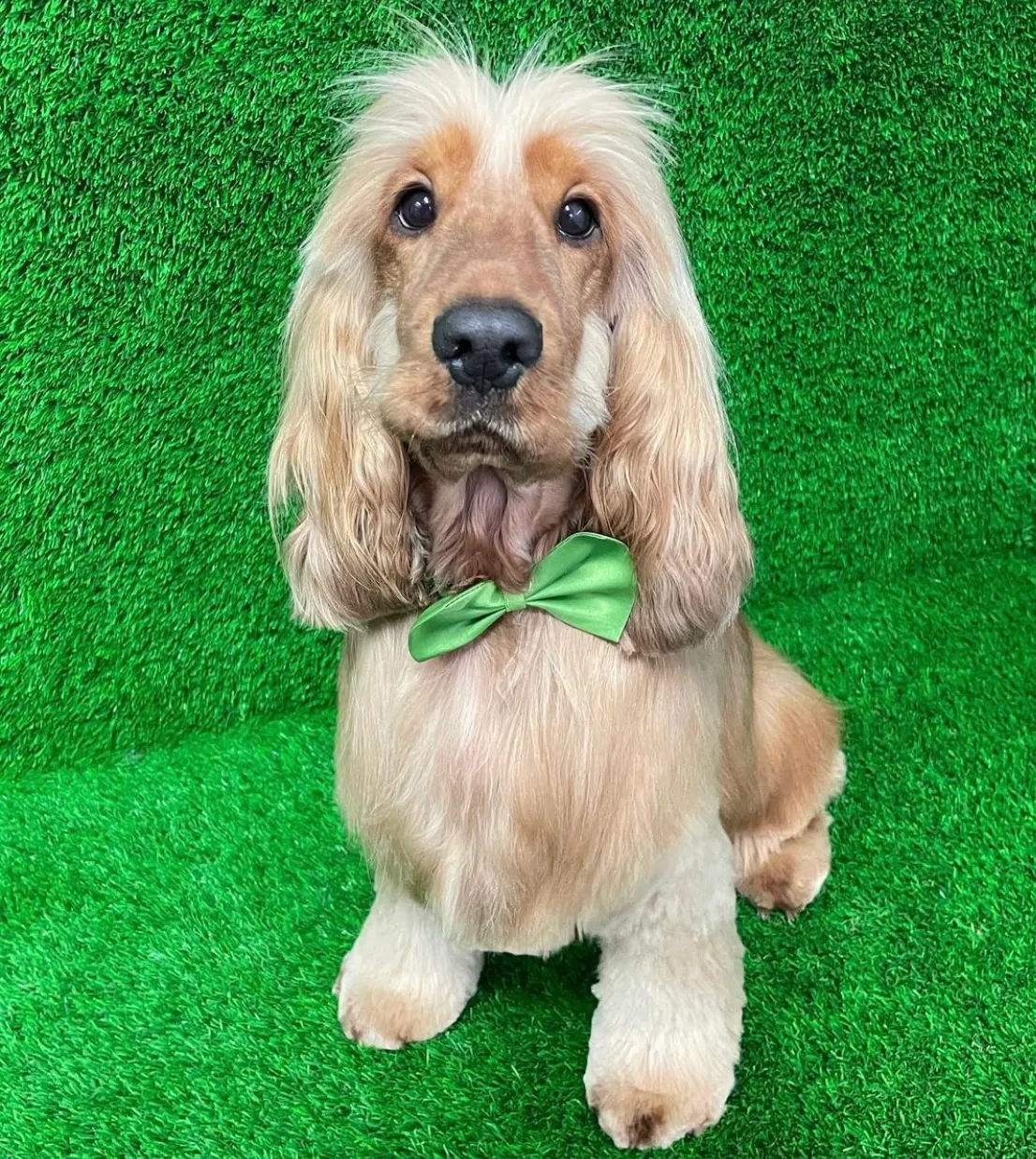 Breed trim: short back, feathered legs and chest left long. Photo: Grooming by Barkley Park, Kedron QLD — via Groomably
The five cuts, side by side
| Cut | Body | Ears & feathering | Brushing | Groom interval |
|---|---|---|---|---|
| Show / breed trim | Short, blended, no clipper lines | Full length, thinned not cut | Daily | 4–6 weeks |
| Puppy cut | Short and even | Shortened to 1–2 inches, shape kept | 2–3× a week | 6–8 weeks |
| Sporting / field clip | Short all over | Short, feathering removed | Weekly | 8–10 weeks |
| Teddy bear cut | Even ½–1 inch | Blended into a round head shape | 2–3× a week | 6–8 weeks |
| Kennel clip | ¼–½ inch, clipped | Taken right down | Weekly | 8–12 weeks |
The two ends of that table are the real decision. A show trim on a pet cocker is a beautiful thing and a genuine daily commitment. A kennel clip is a coat you can forget about. Everything in between is a negotiation, and most owners land on the puppy cut.
American vs English cocker spaniel — this changes the answer
These are two different breeds with two different coats, and a guide that treats them as one will mislead you.
The American cocker spaniel is smaller, domed in the skull, with a shorter muzzle and a dramatically more profuse coat. The feathering is longer, denser and closer to the ground, and on a show-coated American the belly skirt can nearly touch the floor. That coat mats if you look at it wrong. Almost everything written online about cockers being “high maintenance” is written about this dog.
The English cocker spaniel is longer in the muzzle, taller, and carries noticeably less coat. The feathering is present but flatter and shorter, and the working or field-bred English cocker carries less again — some field lines have coats barely longer than a springer’s.
Practically: an American cocker in a full trim needs daily line-brushing; an English cocker in the same trim usually copes with three times a week. If your groomer asks “American or English?” they aren’t being pedantic, they’re deciding how long to book you in for.
1. The show or breed trim
This is the cut the breed standard describes: the back and skull clipped or thinned short and blended smoothly into long feathering on the ears, chest, belly and legs, with no visible line where one length becomes the other. Done properly, the transition is invisible — which is the hard part, and why it takes a skilled groomer two to three hours.
The key technique is that the topcoat is thinned, not clipped. Clippers on a cocker’s back will, over time, soften the texture of the guard coat and dull the colour. Show groomers use thinning shears and a stripping knife to keep that jacket flat and glossy. A pet groomer will usually clip it, which is a completely reasonable trade-off — just know that a clipped cocker back after two years looks and feels different from a stripped one.
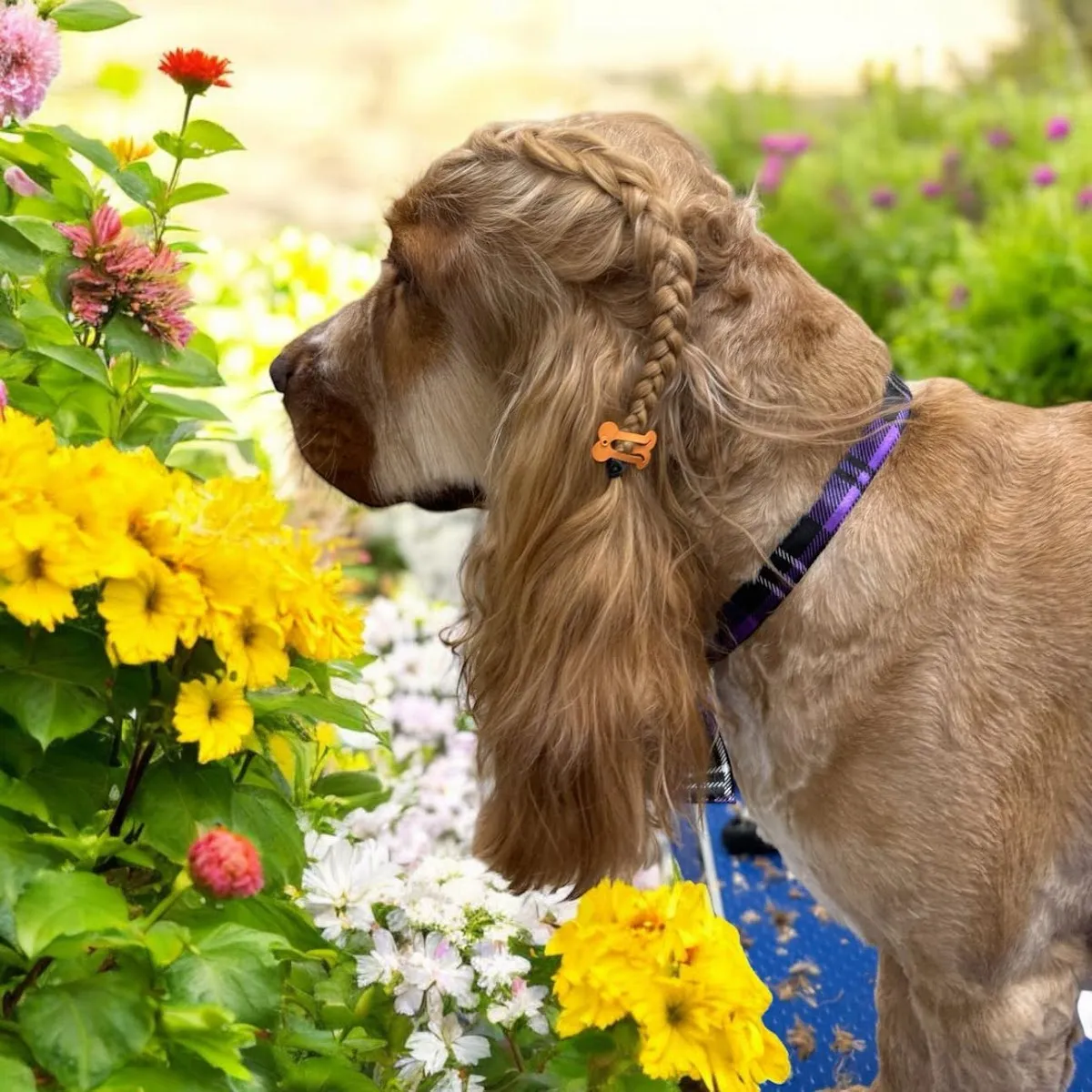 Full feathering left long. Photo: Fur Babies Grooming and Spa, Holden Hill SA — via Groomably
Ask for it like this: “Breed trim please — short and blended on the back and skull, feathering left full on the ears, chest and legs, thinned rather than clipped if you can.”
2. The puppy cut
The most common pet cocker haircut, and for good reason. The body is taken short and even, and the feathering is shortened to one or two inches rather than removed — so the dog still reads as a cocker spaniel in silhouette, with a fraction of the brushing.
The trick that makes or breaks it is proportion. The ear feathering, the chest and the leg feathering all get shortened by the same amount, so the shape stays balanced. Take the legs short and leave the ears long and you get a dog that looks like it’s wearing someone else’s ears.
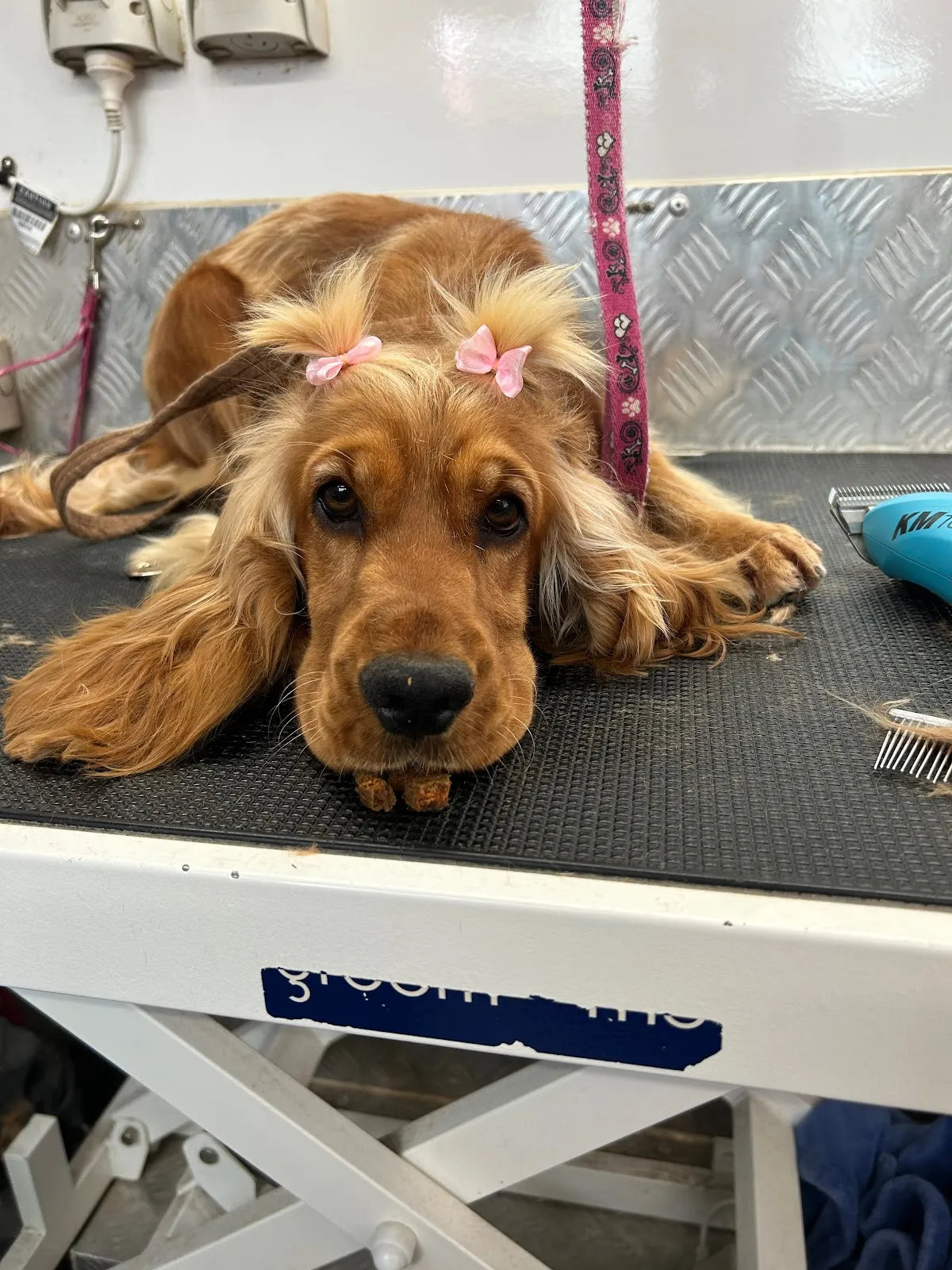 Photo: Splish Splash Dog and Cat Grooming Salon, Cambridge Park NSW — via Groomably
Ask for it like this: “Puppy cut — short on the body, and take the ears, chest and legs down to about an inch and a half, all in proportion.”
3. The sporting or field clip
This is what working cockers get, and it’s the most practical cut on the list. Everything goes short: body, legs, belly, and the ear feathering comes off almost entirely, leaving the leather with a short covering. Burrs don’t stick, mud rinses off, and the dog dries in minutes instead of an hour.
It is not the prettiest cut a cocker can have, and owners who love the breed’s silhouette often hate it on sight. It is, however, the right answer for a dog that swims, works, or lives somewhere with grass seeds — which in much of Australia means most of summer.
Ask for it like this: “Field clip — take it all short, including the ears, I’d rather have easy than pretty.”
4. The teddy bear cut
Thirteen of our style-tagged cocker photos show a teddy bear cut: one even length over the body, and the face scissored into a soft round shape rather than left in breed pattern. It’s a real option and it looks lovely on a cocker’s expression.
Be clear-eyed that it removes the breed look. A cocker’s face is defined by a longer muzzle and long, low-set ears; a teddy bear face rounds the muzzle out and blends the ears toward the head. You get a very cute dog that most people won’t identify as a cocker spaniel. Plenty of owners want exactly that. Just say it out loud so nobody is surprised.
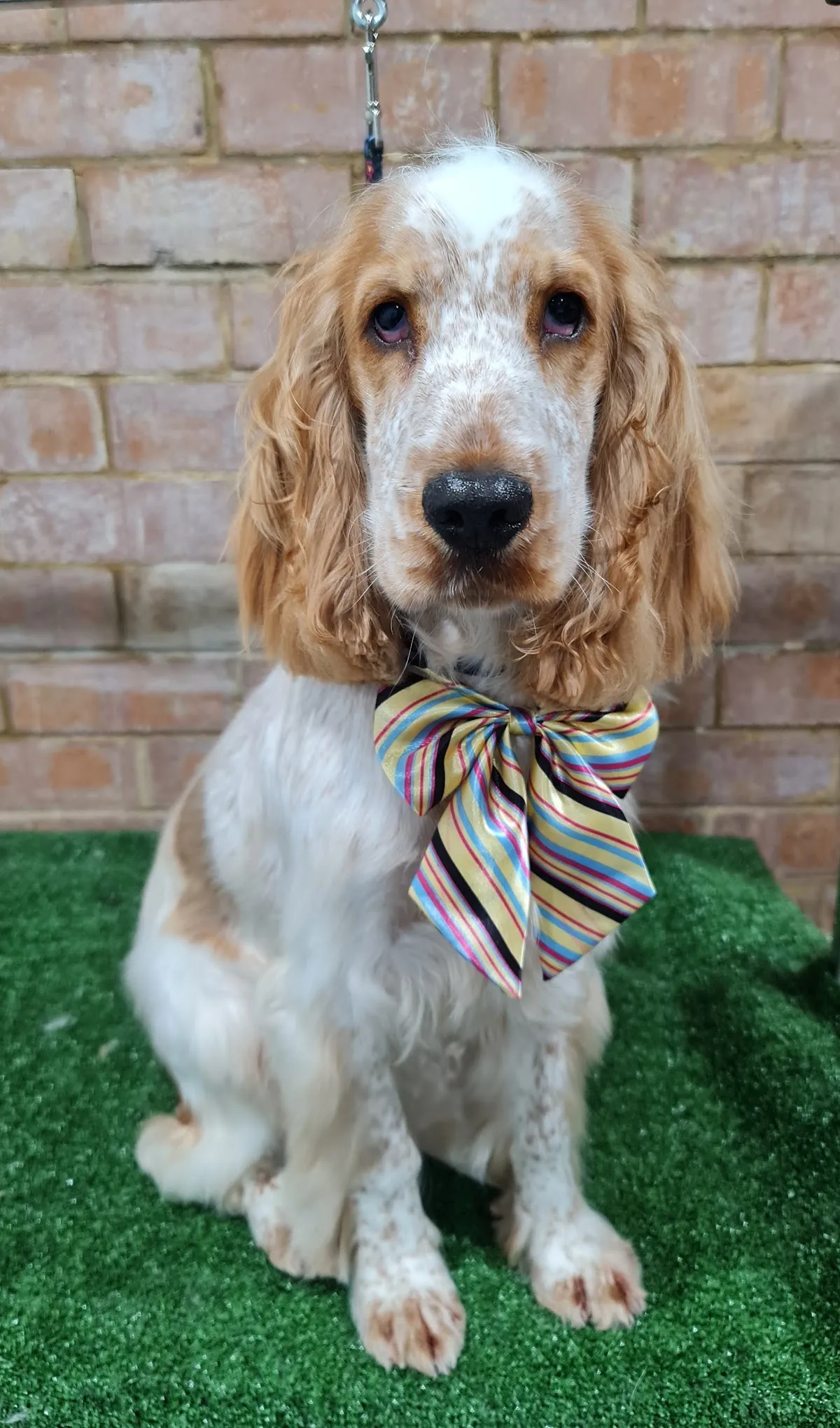 Teddy bear cut on a cocker — round face, breed pattern gone. Photo: Flair For Fur, Bradbury NSW — via Groomably
5. The kennel clip
The reset button. Quarter to half an inch everywhere, clipped rather than scissored, ears taken down with the rest. It’s what a groomer will recommend — and sometimes insist on — when a coat arrives pelted, because dematting a matted cocker’s feathering is hours of pulling on skin and is genuinely painful for the dog.
There’s no shame in it. Coat grows back. A cocker clipped off in February is back in a puppy cut by winter, and the alternative is a dog that spends three hours being brushed to the point of distress.
The ears: the part that actually matters
If you take one thing from this guide, take this. Cocker spaniels have long, heavy, low-hanging ears with a dense covering of hair, and that combination traps warmth and moisture in the ear canal. Ear infections are the single most common health complaint in the breed, and grooming is genuinely preventive here rather than cosmetic.
What a good groom does about it:
- Clears the hair on the underside of the ear leather and around the canal opening so air can move. This is a bigger deal than the length of the ear feathering.
- Dries the ears properly after the bath, not just the coat around them.
- Checks and flags redness, odour or head-shaking — a groomer sees inside more cocker ears in a week than most owners do in a year.
Between grooms, the routine is: check weekly, dry the ears thoroughly after any swim or bath, and see your vet if there’s smell, discharge or scratching. Groomers can clean and clear an ear; diagnosing and treating an infection is a vet’s job, and cocker ear infections that get left alone become chronic ones.
Ear feathering also drags through food and water bowls. A snood at mealtimes, or a narrow, deep bowl, solves a problem that no haircut can.
Feet, hocks and the other maintenance spots
Three places on a cocker mat before anywhere else, and all three are easy to miss:
Between the pads. Hair grows down between the toes and pads and picks up grass seeds. Ask for the pads cleared every groom, and check them yourself after long grass in summer — a grass seed that works into a paw is a vet visit.
Behind the ears. The fine hair where the ear meets the skull is the classic first mat on this breed. Comb it, don’t just brush it.
The hocks and armpits. Friction points where feathering rubs. If the dog is going to mat anywhere between grooms, it will be here.
What it costs and how often
A full cocker spaniel groom in Australia commonly runs $80–120, which sits at the upper end of the $50–110 typical range for a full groom because of the coat volume and the time the feathering takes. A show trim, hand-finished, goes higher again. A bath, dry and tidy between full grooms is cheaper — and 38 of our 92 style-tagged cocker photos are exactly that, which tells you how many owners run a maintenance visit in between.
Intervals by cut: show trim every four to six weeks, puppy cut six to eight, field or kennel clip eight to twelve. The coat doesn’t stop growing between those, so the honest number is whatever interval keeps the feathering combable at home.
Ninety-one of the 1,728 salons in our directory name the cocker spaniel among the breeds they groom. You can find them on the cocker spaniel breed page, and browse finished work in the gallery.
Frequently asked questions
Should you shave a cocker spaniel? Not as a default, but it isn’t harmful the way it is on a double-coated breed. A cocker’s coat is a single silky coat, so it grows back with normal texture. Shaving is the right call for a matted coat, a working dog or a hot climate — it’s the wrong call if you just want less brushing and haven’t tried a puppy cut first.
How often should a cocker spaniel be groomed? Professionally every six to eight weeks in a puppy cut, four to six in a full breed trim. At home, brush the feathering two to three times a week — daily for a show-coated American cocker.
What’s the difference between a cocker spaniel puppy cut and a teddy bear cut? The face. A puppy cut keeps the breed’s face and ear shape, just shorter. A teddy bear cut rounds the face and blends the ears, so the dog stops looking like a cocker. Body length is much the same in both.
Can you clip a cocker spaniel’s back or does it ruin the coat? You can, and most pet groomers do. Repeated clipping does soften and dull the guard coat over time, particularly on solid-colour dogs. If the glossy flat jacket matters to you, ask for thinning shears or hand-stripping on the back instead — see our hand stripping guide for what that involves.
Why do cocker spaniels get so many ear infections? Long, heavy ears with dense hair sit flat against the head and trap warmth and moisture in the canal. Clearing the hair on the underside of the ear, drying properly after swimming, and weekly checks all help. Persistent smell, discharge or head-shaking is a vet visit, not a grooming one.
Do American and English cocker spaniels need different grooming? Yes. The American cocker carries substantially more coat and needs daily brushing in a full trim; the English cocker usually manages on two or three times a week. The cuts are the same; the workload isn’t.


