
When a groomer quotes you two prices for what sounds like the same haircut, this is usually the difference. Groomably holds 225 photos tagged as a scissor cut, from 185 Australian salons — 4.7% of all style-tagged photos in an 18,376-photo library.
That scarcity is the story. Hand-scissoring is the minority technique, it costs more, and the interesting question is which dogs actually get it.
The answer is not the one most owners expect:
| Breed | Tagged photos | Scissor cut | Share |
|---|---|---|---|
| Schnauzer | 194 | 31 | 16.0% |
| Poodle | 1,141 | 59 | 5.2% |
| Groodle | 243 | 5 | 2.1% |
| Cavoodle | 325 | 5 | 1.5% |
A schnauzer is more than ten times as likely to be hand-scissored as a cavoodle. The fluffiest, most “styled-looking” dogs in the country are mostly being clipped.
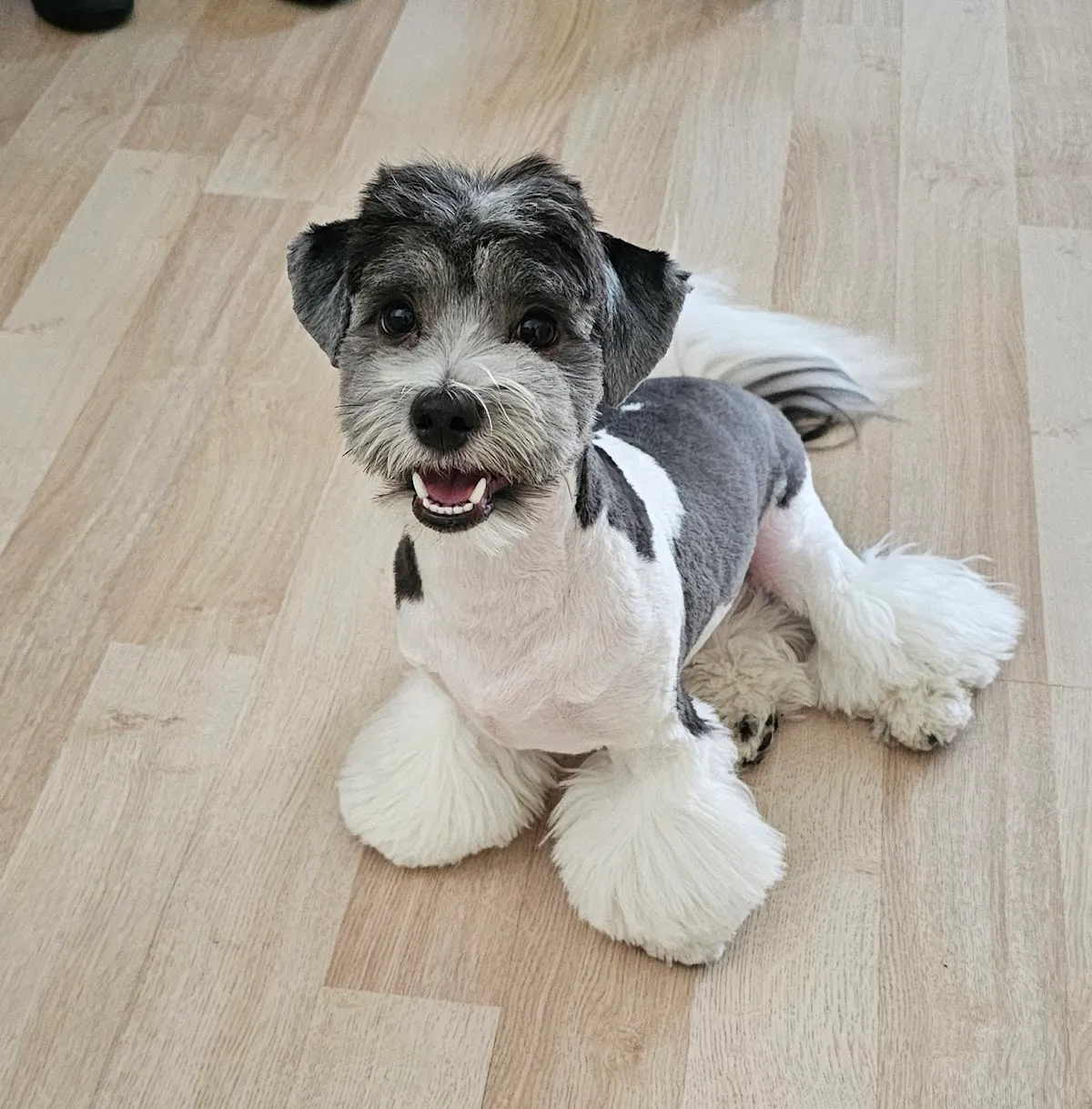 Photo: The Hairy Hound All Breed Grooming & Clipping, Salisbury East SA — via Groomably
What the two techniques actually are
A clipper cut uses electric clippers with a guard or snap-on comb set to a fixed length. The blade runs over the coat and everything comes off at that length. It is fast, it is consistent, and on a well-maintained coat it looks clean.
A scissor cut is done by hand with shears. The groomer works in sections, checking the outline as they go, and the length varies deliberately across the dog — longer on the legs, shorter through the body, blended at the transitions. Nothing is set by a guard; every millimetre is a judgement.
A third term you will hear is hand-stripping, which is neither: it removes dead outer coat by pulling it from the follicle, on wire-coated terriers where clipping ruins the colour and texture. That is its own service and its own conversation.
The practical upshot is time. A clipper pass over a small dog takes minutes. Scissoring the same dog properly takes the better part of an hour, and the groomer is standing over a moving animal with sharp blades the whole time. You are paying for labour, not materials.
Why a clipper cut costs less — and why that is usually fine
Clipping is not the cheap, inferior option. For most pet dogs it is the correct option, and the numbers reflect a trade that has worked this out: 54.2% of our scissor-cut photos also carry a full-groom tag, which means scissoring typically appears as the finishing stage of a larger service rather than as the whole job.
Clipping wins when:
- The coat is matted. Scissors cannot safely cut through a mat; clippers go underneath it. A matted dog gets clipped, and that is a welfare decision, not a budget one.
- The dog will not stand still. Puppies, anxious dogs and seniors are all better served by a fast appointment. Scissoring demands a dog that can hold a position for extended stretches.
- You want a short, even, practical length. A 10mm summer cut gains nothing from being done by hand.
- The coat is soft and fine. Fine coats do not hold a scissored shape for long — you pay for a silhouette that collapses in a fortnight.
Clipping loses when the coat is dense and wiry, when the breed outline is the whole point, or when the fluffy scissored look is what you actually want. That is the schnauzer column in the table above.
Why schnauzers are the outlier
Schnauzers run 16.0% scissored — triple the poodle rate and ten times the cavoodle rate — for a specific structural reason.
A schnauzer has a harsh, wiry outer coat over a softer undercoat, and a breed outline that is genuinely distinctive: short and tight over the body, with the legs and the famous beard and eyebrows left long. Getting that shape requires two different treatments on one dog, and the furnishings have to be shaped by hand. There is no clipper guard that produces a schnauzer.
There is also a coat-quality argument. Clipping a wiry coat repeatedly softens it and fades the colour — the salt-and-pepper goes muddy and the texture goes woolly. It is cosmetic, not a health problem, and most pet schnauzers are clipped anyway. But it is why schnauzer owners who care about coat texture pay for scissoring, and why the number is as high as it is.
The poodle rate of 5.2% tells a related story from the other direction. Poodles have the densest, most scissor-friendly coat of any breed we hold and take a shape better than anything else — show poodles are entirely hand-finished. But the vast majority of Australian pet poodles are in a practical clipped teddy bear or puppy cut, so the pet-dog average stays low even though the breed is the ideal scissoring candidate.
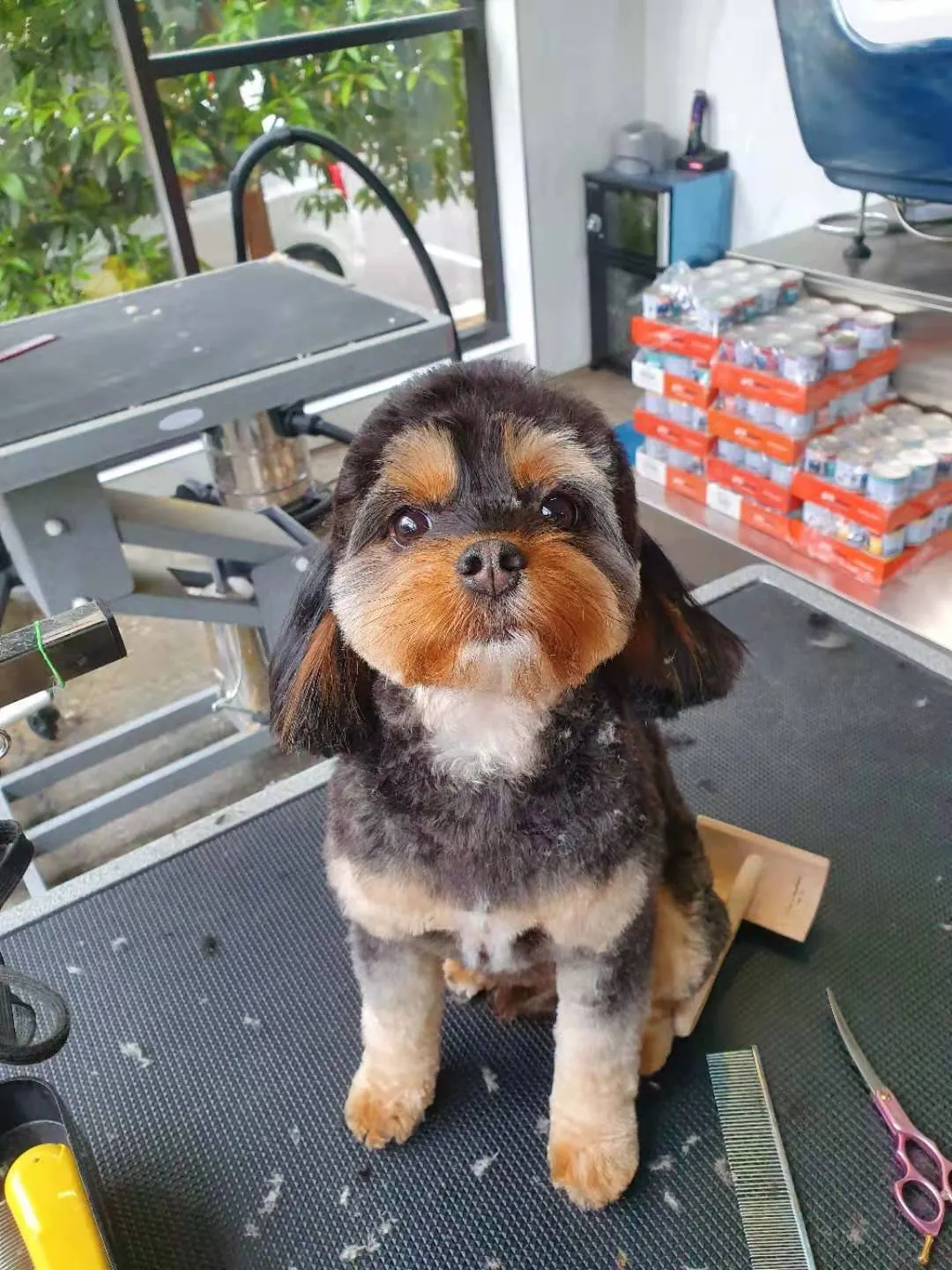 Photo: Qpet Rosebery, Rosebery NSW — via Groomably
The hybrid: what you are actually buying most of the time
Almost every “scissor cut” sold in an Australian salon is really a hybrid, and this is the single most useful thing to understand about the pricing.
The groomer clips the body to length — fast, even, efficient — and then hand-scissors the parts that define the look: the head, the face, the ears, the legs, the feet and the tail. The teddy bear cut, the most requested groom in the country at 38.6% of tagged photos, is exactly this. The round face that makes it a teddy bear cut is scissored. The body underneath is clipped.
This is why the teddy bear cut costs more than a puppy cut of the same length. The body work is identical; the head is not.
So when a salon offers you a cheaper option and a dearer one, the question that actually resolves it is not “clipper or scissor” — it is:
“Which parts are being scissored, and which are being clipped?”
A full head-and-legs scissor finish on a clipped body is worth paying for if you want the look. A full-body hand-scissor on a pet dog in a short practical cut usually is not.
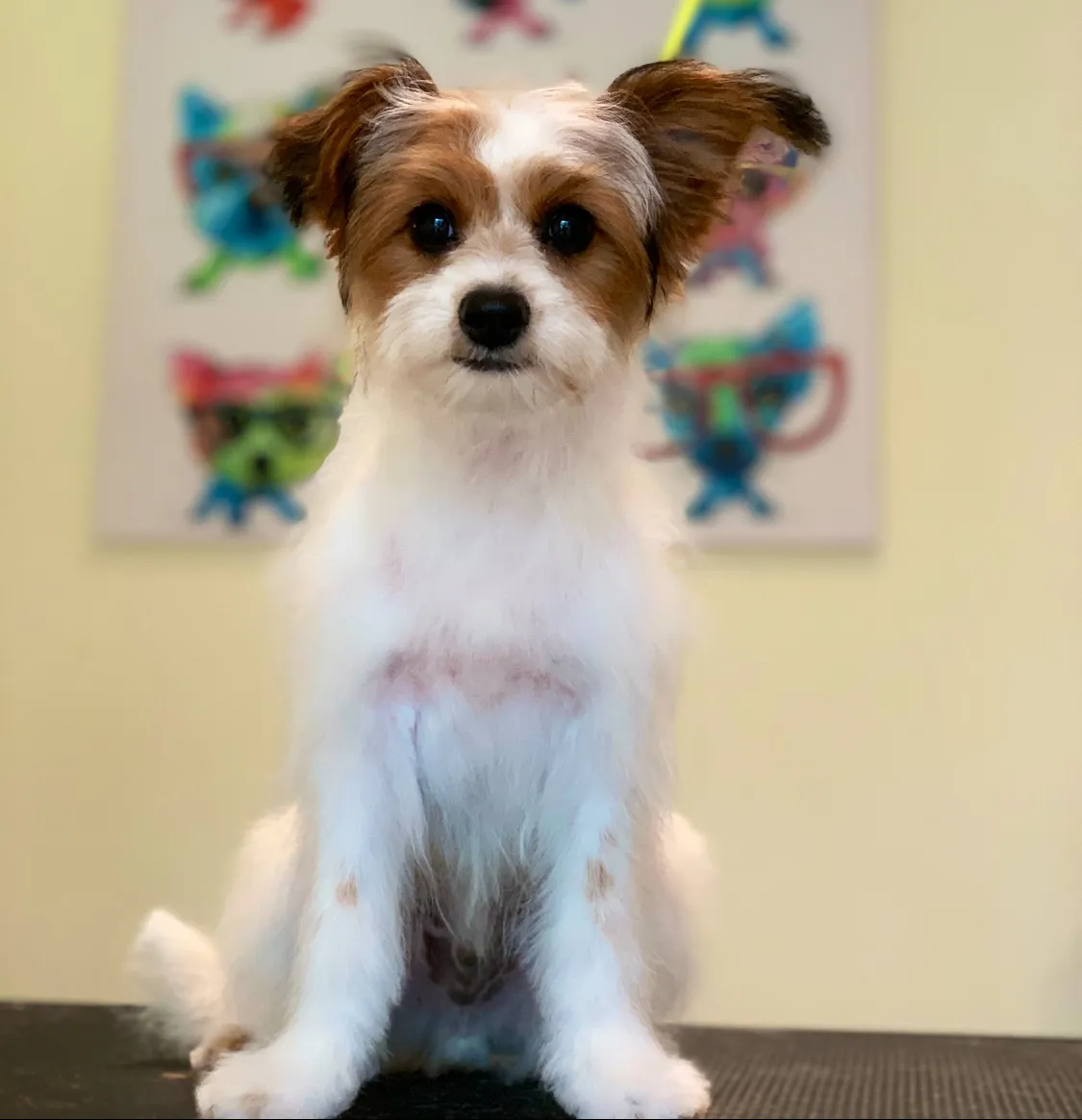 Westies are traditionally hand-finished for the same coat reasons as schnauzers. Photo: Barkers Grooming & Dog Washing, West Pymble NSW — via Groomably
What scissoring needs from you
A scissored finish has a prerequisite most owners are not told about: the coat has to arrive in good condition.
Scissors cut what is in front of them. If the coat is matted, uneven or compacted, there is no clean outline to shape and the groomer cannot produce one — they will clip it instead, and they should. Paying a scissoring premium on a matted dog buys nothing.
It also needs a dog that can stand. Scissoring around the face, the feet and the sanitary areas with sharp shears requires stillness, and a dog that will not settle is a genuine safety problem. Good salons will decline to scissor a wriggling dog and that is the right call.
And it needs realistic expectations about how long it lasts. A scissored outline on a fine or wavy coat looks its best for about two weeks and then softens. On a dense coat it holds for six. If you want the shape maintained, the interval is every 4–6 weeks, not eight.
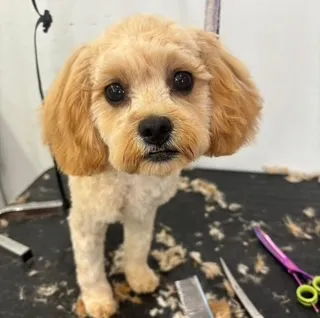 Both tools, one appointment — the hybrid groom is the Australian standard. Photo: Paradise Dog Grooming, Paradise Point QLD — via Groomably
Which should you ask for?
Ask for a clipper cut if you want a short, low-maintenance, even coat; if your dog is young, anxious or elderly; if the coat mats between appointments; or if you stretch beyond eight weeks between grooms. This covers most pet dogs, and there is nothing second-rate about it.
Ask for a scissor finish on the head and legs if you want the fluffy shaped look — the teddy bear face, the leggy outline — and you can commit to a 4–6 week cycle and weekly combing.
Ask for a full hand-scissor if you have a dense-coated dog whose breed outline matters to you, you are prepared to pay for an hour or more of skilled labour, and your dog stands well. This is a small minority of pet appointments and our data shows it: 4.7% of tagged photos.
Whatever you choose, say it in millimetres and body parts rather than style names — “20mm clipped body, scissored round face, scissor the legs” travels between salons in a way that “the usual teddy bear” does not. Our dog grooming cost guide covers how salons build the price from there.
Frequently asked questions
What is the difference between a scissor cut and a clipper cut? A clipper cut takes the coat to one fixed length set by a guard; a scissor cut is shaped by hand with shears, with the length varied deliberately across the dog. Scissoring takes far longer, which is the entire reason it costs more.
Why does a scissor cut cost more? Labour. A clipper pass over a small dog takes minutes; hand-scissoring the same dog takes close to an hour of skilled, close-quarters work on a moving animal. You are paying for time, not products.
Is a scissor cut better for my dog? Not inherently. It produces a softer, more shaped look on a dense coat, but a clipper cut is the better choice for matted coats, anxious or elderly dogs, short practical lengths, and fine coats that will not hold a shape. Only 4.7% of tagged photos in our library are scissor cuts.
Can you scissor a matted dog? No. Scissors cannot safely cut through a mat, and dematting enough to scissor cleanly causes brush burn and distress. A matted dog gets clipped underneath the mats — the humane option, and the reason a scissoring premium is wasted on a coat in poor condition.
Is a teddy bear cut a scissor cut? It is a hybrid, which is what most Australian salons actually sell. The body is clipped to length and the head, face, ears and legs are hand-scissored. The scissored round face is precisely what makes it a teddy bear cut rather than a puppy cut.
How often does a scissor cut need redoing? Every 4–6 weeks to keep the outline. A scissored shape on a fine or wavy coat softens after about two weeks; on a dense coat it holds closer to six. Stretching to eight weeks means paying for a shape you only see for half the cycle.
Find a groomer who scissors
Browse Australian salons offering scissor cut work, see hand-stripping for wire-coated terriers, or look at schnauzer and poodle galleries — the two breeds where hand-finishing is most common. Search the full directory by suburb. Every photo above is a real Australian dog at a real salon, credited to the business that groomed it.


