
Only 63 of the 1,728 Australian salons in Groomably’s directory offer a lion cut — 3.6%. Seventeen of those 63 are cat-only specialists, even though cat-only salons make up just 19 businesses, barely 1% of the directory. Put those two numbers together and you get the single most useful fact about this haircut: the lion cut is overwhelmingly a cat service, and it is overwhelmingly done by people who only groom cats.
There is a second number worth knowing. Of 18,376 classified photos in our library, exactly two are tagged as a lion cut, and neither of them is a cat. Nobody photographs this haircut for marketing. It is not an aesthetic that salons compete on — it is a solution to a problem, done quietly, usually on a cat who has already stopped coping with its own coat.
This guide is about that problem and that solution: what a lion cut actually removes, when it genuinely helps, when it’s the wrong answer, what it costs in Australia, and how to find someone who can do it safely.
What a lion cut actually is
A lion cut clips the cat’s body coat down close — most often with a #10 blade, leaving roughly 2 mm — while deliberately leaving four things long:
- The mane. The head, cheeks, throat and a collar of coat around the shoulders stay full. This is what makes it read as a lion rather than a shave.
- The boots. The lower legs are left, usually from the elbow and hock down, so the cat keeps fur on the parts it lands on and grips with.
- The tail plume. Most of the tail is clipped, with a pom of long coat left at the tip. Some groomers leave the whole tail; some leave nothing. It is a style choice, not a health one.
- The belly line. Good groomers keep the blade off the thin skin of the belly and inner thighs, or drop to a longer guard there.
Everything else comes off. That’s it. There is no scissoring, no shaping and no finish work in the way a poodle trim has them — a lion cut is a clipper job, and its difficulty has nothing to do with artistry. It is difficult because it is done on a cat.
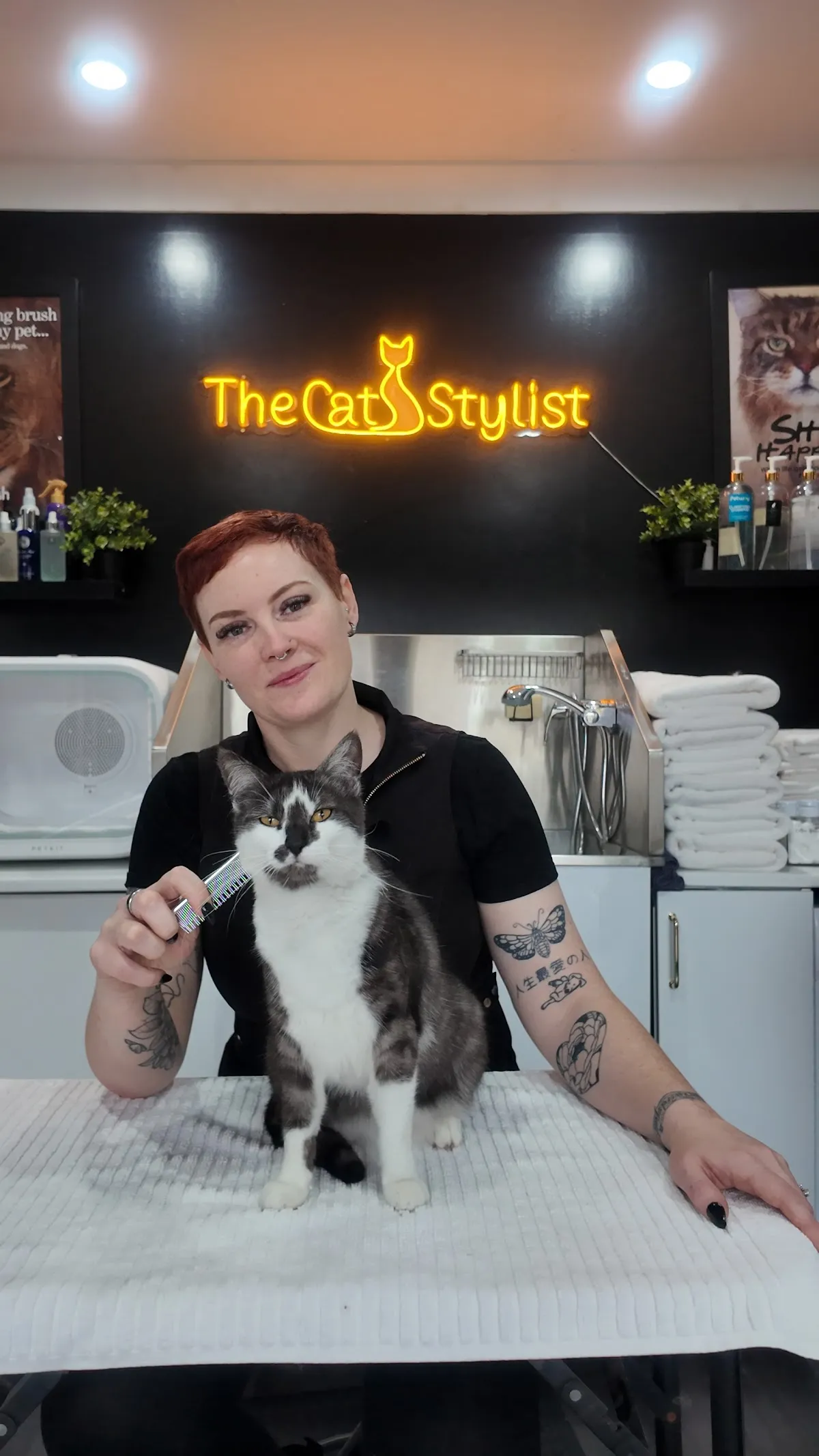 Photo: The Cat Stylist, Kanwal NSW — via Groomably
Why so few salons offer it
Three reasons, and they compound.
Cats don’t tolerate clippers the way dogs do. A dog that dislikes grooming leans away. A cat that dislikes grooming becomes genuinely dangerous to itself and to the groomer — cat bites are a puncture-wound infection risk serious enough that many groomers simply decline the work. The 3.6% figure is not a gap in the market. It is an honest self-assessment by 96% of Australian salons.
The skin is the hazard. Cat skin is roughly as thick as tissue paper and it moves. Under a matted coat it tents, folds and sits in ridges that a clipper blade will open before anyone sees it happening. This is the single reason a lion cut is a professional job and not a home job, no matter how good your clippers are.
Restraint has to be a skill, not a struggle. The salons that do this well have a repertoire — scruffing technique, air-muzzles, tables set up so the cat can’t reverse off them, and the judgement to stop. That’s what the cat-only salons are actually selling. Our directory shows them clustered in Victoria (5), Queensland (5) and Western Australia (5), with two each in New South Wales and the ACT — which means for most Australians this is a drive, not a walk.
When a lion cut is genuinely the right call
Matting that has passed the point of brushing out. This is the main one, and it is not a close call. Once a mat has tightened against the skin it is pulling on live nerve endings every time the cat moves. Dematting tools work by tearing, and on a coat that is already pelted they hurt more than the clipper does. Clipping under the mat is the kinder option and every good cat groomer will tell you the same thing.
Long-haired cats who have stopped grooming themselves. Cats groom with their tongue and their flexibility. Arthritis, obesity, dental pain and simple old age all take that away, and the first place it shows is the coat over the hips and the base of the tail — exactly where they can no longer reach. A lion cut buys those cats months of comfort.
Persians, Himalayans, Maine Coons and Ragdolls. Coats bred to be longer and denser than a cat can realistically maintain. Owners of these breeds often end up on a standing appointment two or three times a year, not because the cat is neglected but because the coat is more than any cat can service alone.
Heavy shedders in a house that can’t cope. A legitimate reason, and a common one. Just know that clipping doesn’t reduce shedding — it shortens what sheds.
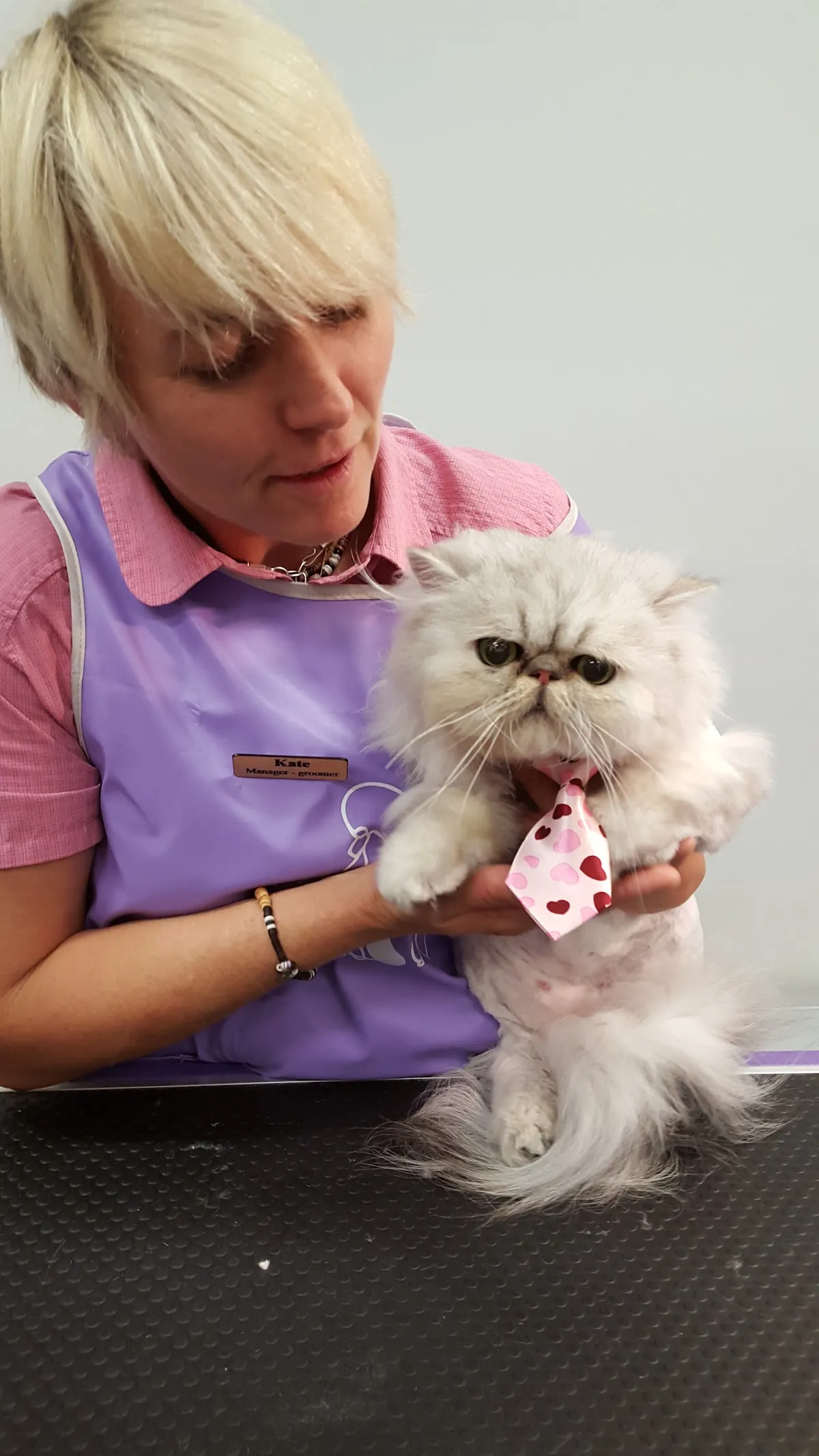 Photo: Kitten-Caboodle cat grooming salon, Florey ACT — via Groomably
When it isn’t
“For summer,” on a healthy short-haired cat. A cat’s coat is insulation in both directions and it shades skin that has no melanin protection of its own. A shaved white or pale cat can genuinely sunburn on a windowsill. If your cat is short-haired and mat-free, the honest answer is that it does not need this haircut.
As a fix for shedding on a cat you could brush instead. Ten minutes twice a week with a proper undercoat comb removes more loose coat than a clip does, and it does not reset your cat’s coat for six months.
On a cat with skin conditions, without vet input first. Clipping removes the barrier over inflamed, ulcerated or infected skin. Have the skin looked at before the coat comes off, not after.
As a one-off. The thing nobody mentions: the coat that grows back after a close clip often grows back differently. On Persians and other dense-coated breeds it can come in patchy, softer, and more matting-prone than what it replaced. A lion cut is frequently the start of a routine rather than a single event, and that is worth deciding on deliberately.
What it costs in Australia
Expect $90–$180 for a lion cut at a cat-capable salon, with most sitting around $120–$150. Mobile and in-home cat groomers usually sit at the upper end because you are also paying for the travel and for a familiar environment that makes the cat easier to handle.
The spread is wide for real reasons:
- Severity of matting. A pelted coat takes two to three times as long as a maintenance clip, and some salons price dematting separately at $20–$40 per additional 15 minutes.
- Temperament. Cats that need two people, or that need the appointment broken into stages, cost more. Some salons will charge a handling fee; better ones will tell you about it before you book.
- Sedation. A minority of cats genuinely cannot be clipped conscious. That becomes a veterinary appointment, not a grooming one, and the cost moves to $250–$450 including the sedation and monitoring. A groomer who refers you to a vet for this is doing their job properly.
For comparison, our dog grooming cost guide puts a standard full groom on a small dog at $50–$110. Cat work costs more per appointment because it takes more people, more time and more risk for less coat.
What actually happens at the appointment
A well-run cat lion cut is short by design — most salons aim to have the cat off the table inside 45 minutes, because time on the table is the thing that turns a manageable cat into an unmanageable one.
- Assessment, before anything is switched on. The groomer runs their hands through the coat to find the mats and any lumps, scabs or old wounds hiding under them. This is also where they decide whether the appointment should happen at all.
- Nail trim first. Always first — it protects everyone for the rest of the appointment. It also explains a first-party oddity in our data: of the 708 cat photos in our library, 106 carry a service tag, and 67 of those (63%) are nail trims. Nails are what Australian cat grooming mostly is.
- The body clip. Usually dry, usually a #10, working with the lie of the coat over the ribs and along the spine, then very carefully around the belly, armpits and back legs.
- Mane, boots and tail shaped by eye. Blended by clipper rather than scissored.
- Bath and dry, if the cat is still coping. Many aren’t, and a good groomer will skip it rather than push. A clipped cat is far easier to bathe than an unclipped one, so if it happens it happens here.
- Ears, and a check of the skin now that it’s visible. Mats hide a lot. This is often where owners find out about a flea burden or a hot spot.
You can see the range of what Australian cat salons offer on our cat grooming services page, and the individual services that usually go with a lion cut — nail trimming and de-shedding treatments — each have their own guide.
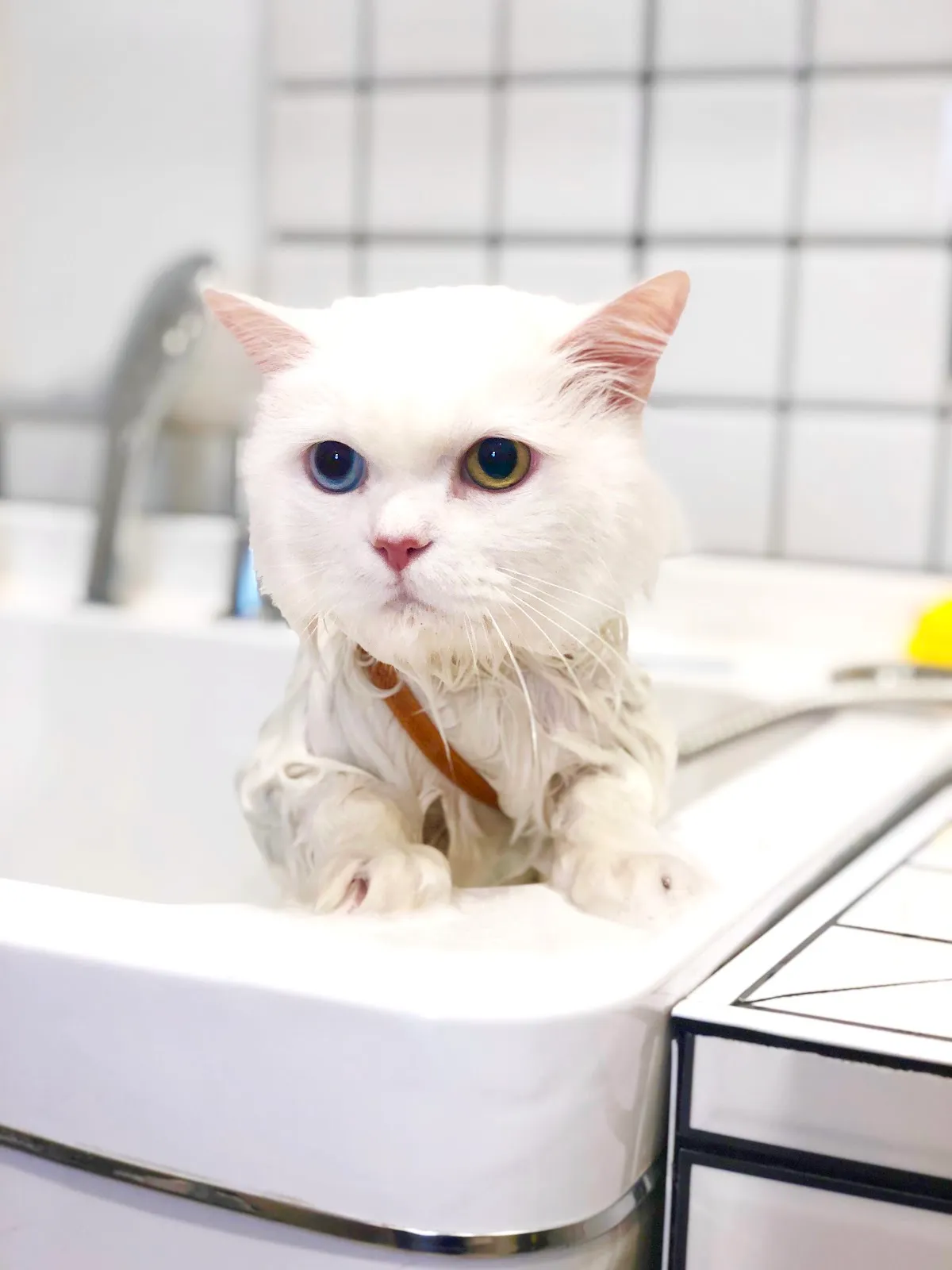 Photo: Baby Pet Studio, Waterloo NSW — via Groomably
How to find someone who will actually do it
Search terms matter here. “Cat groomer” finds you far more useful results than “pet groomer”, because the businesses that are good at this tend to say so in their name — our directory’s 19 cat-only salons include names like Purrf Cat Grooming in Stirling WA, Fantastic Felines Cat Grooming in Dandenong North VIC, Cat Grooming Purrfection in Bli Bli QLD and You had me at Meow in Bald Hills QLD.
Three questions worth asking when you call:
- “How many cats do you do in a week?” You want a number, not a yes. A salon doing five or ten cats a week has a system. A salon doing one a month is learning on your cat.
- “What do you do if she won’t have it?” The right answer is some version of we stop. Any answer that involves pushing through is the wrong salon.
- “Do you clip dry or bathe first?” Either is fine — you’re listening for someone with an opinion, which tells you they do this often enough to have formed one.
Browse cat grooming across Australia or start with everything we hold on cats to find someone near you, then send them an enquiry with a photo of the coat. Most cat groomers would much rather see the mats before you arrive.
The short version
A lion cut is a clipper-only haircut that takes the body coat to about 2 mm and leaves the mane, lower legs and tail tip. It is the humane answer to a matted or unmaintainable long coat, and a bad answer to a mild shedding problem on a healthy cat. In Australia it costs $90–$180, only 3.6% of salons offer it, and the ones who do it best are usually the ones who only groom cats.
If your cat’s coat has reached the point where a brush stops halfway through, don’t wait for the next one to be worse. That’s the appointment to book.


