
There is a gap between the westie haircut you see in breed books and the westie haircut most salons actually cut, and nobody says so out loud. The traditional West Highland White Terrier trim — harsh white jacket, skirt left long, that famous round chrysanthemum head — is produced by hand-stripping, pulling dead coat out by the root rather than cutting it. Almost nobody does that on a pet westie any more.
We can show you the gap with numbers. Groomably’s classified library holds 351 westie photos from Australian salons. Of the 103 that carry a style tag, only 6 are a breed-pattern trim — while 21 are a teddy bear cut and 20 a standard full groom. Three and a half times as many Australian westies are photographed in a soft round teddy bear cut as in the trim the breed standard describes.
That is not a scandal. It is a reasonable trade-off that thousands of owners have made, mostly without being told they were making it. This guide explains what each option does to the coat, so you can make it deliberately.
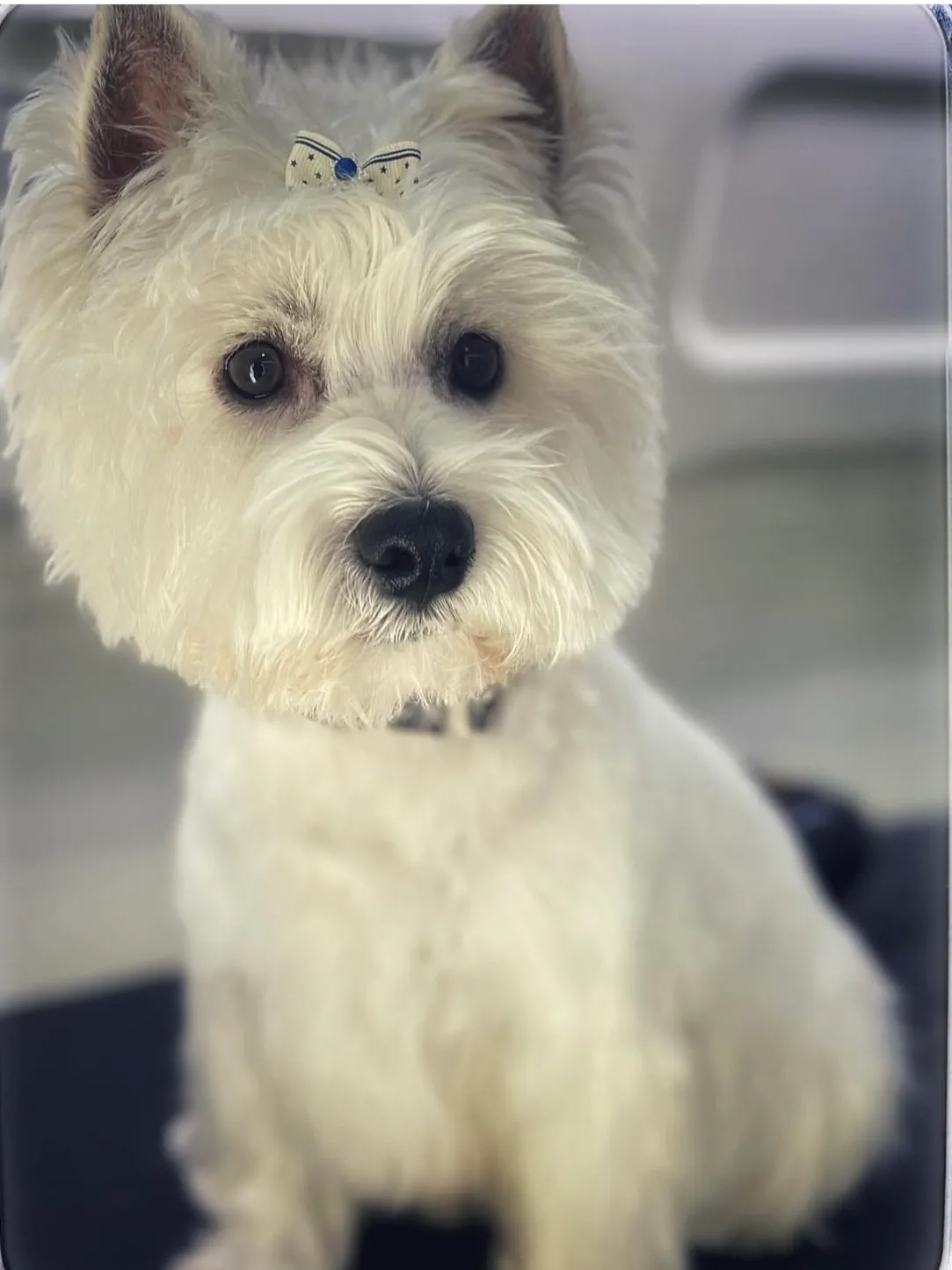 Breed-pattern trim: short jacket, longer skirt, rounded head. Photo: Groomed by Karyn, North Narrabeen NSW — via Groomably
Why the westie coat is different
A westie has a double coat, but not the kind a husky has. The outer coat is harsh — wiry, straight, about two inches long, and weather-resistant. Underneath is a short, soft, dense undercoat. The harshness is functional: it sheds dirt, resists water, and is the reason a westie can come in from mud and be white again by evening.
Here is the crucial fact. Harsh coat is produced by the follicle only when the old hair is pulled out and a new one grows in its place. If you cut the coat with clippers instead, the follicle isn’t triggered to replace it, the blade shears through the soft undercoat, and what grows back is progressively softer, woollier and more inclined to hold dirt. After a few clipped grooms most westies develop a coat that is fluffy rather than crisp, often slightly yellowed at the tips, and noticeably harder to keep white.
This is reversible, slowly, but it takes months of stripping to bring a harsh coat back once it’s gone soft. So the choice between stripping and clipping is not just about this haircut — it’s about what the coat will be like in two years.
The three westie haircuts
| Cut | How it’s done | Coat outcome | Interval |
|---|---|---|---|
| Traditional / breed trim | Hand-stripped jacket, scissored skirt and head | Stays harsh, white, weather-resistant | Rolling, every 6–8 weeks |
| Clipped puppy cut | Clippers on the body, scissors on legs and head | Softens over time, holds dirt more | 8–10 weeks |
| Teddy bear cut | Clipped or scissored even length, round face | Softest; breed outline gone | 6–8 weeks |
1. The traditional trim
The one from the breed books. The jacket over the back and sides is stripped short and left harsh, the skirt along the belly and the leg furnishings are left longer and tidied with shears, the tail is shaped into a carrot, and the head is scissored into a full round chrysanthemum with the ears standing clear of it.
Done properly, a westie in this trim is a genuinely striking little dog and needs surprisingly little washing, because harsh coat sheds dirt on its own. The catch is finding someone to do it. Hand-stripping is slow, physical, skilled work — and of the 1,728 salons in our directory with a full service list, only 83 offer it. That’s under five per cent. Our hand stripping guide explains what the appointment involves and why it’s priced the way it is.
Most stripping is done on a rolling schedule: rather than taking the whole jacket off at once, the groomer removes the longest, deadest hairs every few weeks so the coat sits in several stages of growth at any time and always looks tidy. That’s why stripped westies rarely look “just done” — the whole point is that they never look undone.
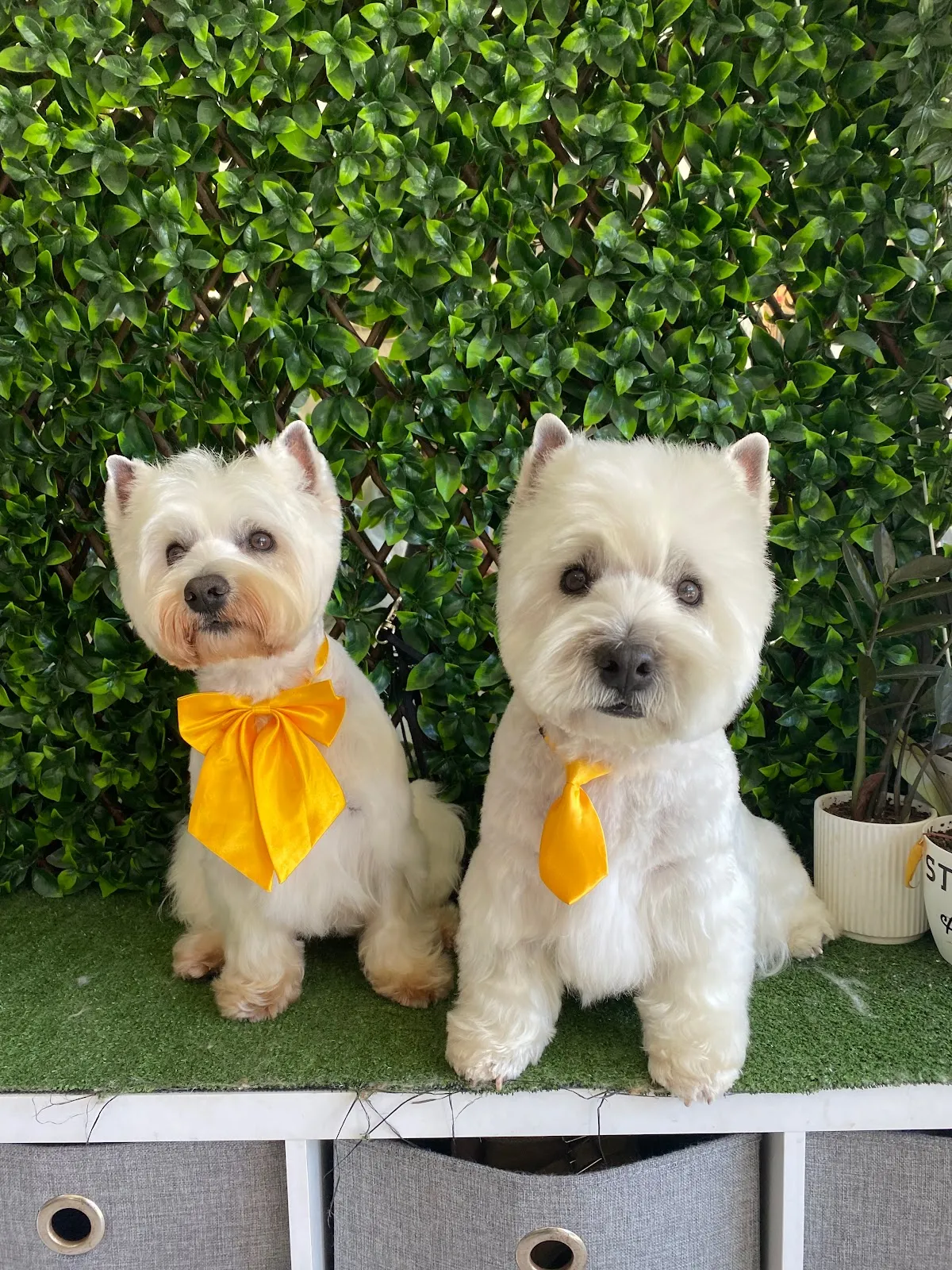 Photo: Simply Bliss Dog Grooming, Brendale QLD — via Groomably
2. The clipped puppy cut
The pragmatic compromise, and probably what your local salon means when you ask for “the normal westie cut”. The body is clipped short with a guard, the legs and skirt are scissored to a tidy length, and the head is still shaped round — so from three metres away it reads as a westie, and it takes an hour instead of three.
What you give up is the coat texture, gradually. What you get is a groom that costs about half as much, is available at nearly every salon, and doesn’t require your dog to stand still for a long stripping session — which matters for older dogs and for terriers with limited patience.
If you go this way, one thing genuinely helps: ask the groomer to card the coat. Carding uses a fine stripping-style tool to pull out dead undercoat without cutting the topcoat, and it keeps a clipped westie considerably crisper than clipping alone. It adds ten minutes and most groomers will do it if asked.
3. The teddy bear cut
The most photographed westie style in our library, and the furthest from the breed standard. One even length over the body, legs scissored into columns, and the face rounded into a soft circle rather than the flat-fronted chrysanthemum. The ears usually get blended in rather than left standing.
It’s undeniably cute and it’s very easy to live with. It also removes essentially every visual cue that says “West Highland White Terrier” — the hard head shape, the harsh jacket, the outline. Our full teddy bear cut guide covers the lengths and the face in detail; on a westie the only extra consideration is the coat-softening point above, which applies here more than anywhere.
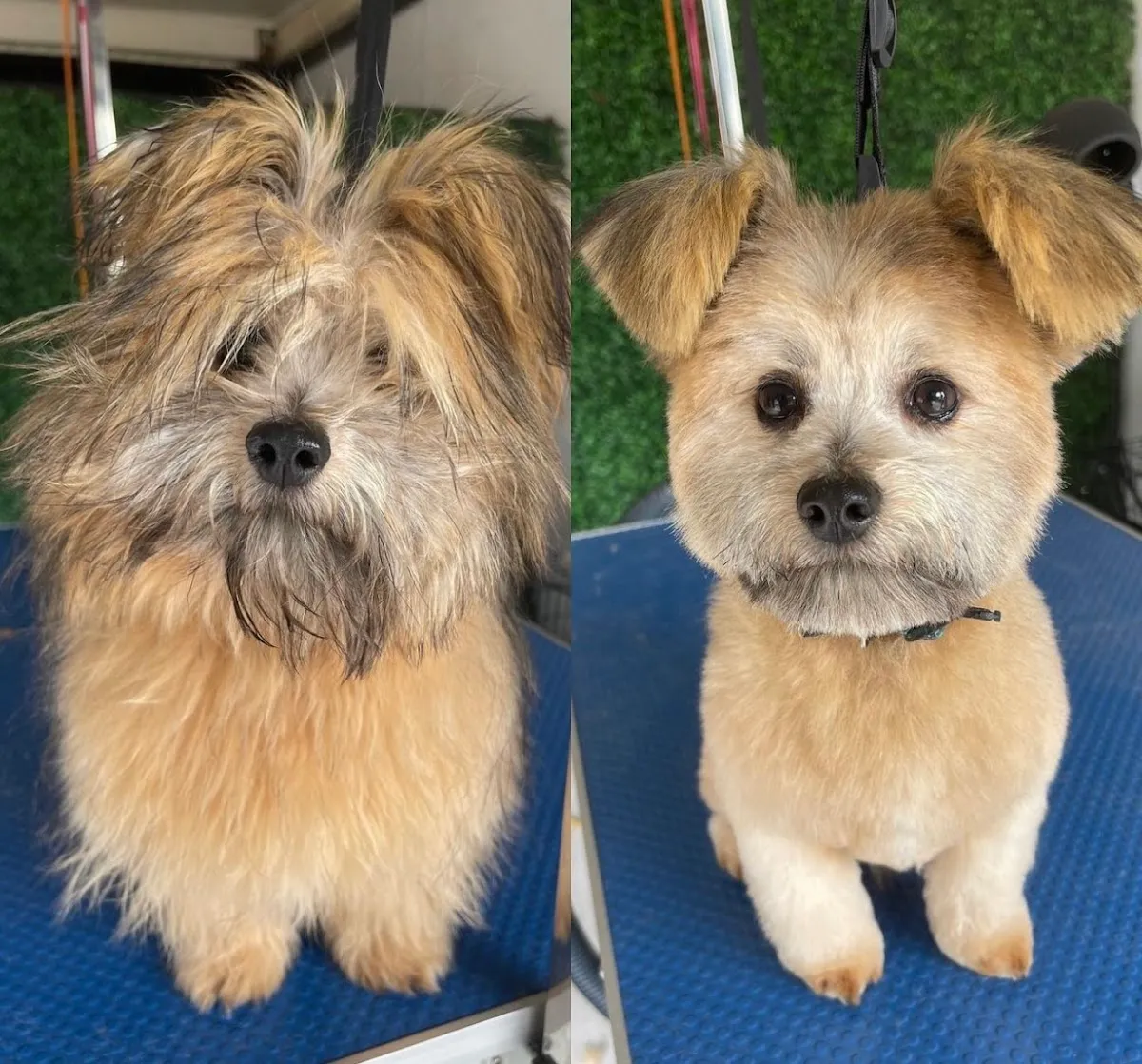 Before and after, teddy bear cut. Photo: The Fur Beauty, Mooloolaba QLD — via Groomably
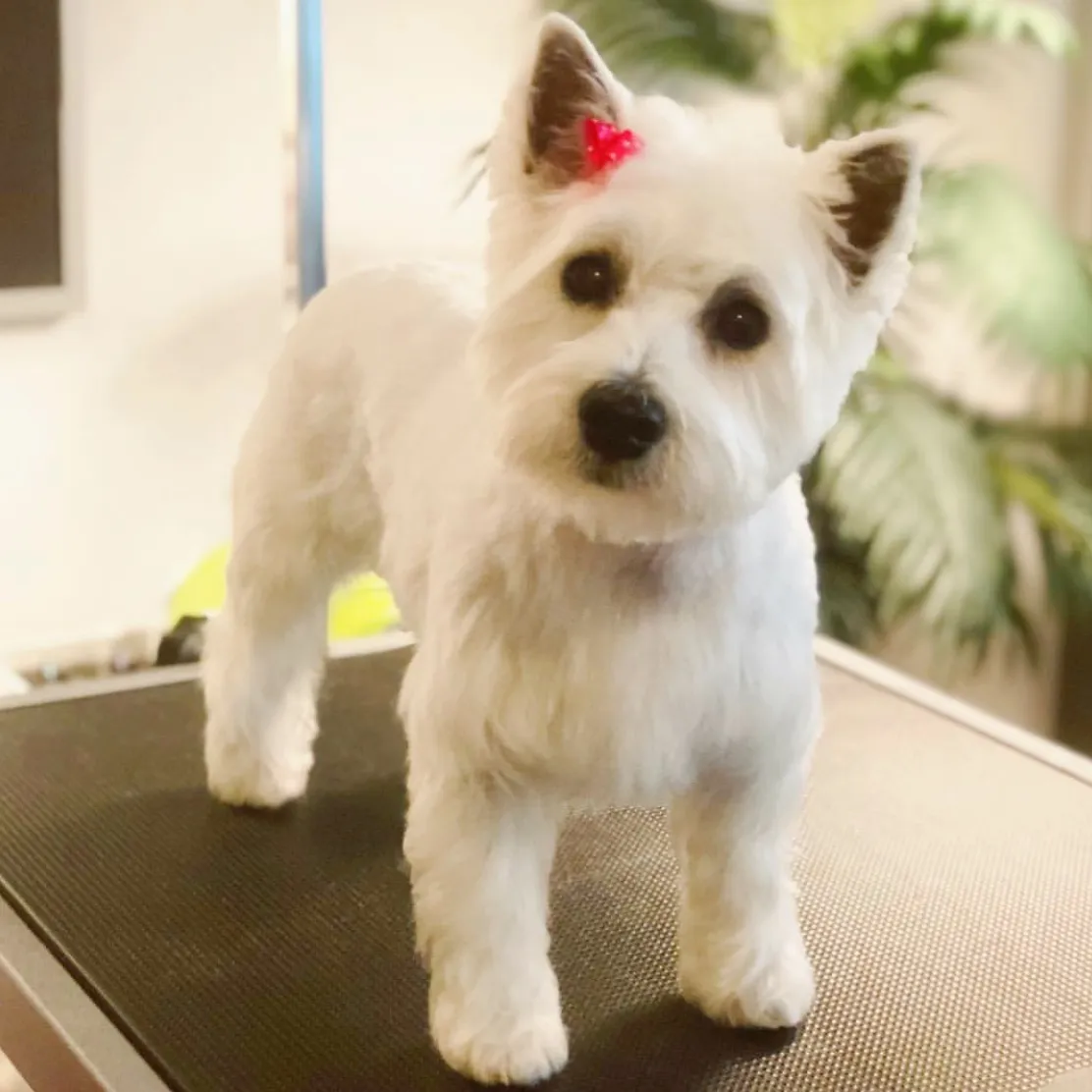 Photo: Flawless Paws Pet Grooming, Potts Point NSW — via Groomably
The head is the whole look
Whichever body cut you choose, the head is what people recognise. The traditional westie head is a chrysanthemum: the hair on the skull, cheeks and muzzle scissored outward into a full circle, flat across the front, with the ears trimmed short and left standing clear above it so the dog looks alert rather than fluffy.
Three things separate a good westie head from a mediocre one:
- The ears are taken short, right down on the leather, front and back. Long ear hair collapses the outline instantly.
- The face is flat-fronted, not domed. Seen head-on it should read as a disc, not a ball — that flat front is what distinguishes it from a teddy bear face.
- The eyes are cleared just enough to be visible. Westies have dark eyes that are meant to show against white coat; buried under fringe, the expression disappears.
If you want the classic look but a low-maintenance body, ask for exactly that: a short clipped body with a properly scissored westie head. Plenty of groomers will happily do it and it’s the best of both.
Keeping a white dog white
The other half of westie grooming has nothing to do with the cut.
Tear staining and beard staining are the usual complaints. Wipe the face daily with a damp cloth and dry it — the staining comes from moisture sitting on white hair, so the drying is the part that matters. Feeding from a shallow steel or ceramic bowl rather than a plastic one helps with beard staining.
Feet and legs pick up colour from grass and dirt. Rinse and dry the legs after wet-weather walks rather than letting them dry muddy.
Whitening shampoos are fine occasionally and are not a substitute for the above. A harsh, correctly stripped coat stays white far more easily than a soft clipped one, which is one more entry in the stripping column.
Skin. Westies are a breed with a real predisposition to itchy skin and allergies, and grooming intersects with it: over-bathing strips the coat’s oils, harsh shampoos irritate, and a dog that is scratching will damage its own coat faster than any clipper. If your westie is chewing its feet, scratching persistently or has red skin under the coat, that is a vet conversation, not a grooming one. Bathe every four to six weeks unless a vet advises otherwise — not weekly.
What it costs and how often
A clipped westie groom in Australia sits in the ordinary small-dog band, commonly $70–100, in line with the $50–110 typical range for a full groom. Hand-stripping costs substantially more — it is two to three hours of skilled manual work rather than one hour with clippers, and pricing usually reflects that with a premium of $40 or more over the salon’s standard groom, sometimes considerably more for a first full strip on a neglected coat.
Intervals: rolling stripping every six to eight weeks, clipped grooms every eight to ten, teddy bear cuts six to eight because the round shape drifts faster than a pattern trim does. In between, brush twice a week with a slicker and follow with a comb — the leg furnishings and the skirt are where a westie mats, and they mat quietly under the fringe where you won’t see it.
Frequently asked questions
Should you clip a westie or hand-strip it? Hand-stripping keeps the coat harsh, white and weather-resistant and is what the breed’s coat is designed for. Clipping is faster, cheaper and far more widely available, but softens the coat over successive grooms. If texture and easy whiteness matter to you, find a stripper — only about 83 of the 1,728 salons in our directory offer it. If convenience matters more, clip, and ask for carding to keep some crispness.
Does clipping a westie ruin its coat? “Ruin” is too strong, but it does change it. Clipping cuts through the harsh topcoat instead of removing dead hair at the root, so what regrows is progressively softer and woollier. It’s reversible with months of patient stripping. It is not damaging to the dog’s health — just to the texture.
How often should a westie be groomed? Professionally every six to ten weeks depending on the cut, and brushed twice a week at home with a slicker followed by a comb. Bathe every four to six weeks — westies are prone to itchy skin and over-bathing makes it worse.
Can a westie have a teddy bear cut? Yes, and it’s the most common cut in our photo library — 21 of 103 style-tagged westie photos. It looks lovely and is easy to live with. It removes the breed outline and softens the coat over time, so choose it knowingly.
What is a westie’s traditional head shape called? The chrysanthemum. The hair on the skull, cheeks and muzzle is scissored outward into a full, flat-fronted circle, with the ears trimmed short and standing clear above it.
Why is my westie turning yellow? Usually a combination of a softened, clipped coat holding dirt, moisture sitting on the face and feet, and staining from bowls or grass. Daily face-wiping and drying, a non-plastic bowl, and rinsing the legs after wet walks do more than any whitening shampoo.
Browse real finished work from Australian salons in the gallery, or read what a stripping appointment actually involves on the hand stripping page.


