
The most popular bichon frise haircut is the teddy bear cut, by the widest margin of any breed we track. Of the 81 style-tagged bichon frise photos on Groomably, 68 of them, or 84%, are teddy bear cuts. That’s the highest share of any breed on the site. No other dog commits to a single style the way the bichon does, and there’s a good reason for it: the bichon’s powder-puff double coat is practically engineered for round shapes. The other cuts worth knowing are the full bichon trim (the show look), the puppy cut, the lamb cut and the summer cut, but for most pet bichons the real decision is how round, and how long, you want the teddy bear to be.
For the record, the second most-tagged style is the full groom, on 23 photos, or 28% (many photos carry both tags, since a teddy bear cut usually arrives as part of a full groom). Everything else is a rounding error.
The powder-puff coat, and why round shapes work
The bichon frise has a curly double coat: a soft, dense undercoat with a coarser, curly outer coat over the top. When it’s washed, blow-dried straight and scissored, that combination stands up and away from the body rather than lying flat. It holds a shape the way topiary holds a shape. This is why bichons are the round-headed breed. A scissored sphere on a groodle slowly collapses as the coat relaxes; on a bichon it stays put until the next groom.
The same density is the catch. When the undercoat packs down, a bichon matts fast, and it matts close to the skin where you can’t see it. A coat can look fine on the surface while it’s quietly felting underneath. The breed also needs grooming more often than most to actually hold that plush, rounded look — the shape grows out and loses definition quicker than a plain clip does. Our guide on how often you should groom your dog covers the general rules, but bichons sit at the high-frequency end of every one of them.
Two more realities of owning a white, curly dog. Tear staining — the reddish-brown streaks under the eyes — shows up vividly on a white coat; groomers manage it by keeping the eye area trimmed and clean, but it’s ongoing, not a one-visit fix. And white shows everything, so regular bathing isn’t vanity with this breed, it’s maintenance.
If you want to see what the coat can do, the bichon frise breed page collects real photos from salons around the country.
1. The teddy bear cut
The headliner, and on this breed, close to the default. The body is clipped or scissored to an even, plush length, and the head is scissored into a soft round shape with the ears blended in, so the whole dog reads as a soft toy. Because the bichon’s coat stands off the body, the finish looks fuller and rounder than the same cut does on any other breed. That’s the coat doing the work.
Here’s the useful distinction: the teddy bear cut is a relaxed, pet-friendly version of the traditional bichon trim. The show trim sculpts the head into a near-perfect sphere with the ears hidden inside the shape, and keeps serious length everywhere. The teddy bear keeps the roundness but shortens everything and lets the ears read as ears. Round, but livable.
What to ask the groomer: “A teddy bear cut, rounded head, ears blended in, body short enough to manage.” Agree on a body length with your groomer and bring a photo of the head shape you like — rounder and more sculpted, or softer and more natural. We’ve got a whole guide to the teddy bear cut if you want the full brief.
Maintenance: Brushing three to four times a week with a slicker and a comb, down to the skin, especially behind the ears, in the armpits and under the collar. Regular grooms to hold the shape — the round head loses its lines noticeably as it grows out.
Suits which coat: Every bichon coat. This is the rare style-and-breed pairing with no real caveats, which is presumably why 84% of the style-tagged bichons on the site are wearing it. You can browse them all on the bichon teddy bear cut page.
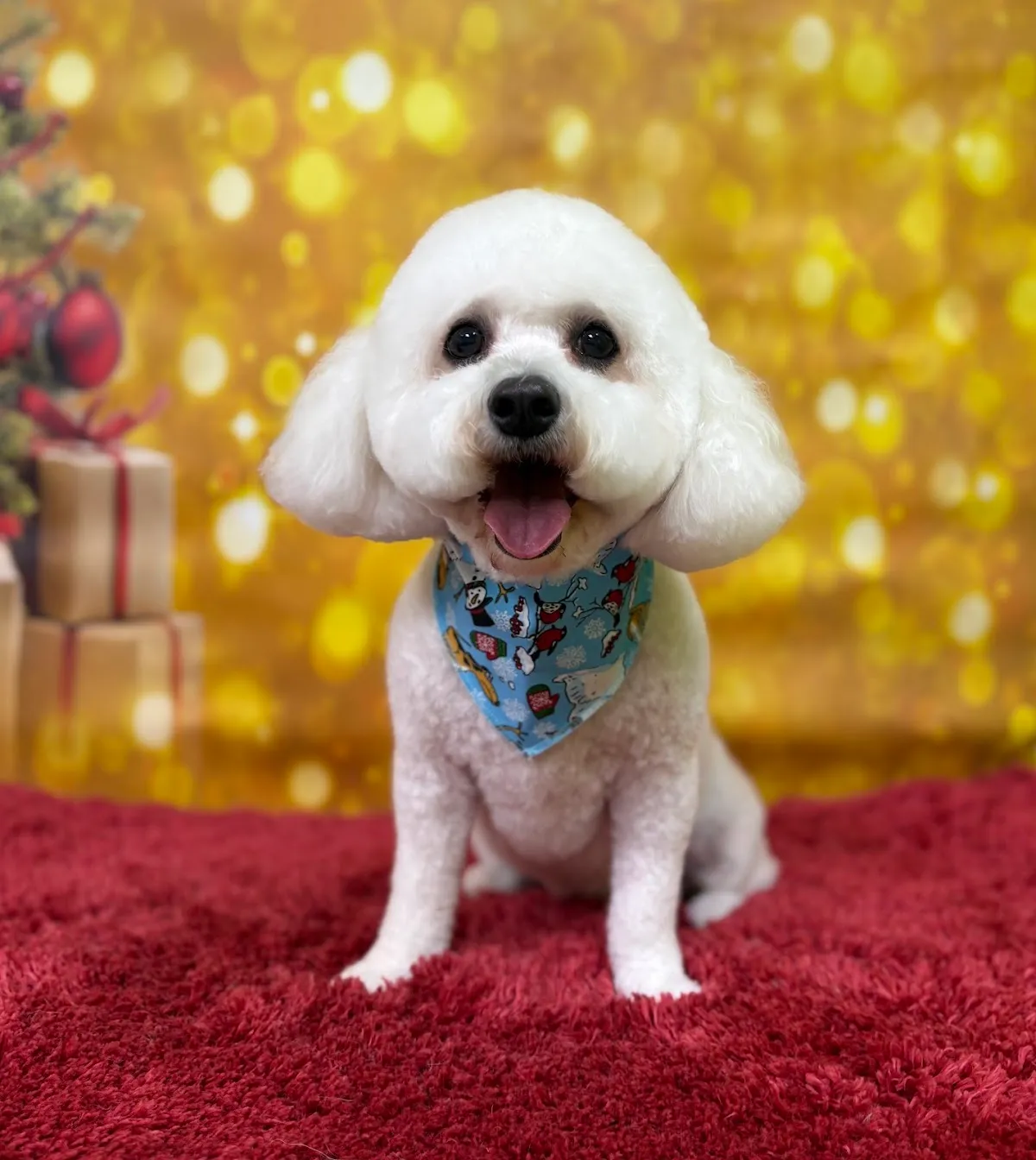 Photo: A & S Dog Grooming, Carseldine QLD — via Groomably
2. The full bichon trim (the show look)
This is the breed-standard cut you see at dog shows: a long, dense coat scissored entirely by hand into that unmistakable silhouette, with the head shaped into a perfect sphere and the ears invisible inside it. No clippers on the body — it’s all scissors and a very good blow-dry, which is why it takes serious time and a groomer who knows the breed.
It’s a beautiful cut and almost nobody should get it. The length matts if you miss a few days of line brushing, and the sculpted shape only survives with frequent professional upkeep.
What to ask the groomer: “A full bichon trim” or “the breed-standard trim.” Ring ahead — not every salon offers full hand-scissoring, and it takes far longer than a standard groom, so expect it to cost accordingly.
Maintenance: Daily brushing, no exceptions, plus frequent baths and grooms. This is a hobby, not a haircut.
Suits which coat: A dense, properly curly double coat in excellent condition. A bichon with a softer or thinner coat won’t hold the sculpted shape.
3. The puppy cut
A short, even length all over, with a lightly rounded face rather than a sculpted one. On a bichon it still looks plush — the coat’s density means even a short clip has that velvety, stuffed-animal texture — but it drops the maintenance dramatically.
What to ask the groomer: “A puppy cut, short and even all over, easy to manage.” If brushing keeps slipping down your to-do list, say so honestly and the groomer will pick a length that buys you more time between matts.
Maintenance: A couple of brushes a week. The kindest option for busy owners, and the coat’s shape bounces back quickly at the next groom.
Suits which coat: All of them. It’s the sensible fallback if a teddy bear cut keeps arriving at the salon matted.
4. The lamb cut
Short body, fuller scissored legs. The bichon’s leg coat fluffs out beautifully, so you get the woolly-legged lamb silhouette with far less coat to look after. A nice compromise if the full teddy bear has proven too much brushing.
What to ask the groomer: “A lamb cut, short on the body, full rounded legs.” A photo helps, because how much contrast you want between body and legs is a matter of taste.
Maintenance: Moderate. The body is easy; the legs still need proper brushing, particularly where they meet the body, or you’ll get matts in the transition.
Suits which coat: Any bichon coat with enough leg density to build the fullness — which is most of them.
5. The summer cut
The shortest practical option: the body clipped right down, with a little length kept on the head and ears so the dog still looks like a bichon rather than a white whippet. Popular heading into an Australian summer, and a genuine relief for a dog carrying a dense double coat through February.
What to ask the groomer: “A summer cut, short body, keep some shape on the head.”
Maintenance: The lowest of the lot. A weekly once-over does it, and the coat dries in minutes after a swim or a bath.
Suits which coat: All coats, and especially matted ones — if the undercoat has packed beyond saving, this is where the groom ends up regardless. One caution: a clipped white dog has very little sun protection, so keep them out of harsh midday sun.
Quick comparison
| Style | Length | Brushing | Upkeep | Best for |
|---|---|---|---|---|
| Teddy bear | Medium, round head | 3–4x/week | Regular grooms to hold shape | Almost every bichon |
| Full bichon trim | Long, sculpted | Daily | Frequent, specialist | Show dogs, devoted owners |
| Puppy cut | Short, even | 2x/week | Relaxed | Busy owners |
| Lamb cut | Short body, full legs | 2–3x/week | Moderate | Fluff lovers, less brushing |
| Summer cut | Very short | Weekly | Minimal | Hot months, matted coats |
An honest word before you book
The teddy bear cut dominates this breed for the best possible reason: it’s what the coat wants to do. But the shape only stays plush if the coat underneath stays brushed, and the most common reason a bichon walks out of a salon with a summer cut instead of a teddy bear is matting that had gone too far to save. If the undercoat has felted to the skin, clipping it off is the only humane option, and no groomer enjoys making that call.
So be honest about your brushing before you pick a length, and be prepared for this breed to need salon visits more often than your neighbour’s staffy — our dog grooming cost guide is worth a read before you budget for it. Then have a scroll through the grooming gallery or the work at salons like Polished Pooches Montrose in Montrose VIC, save a couple of photos of the head shape you’re after, and take them along. With a bichon, the coat will do the rest.


