
The breed standard says a cavalier’s coat should be left long, silky and untrimmed. Owners are voting differently. Of the 336 style-tagged cavalier photos in Groomably’s classified library, 130 — 39% — show a teddy bear cut, against 150 (45%) that are a plain bath-and-dry with the natural coat intact, and just six that show the traditional breed-specific presentation.
That 39% is the highest teddy bear share of any drop-coated, feathered breed we track. The cocker spaniel sits at 14%, the border collie at 8%. Something specific is happening to cavaliers: a silky coat that was never designed to be scissored is being scissored anyway, and often the owner didn’t set out to do it.
This guide covers the three real options — leave it natural, trim it into shape, or go teddy bear — and what each one costs you in brushing.
The cavalier coat, briefly
A cavalier has a single, moderately long, silky coat with pronounced feathering: on the ears, the chest, the backs of the legs, the tail and the feet. There’s no dense undercoat to speak of, which is why cavaliers shed moderately rather than dramatically and why they don’t need the de-shedding treatments a golden or a husky does.
The trade-off is texture. Silky, fine hair with feathering tangles readily — especially behind the ears, where the long ear leather rubs against the neck all day. Cavalier ears are the single most common matting site on the breed, and the reason a lot of owners end up at the teddy bear cut.
Grooming a cavalier is therefore less about haircuts and more about whether you’re going to brush those five feathered areas twice a week. Answer that honestly and the style choice makes itself.
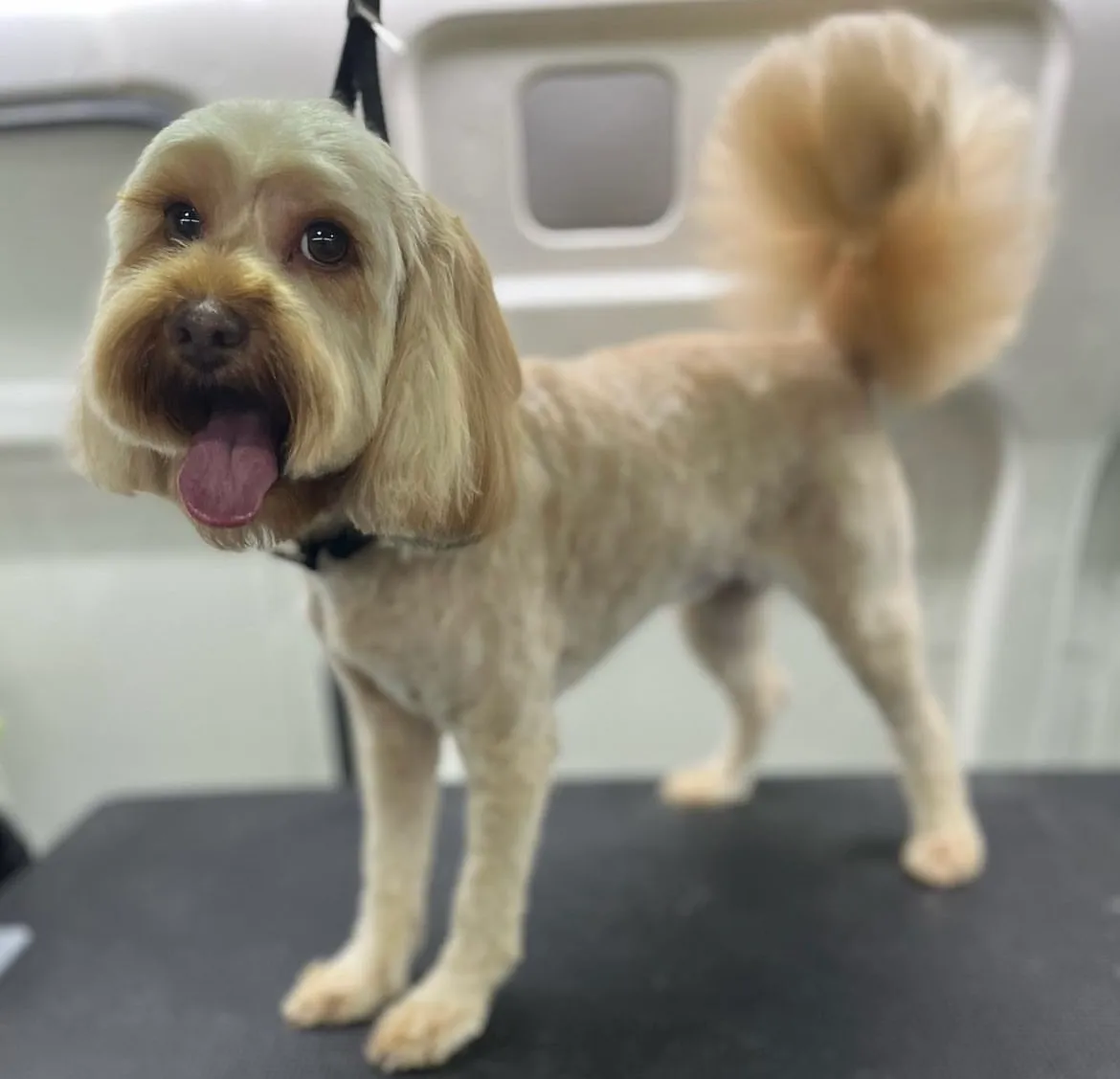 Photo: Groomed by Karyn, North Narrabeen NSW — via Groomably
1. The natural coat (bath, dry and tidy)
This is the traditional option and the most common single service in our data at 45% of style-tagged cavalier photos. Nothing is cut short. The dog is washed, blow-dried straight, brushed through, and then a groomer neatens only the areas where length causes problems:
- Feet. Hair between the pads trimmed flush and the foot outline tidied into a neat round shape.
- Hocks. The back of the rear legs neatened so the trousers hang cleanly.
- Sanitary and belly. Hygiene trim only.
- Ear tips. Some groomers tidy straggly ends; the show convention is to leave them entirely.
Everything else — the ear feathering, chest, tail plume and leg furnishings — is left to grow. On a well-brushed cavalier the result is the look the breed is famous for, and the blow-dry is what makes it: a straight, glossy coat that lies flat rather than fluffing.
What to ask for: “Bath, blow-dry, feet and hocks tidied, sanitary trim, and please leave the feathering.” Say it explicitly. A groomer looking at a matted cavalier will otherwise reach for clippers, reasonably.
Maintenance: A line-brush with a slicker plus a metal comb through the ears, chest, leg feathering and tail, twice a week without fail. Grooms every six to eight weeks.
See the range on the cavalier breed page or the cavalier bath-and-dry gallery.
2. The teddy bear cut (what 39% of cavaliers are actually wearing)
The teddy bear takes the whole dog down to one soft, even length — usually 2 to 4 centimetres — and scissors the face into a round, plush shape. The ear feathering comes off. The tail plume comes off. What’s left is a compact, round, soft-looking dog that stays out of trouble.
It is genuinely a different-looking animal, and the numbers say Australian owners have made peace with that. The honest reasons it wins:
- Ear matting stops being a problem overnight, because there’s no long ear feathering left to mat.
- Brushing drops to once a week, and a missed week no longer costs you a de-matting fee.
- Mud, burrs, grass seeds and wet-dog smell all reduce dramatically. A cavalier with full feathering picks up the whole garden.
The cost is that silky coat texture doesn’t hold a plush shape the way a curly coat does. A poodle scissored round stays round for six weeks; a cavalier scissored round looks its best for about two, then softens into shaggy. Groomers will tell you this. It’s why the cut suits a six-to-eight-week cycle and not a twelve-week one.
What to ask for: “A teddy bear cut — one even length all over, rounded face, feathering off.” Bring a photo, because “teddy bear” means slightly different lengths to different groomers. Our teddy bear cut guide covers how the style reads across breeds, and there are real cavalier examples on the cavalier teddy bear cut gallery.
Growing it back: feathering takes six to twelve months to return to full length, and ear feathering is the slowest of all. This is the decision people most often make casually and regret, so make it deliberately.
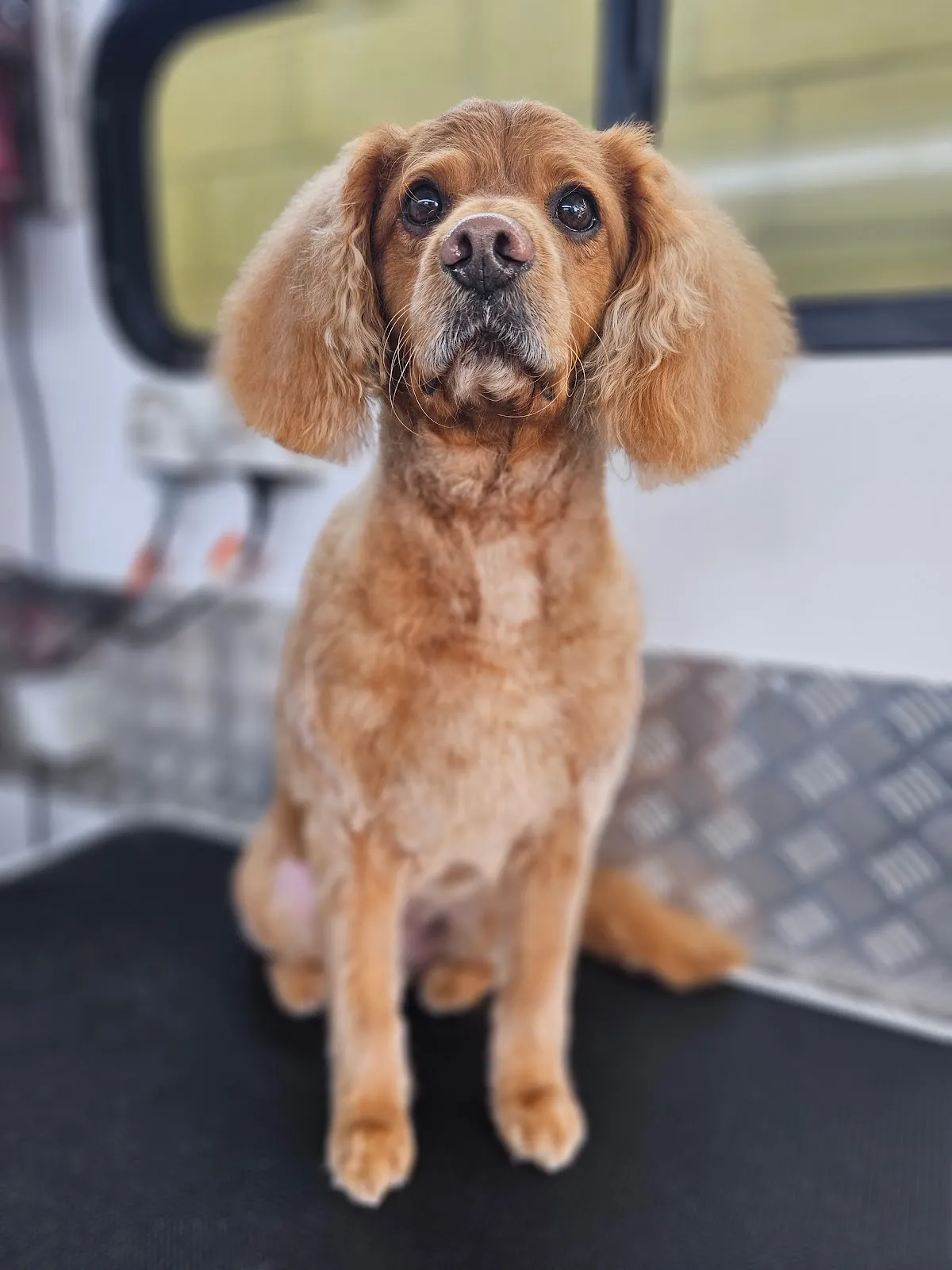 Photo: The Beez Kneez Dog Grooming, Halls Head WA — via Groomably
3. The full groom / puppy trim (the middle ground)
Eighty-seven of our cavalier photos (26%) are tagged as a full groom, and in practice a lot of these sit between the two options above: the coat is shortened noticeably but the dog still reads as a cavalier, with some ear feathering left and the body taken to a moderate length rather than clipped.
This is the compromise worth asking about if you like the natural look but keep losing the brushing battle. Shortening the body coat by a third while keeping two-thirds of the ear feathering halves the tangling without changing the dog’s silhouette. Many groomers will do it if you describe the outcome rather than naming a style.
What to ask for: “Shorten the body, leave the ears and tail long, keep the shape.” Then adjust at the next appointment based on how the brushing actually went.
See examples on the cavalier full groom gallery.
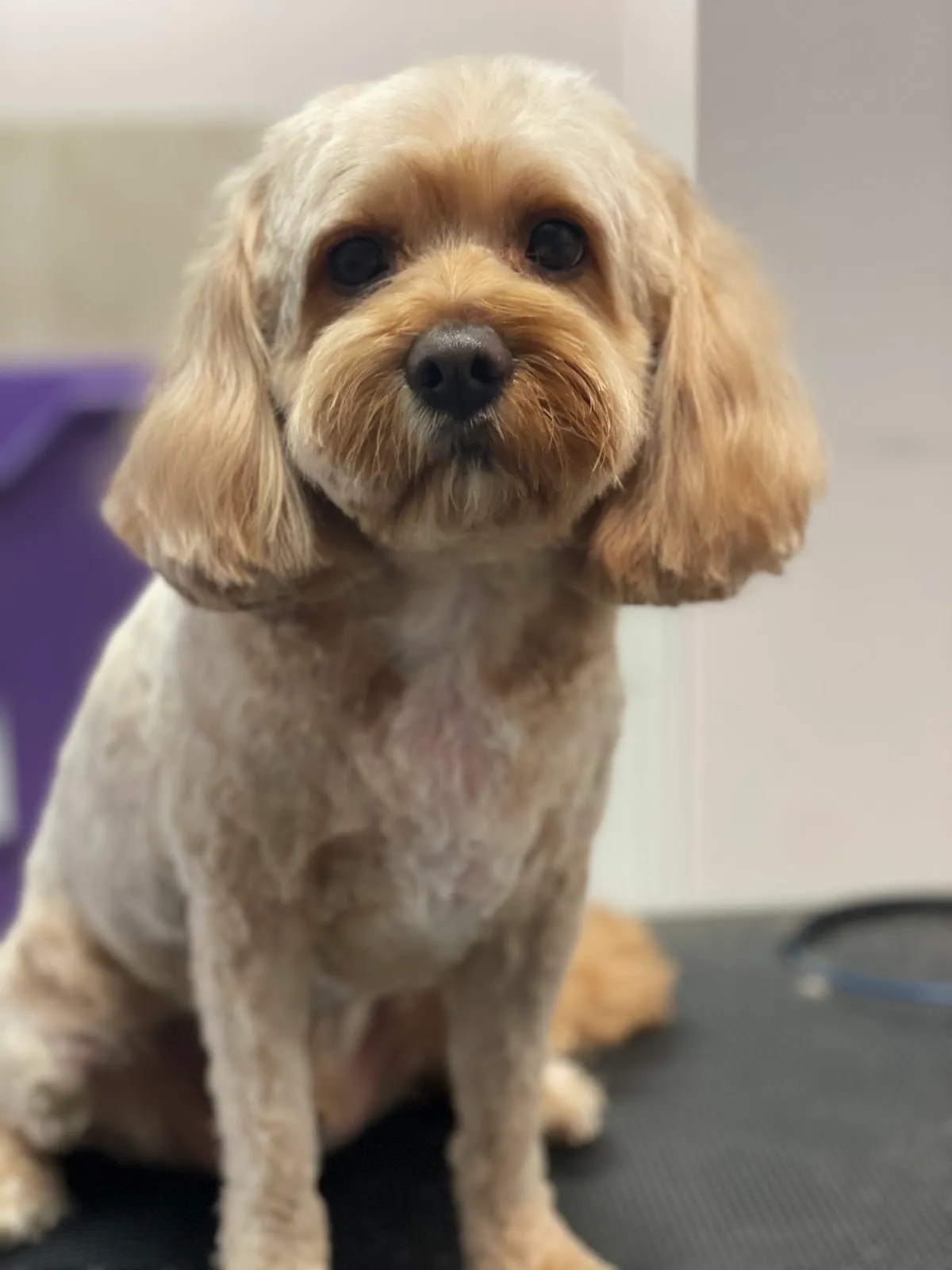 Photo: The Wag Club, Mountain Creek QLD — via Groomably
The drift nobody decides on
Here’s the pattern behind that 39%. Almost nobody books a first appointment saying “please turn my cavalier into a teddy bear”. What happens instead is incremental: the ears mat over winter and get shaved out; the leg feathering gets shortened because of mud; the chest gets trimmed after a de-matting session; and eighteen months later the dog is wearing a full teddy bear that no one chose out loud.
There’s nothing wrong with the destination — plenty of owners are happier there, and a comfortable, mat-free dog beats a beautiful matted one every single time. But it’s worth arriving deliberately, because the return trip is a year long.
If you want the natural coat, the decision point isn’t at the salon. It’s whether you’ll comb the ears twice a week.
Ears, eyes and the non-haircut jobs
Two things matter more for cavalier health than any style choice.
Ears. Long, heavy, low-set ear leather with feathering over it traps moisture and restricts airflow — a setup for infections. Check weekly for smell, redness or head-shaking, keep them dry after swimming and bathing, and ask your groomer to dry under the ear properly rather than just the top. Any groomer working on cavaliers regularly will already do this.
Tear staining. Cavaliers have large, prominent eyes and many have some degree of tear overflow. A daily wipe with a damp cloth under the eye keeps the area clean; the staining itself is cosmetic and, once the hair is stained, it only goes when that hair grows out. Persistent, heavy tearing is worth a vet conversation rather than a grooming one.
Nails, teeth and anal glands round out the standard appointment. The full groom service page sets out what a complete appointment should include.
Quick comparison
| Style | The look | Brushing | Groom frequency | Best for |
|---|---|---|---|---|
| Natural coat + tidy | Full feathering, glossy, breed-typical | Twice weekly, ears and feathering | 6–8 weeks | Owners who will genuinely brush |
| Full groom / puppy trim | Shorter body, feathering kept | Weekly | 6–8 weeks | The honest middle ground |
| Teddy bear cut | Round, plush, feathering off | Weekly, low stakes | 6–8 weeks | Mud, matting and busy households |
Cost and booking
A cavalier is a small-to-medium dog with no undercoat, so grooming sits in the lower-to-middle price band — until de-matting time is added, which is charged by the hour almost everywhere and is the single biggest variable on a cavalier invoice. Our dog grooming cost guide has current Australian bands, and how often you should groom your dog covers scheduling.
When you’re choosing a salon, look at their cavalier work specifically rather than their poodle work — the two coats need different hands. Browse real photos on the cavalier breed page, or search the grooming directory and send an enquiry to a groomer whose work you like, with a photo of the coat length you’re after.


