
The four goldendoodle haircuts you’ll actually be offered at a salon are the teddy bear cut (even medium length, round plush face), the lamb cut (short body, deliberately longer legs), the summer or kennel cut (short everywhere, a little length left on the head), and the puppy cut (short and even, soft face). The difference between them is mostly where length is left, not how skilled the groomer is — and the cut that works on a 20 lb mini goldendoodle often looks wrong on a 65 lb standard, because the same coat length reads very differently on a small frame than a big one.
That size point is the part most goldendoodle haircut guides skip, so this one is organised around it. Everything here is grounded in the 671 goldendoodle photos in Groomably’s classified library — real dogs from real salons, tagged style-by-style — rather than stock images. Of those, the teddy bear cut is the single most photographed style (125 photos), which matches what groomers report: it’s the default request.
One naming note before we start. In Australia this dog is a groodle, in the US and UK it’s a goldendoodle, and it’s the same cross — golden retriever × poodle. If you want the Australian-terminology version of this guide, with the five style names as local salons list them, read the groodle haircuts guide. This page is the size-and-cut-comparison version.
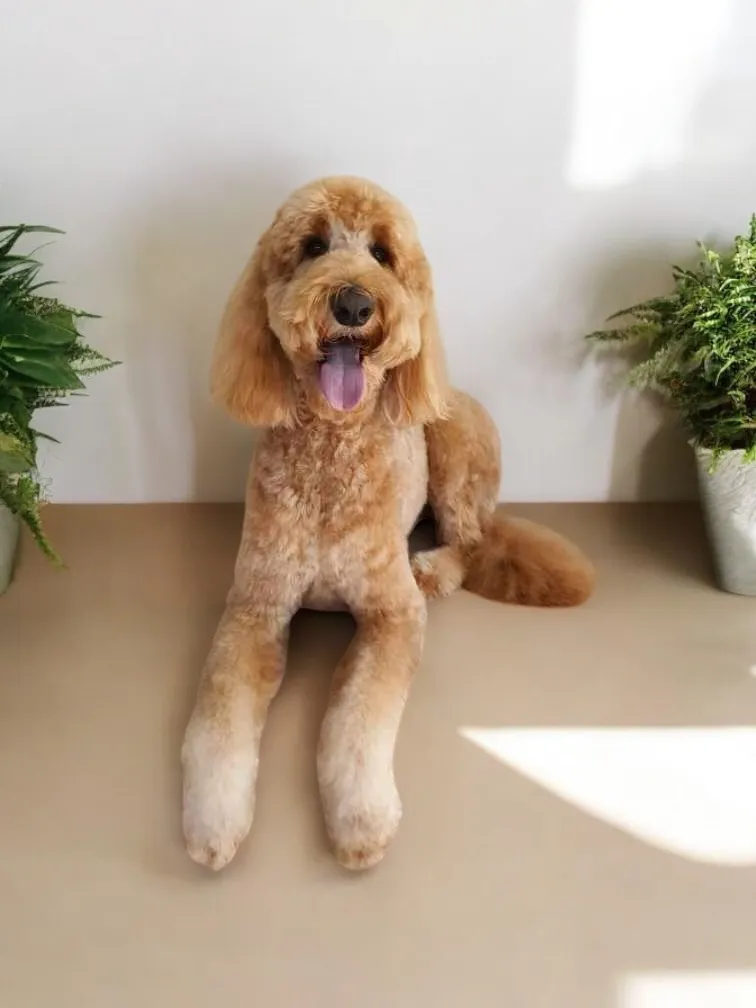 Teddy bear cut, medium length all over. Photo: Lei Lani Pet Spa, Terrigal NSW — via Groomably
The four cuts, side by side
| Cut | Body length | Legs | Face | Brushing | Groom interval |
|---|---|---|---|---|---|
| Teddy bear | 25–50 mm (1–2 in) | Full, rounded | Round and plush | 3–4× / week | 6–8 weeks |
| Lamb | 10–20 mm (½–¾ in) | Left longer than body | Softly rounded | 2–3× / week | 8 weeks |
| Summer / kennel | 6–13 mm (¼–½ in) | Same as body | Trimmed, some length on ears | 1× / week | 8–12 weeks |
| Puppy | 10–20 mm (½–¾ in) | Same as body | Soft, less sculpted | 2× / week | 8 weeks |
Read that table as a maintenance ladder rather than a style ranking. Every extra millimetre of coat you keep is more brushing you owe. The single most common reason a goldendoodle comes home shorter than the owner wanted is that the coat had already matted past the point where a longer style was possible — at which point clipping short is the kind thing to do, not a failure by the groomer.
1. The teddy bear cut
The teddy bear cut keeps an even 25–50 mm all over the body, leaves the legs full and cylindrical, and scissors the face into a soft round shape with the ears blended in. It’s the look that sells goldendoodles on Instagram, and it’s the most photographed goldendoodle style in our library by a wide margin.
What to ask for: “A teddy bear cut, about a [length] comb on the body, full round legs, and a rounded face.” Bring a photo. “Teddy bear” means slightly different lengths to different groomers, so a picture settles it faster than a number.
Size note: on a mini goldendoodle, 25 mm already reads as full and fluffy. On a standard, the same 25 mm can look flat and undersized against the dog’s frame — standards usually need the upper end of the range, 40–50 mm, to get the same plush effect. That’s why “teddy bear short goldendoodle haircut” is its own search: it’s what people want on a big dog, at a length that’s actually maintainable.
Honest maintenance: this is the highest-effort cut on the list. Comb to the skin three or four times a week, paying attention to behind the ears, the armpits, the collar line and the tail base — the four places matts start.
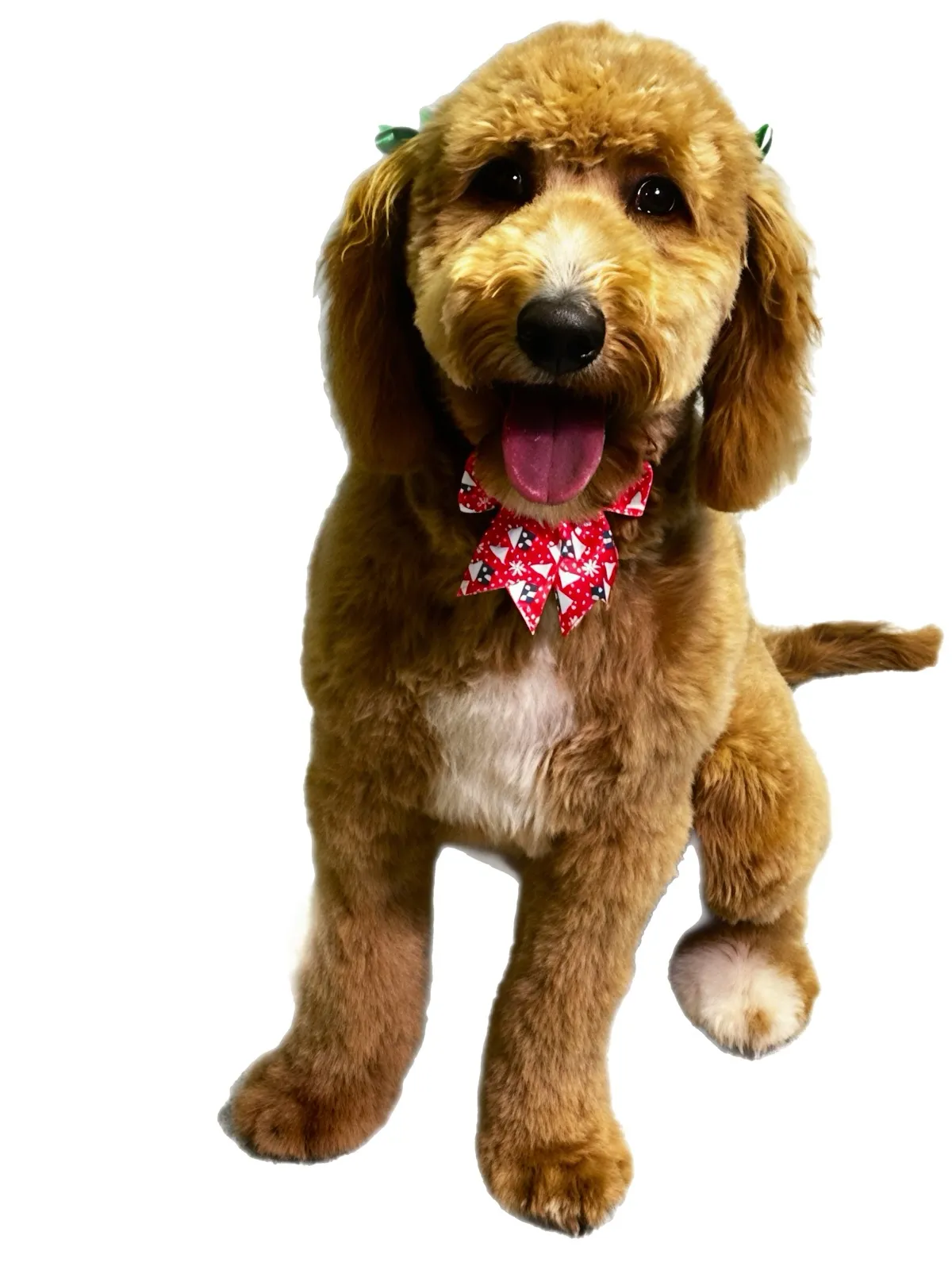 A rounder, shorter take on the teddy bear face. Photo: The Dog Groomer Shellharbour, Flinders NSW — via Groomably
2. The lamb cut
The lamb cut is the one people most often ask for by name and then can’t quite describe. The body is clipped short, usually 10–20 mm, while the legs are deliberately left longer than the body and scissored into clean columns. The contrast between short body and full legs is the whole point — it’s the same idea as a lamb’s silhouette, hence the name.
What to ask for: “A lamb cut — short on the body, leave the legs long and scissored, and a soft rounded face.” If you want it noticeably leggy, say so: some groomers keep the contrast subtle by default.
Who it suits: it’s the best-value cut for owners who love the fluffy doodle look but keep losing the battle on the body coat. The body is short enough to stay matt-free with modest brushing; the legs carry the visual interest. It also flatters leggy standards more than a uniform clip does.
Honest maintenance: the legs are the work. They’re the part of the dog that touches wet grass, sand and mud, and long leg hair matts fast at the elbows and hocks. Two or three combs a week, legs included, and don’t skip the feet.
Watch out for: on a tight curly coat, a very short body plus long legs can look disconnected as it grows out. Ask your groomer to blend the transition rather than leaving a hard line at the shoulder and hip.
3. The summer cut (also called the kennel cut)
Short everywhere: 6–13 mm on the body, with a bit more length usually left on the head and ears so the dog still reads as a doodle rather than a shorn sheep. “Summer cut” and “kennel cut” describe the same finish; the second name comes from boarding kennels, where a short coat is simply easier to keep clean.
What to ask for: “A summer cut — short on the body, keep some length on the head and ears.”
Who it suits: curly coats that matt no matter how diligent you are, water dogs, dogs that swim, and any household where honest brushing time is under ten minutes a week. It’s also the standard rescue-and-reset cut after a coat has matted badly.
The one real caution: don’t go shorter than about 6 mm on a pale goldendoodle in high summer. A close clip on light skin means genuine sunburn risk — keep them in shade during the middle of the day for the first couple of weeks. This is also why “shave it for summer” is bad advice on a golden retriever but merely a trade-off on a goldendoodle: the retriever’s double coat insulates and doesn’t grow back the same, while the doodle’s single coat does. We’ve covered why shaving a double-coated dog backfires separately, and it’s worth reading if your doodle took strongly after the retriever side.
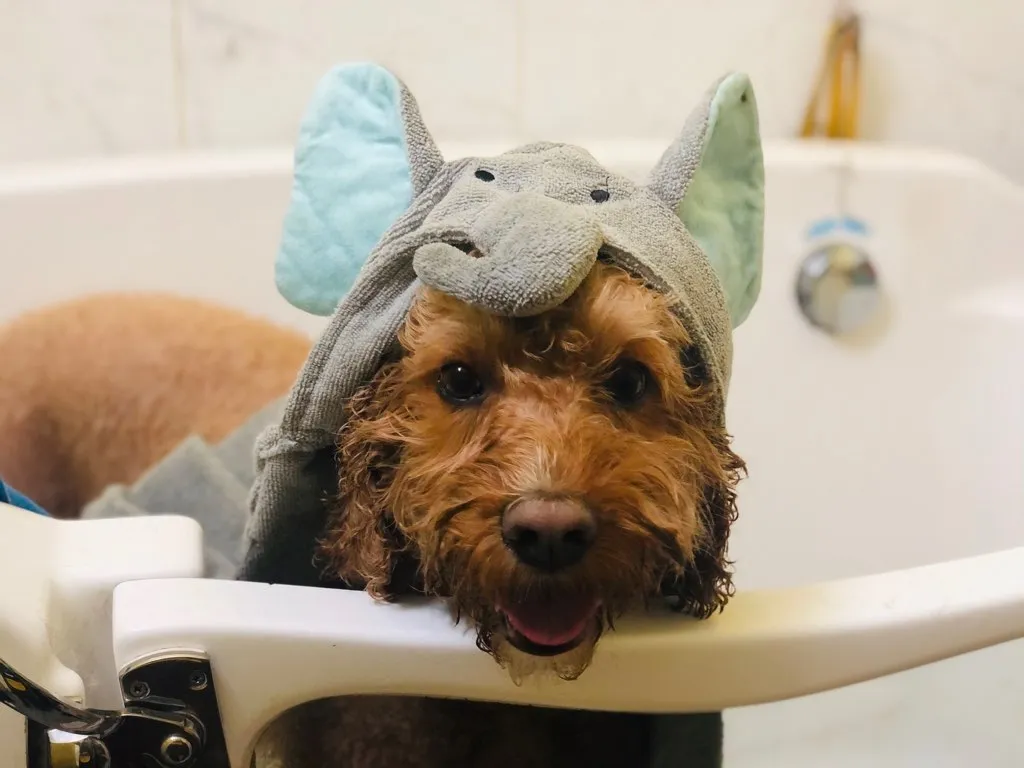 A bath and full blow-dry — the step that decides whether any of these cuts finishes cleanly. Photo: Dog de Miow Potts Point, Potts Point NSW — via Groomably
4. The puppy cut
Short and even all over, usually 10–20 mm, with a softer face than the teddy bear’s sculpted circle. Despite the name it has nothing to do with age — a nine-year-old goldendoodle can wear a puppy cut. It’s the sensible middle of the range: shorter than a teddy bear, longer and softer than a summer cut, and forgiving of a missed brushing week.
What to ask for: “A puppy cut, short and even, easy to manage.” If you know you’ll fall behind on brushing, say that out loud — a good groomer will take a little more off to buy you slack.
Real goldendoodle puppies are a separate thing. The first groom isn’t about the style at all; it’s about the dog learning that clippers, dryers and being handled are survivable. Book it early, keep it short, and expect a tidy rather than a transformation. Our guide to a puppy’s first groom walks through what actually happens in that appointment.
How size changes the answer
Mini goldendoodle (7–14 kg / 15–30 lb). Small frames carry length well — a 25 mm teddy bear looks generously fluffy on a mini and won’t overwhelm the dog. The risk with minis is the opposite of what you’d expect: because there’s less coat overall, owners often stretch grooms too far, and the coat matts closest to the skin where it’s hardest to save.
Medium goldendoodle (14–23 kg / 30–50 lb). The most forgiving size. All four cuts work. This is where the lamb cut looks best, because there’s enough leg to make the contrast read.
Standard goldendoodle (23–40 kg+ / 50–90 lb). Big dogs need proportionally more length for the same visual effect, so a plush teddy bear on a standard is genuinely high-maintenance — you’re brushing a much larger surface area, three or four times a week. Be honest with yourself before committing. Many standard owners land on a lamb or summer cut permanently and are happier for it.
Coat type decides more than the style name
Goldendoodles don’t share one coat. Some take after the poodle with a tight, curly, wool coat; some after the retriever with a loose, wavy, almost flat coat; plenty land in the middle with a wavy fleece.
- Curly / wool: matts fastest, holds shape best. Suits summer, puppy and lamb cuts. A teddy bear is possible but only with real brushing commitment.
- Wavy fleece: the sweet spot. Every cut on this page works.
- Straight / flat: won’t hold a plush round teddy bear shape no matter how skilled the groomer, because the hair doesn’t spring. Lamb and puppy cuts look better on these coats — don’t let anyone sell you a look your dog’s hair can’t physically do.
When a groomer suggests a length you didn’t ask for, they’re usually reading the coat in front of them. Trust that read; it’s the difference between a good groom and a photo-matching exercise that fails in three weeks.
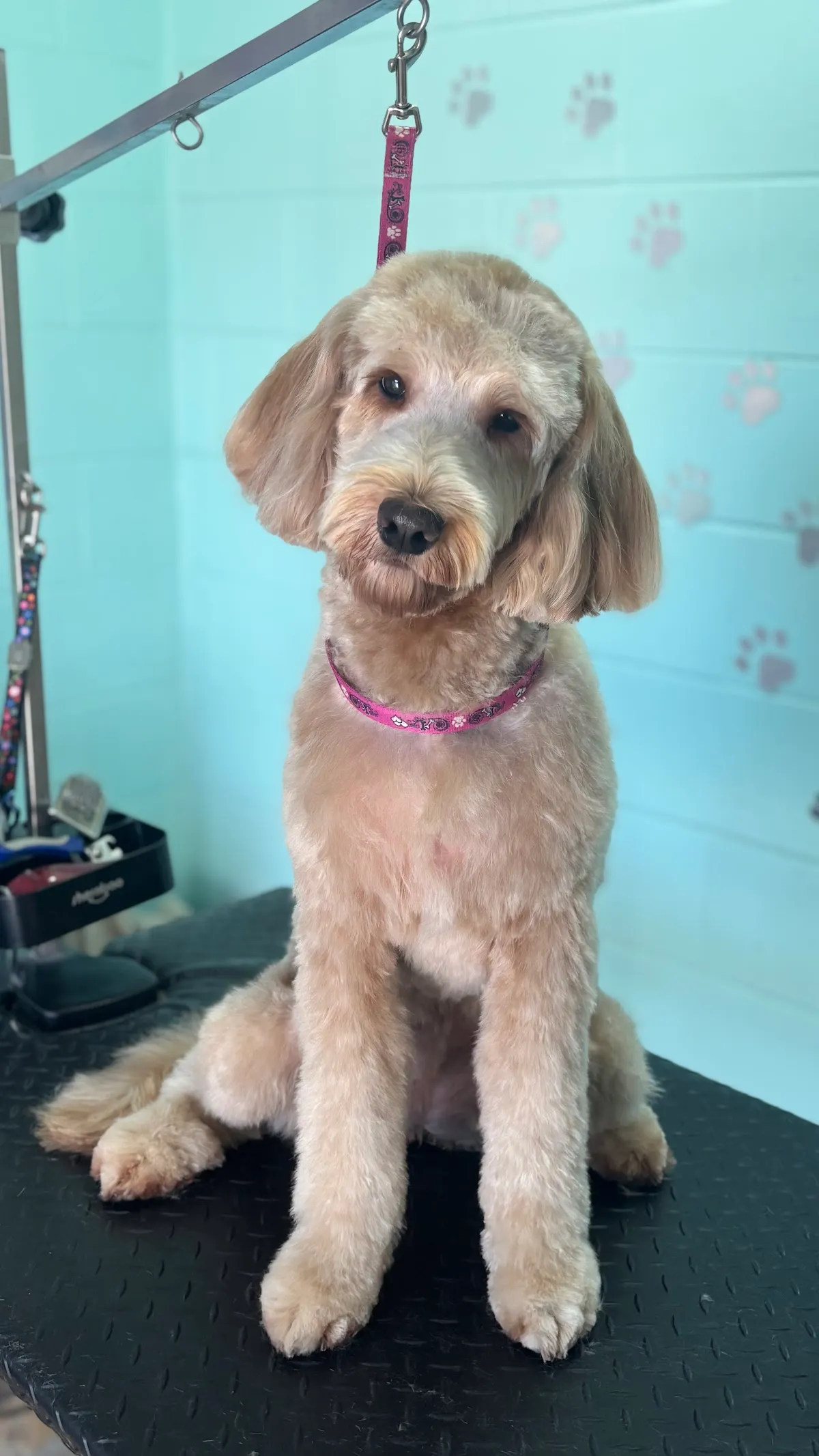 Photo: Oh My Dog Grooming Cairns, Trinity Beach QLD — via Groomably
What it costs and how often
Goldendoodles sit at the higher end of grooming pricing for one unglamorous reason: they take longer. A scissored finish on a curly coat is skilled hand work, and a standard-sized dog is a lot of surface area. In Australia a full groom generally runs $80–110, and a doodle usually sits at the top of that band rather than the bottom, with big standards, mobile groomers and matted coats pushing past it — our dog grooming cost guide breaks the numbers down by service and size.
The interval matters more than the price. A teddy bear cut needs a salon visit every six to eight weeks to stay a teddy bear cut; stretch it to twelve and you’ll be choosing between a long de-matting session (uncomfortable and expensive) or a much shorter cut than you wanted. Book the next appointment while you’re still standing at the counter.
Two things to say at drop-off
- How much brushing you actually do. Not aspirationally — actually. This one sentence changes the groomer’s recommendation more than any photo you bring.
- Any tender spots. Ears, feet, tail base, previous clipper irritation. Goldendoodles are big enthusiastic dogs who often don’t tell you something hurts until the clipper is on it.
See real goldendoodle grooms
Photo references beat descriptions every time, especially for a cut as loosely defined as “teddy bear”. Groomably’s goldendoodle photos come from Australian salons and are tagged by style, so you can browse the actual finish rather than a retouched ideal:
- Goldendoodle (groodle) teddy bear cuts — the full set
- Goldendoodle full grooms — including shorter body finishes
- All goldendoodle grooming photos — every style we’ve classified
- The teddy bear cut across all breeds — the most photographed style in Australia, 1,845 of 18,376 photos
If your doodle is more poodle than retriever in coat, the poodle haircuts guide is the closer read; if you’re comparing against a smaller doodle, the cavoodle haircuts guide covers the cavapoo equivalents of these same four cuts.


