
Groomably holds 241 husky photos from 165 Australian salons — every mainland state plus Tasmania. Ninety-six of them carry a grooming-style tag, which means we can answer the question husky owners actually argue about with counts instead of opinions.
Here is the headline, and it is unusually clean:
Two. Out of 241 husky photos, two show a dog that has been clipped or styled in any way. That is 0.8%. Across the whole library — 18,376 photos — the equivalent figure is 16%. For a poodle it is 51%.
Australian groomers do not cut huskies. They wash them and they pull the coat out.
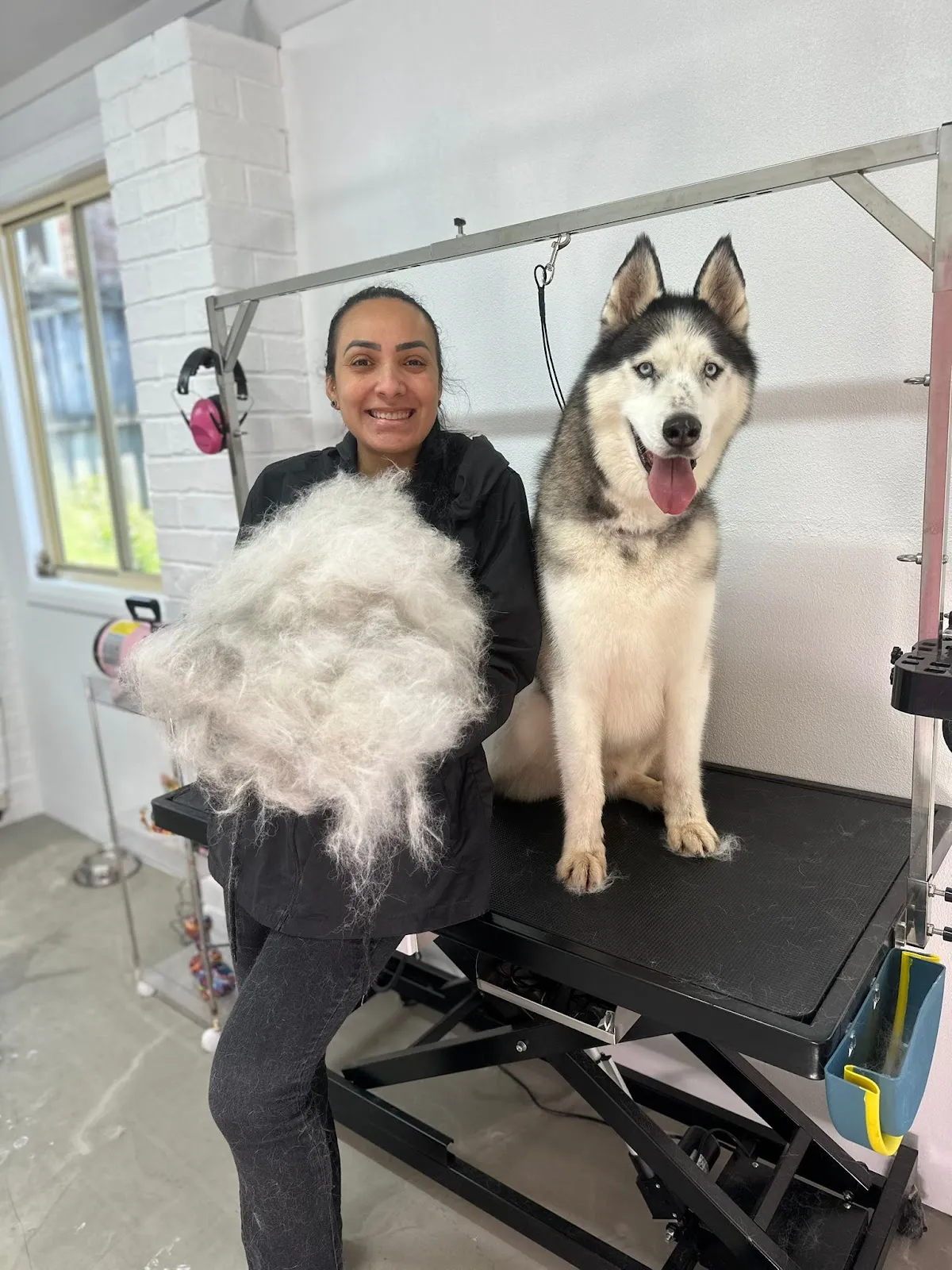 The pile on the table is the entire husky grooming business in one frame. Photo: Happy Tail - Grooming & Daycare, Allambie Heights NSW — via Groomably
What Australian salons actually do to a husky
Of the 96 style-tagged husky photos in the library:
| Service | Photos | Share of tagged |
|---|---|---|
| Bath and dry | 60 | 62.5% |
| De-shedding treatment | 50 | 52.1% |
| Nail trimming | 6 | 6.2% |
| Teddy bear cut | 1 | 1.0% |
| Full groom | 1 | 1.0% |
| Puppy cut | 1 | 1.0% |
| Creative grooming | 1 | 1.0% |
Photos can carry more than one tag, so the column sums above 96.
Two numbers are worth sitting with.
De-shedding at 52.1% is the highest rate of any breed we hold. The library baseline is 8.5%. The husky runs at roughly six times that — ahead of the samoyed (49.0%), the border collie (24.8%) and the German shepherd (33.3%).
The teddy bear cut, at 1.0%, is a rounding error. It is the single most common groom in Australia at 38.6% of all tagged photos in our library. On huskies it happened once.
If you have been told that huskies are high-maintenance dogs at the groomer, this is the correction: they are not high-maintenance, they are differently maintained. Nobody is styling your husky. They are bathing it and blasting the undercoat out of it, and that is the whole appointment.
Why the coat works the way it does
A husky has a true double coat, and it is a genuinely sophisticated piece of equipment.
The outer coat is made of straight, coarse guard hairs. They shed water, block UV and keep dirt and grass seed off the skin. Guard hairs are shed slowly and continuously, a few at a time.
The undercoat is short, dense and woolly — closer to insulation batting than to hair. It traps a layer of still air against the skin, and still air is what actually regulates temperature. Crucially it insulates in both directions: it slows heat escaping in a Siberian winter, and it slows radiant heat reaching the skin in a Queensland summer.
The undercoat is also the part that comes out. Not gradually — in sheets, twice a year, in what the trade calls a coat blow. In Australia that is usually a big drop in spring (roughly September–November) and a second, often smaller one in autumn (March–May). Dogs kept in air conditioning and artificial light frequently blow coat on a less predictable schedule, or seem to shed moderately all year instead.
This is why the husky appointment looks nothing like a poodle appointment. A poodle grows hair continuously and must be cut. A husky grows a coat, keeps it, then ejects half of it. There is nothing to cut. There is a great deal to remove.
The de-shed: what you are actually paying for
A de-shedding treatment is a sequence, not a tool, and the sequence matters.
- A bath with a de-shedding shampoo and conditioner. These are formulated to hydrate and swell the undercoat so it releases from the follicle rather than tearing. Skipping the bath and going straight to brushing is why home de-shedding is so much harder than it looks — dry undercoat grips.
- The high-velocity dryer. This is the piece of equipment that does the real work. It is not a hairdryer; it is a blower that drives a column of air right down to the skin, and it physically pushes loose undercoat out of the coat in clouds. There is no home equivalent at any price most owners would pay.
- Rake and slicker. An undercoat rake collects what the dryer has released and reaches what it missed, especially over the hips, the ruff and the trousers.
- A final comb through the ruff, the britches and behind the ears.
A full husky de-shed takes a while, and it produces a genuinely startling quantity of fur. Groomers post those photos for a reason. Browse salons offering it on our de-shedding page, or see husky de-shedding work specifically.
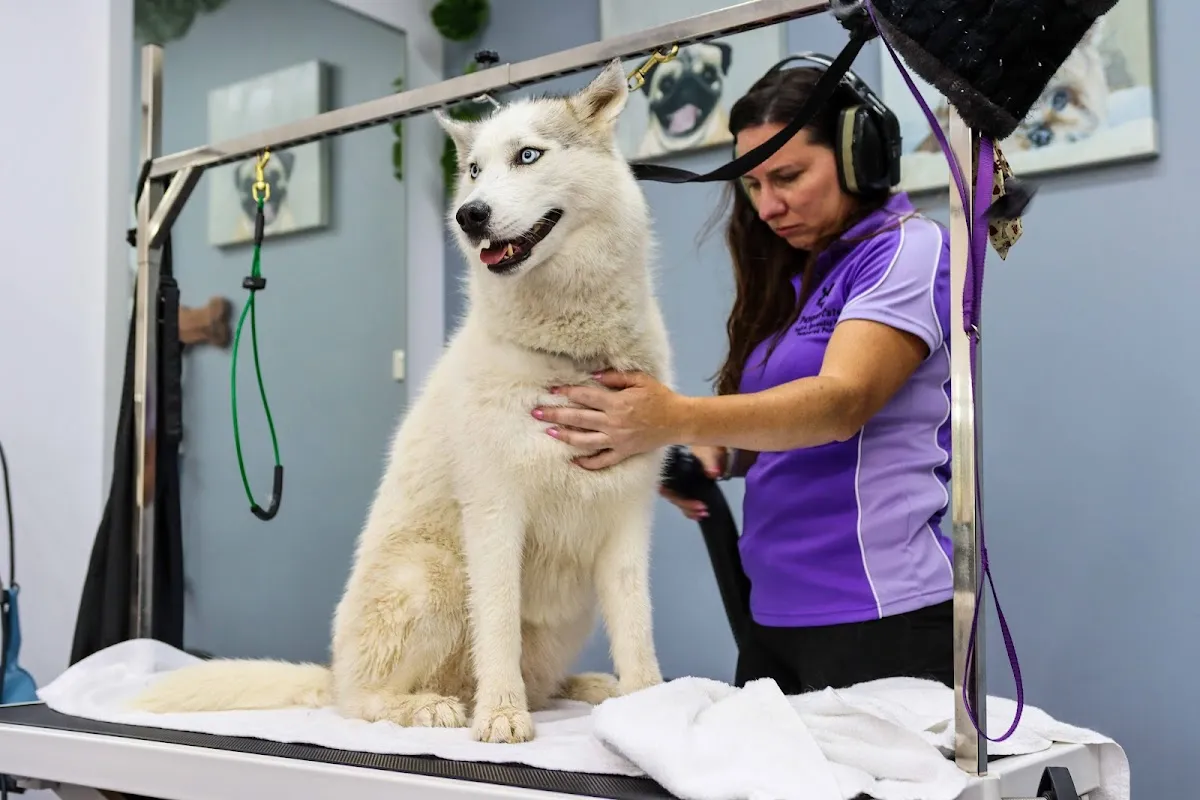 Photo: PupperCuts, Tanah Merah QLD — via Groomably
Why two professional de-sheds beat months of brushing
Home brushing removes undercoat that has already worked its way loose and to the surface. The high-velocity dryer removes undercoat that is still sitting deep in the coat and has not yet let go.
That is the difference, and it is why the advice that actually works is: brush at home to manage the mess, and book two professional de-sheds a year timed to the coat blows. Those two appointments do more than every brushing session in between.
Should you shave a husky?
No — and our data says Australian groomers agree with a near-unanimity you rarely see in this trade. Two dogs out of 241.
The reasoning is worth understanding properly, because “never shave a double coat” is repeated a lot online without explanation, and unexplained rules are easy to dismiss when it is 39 degrees outside and your dog looks miserable.
Shaving does not make a husky cooler. The layer you remove with clippers is mostly guard coat. The insulating undercoat is short, sits below the blade for any normal guard length, and stays. You have removed the sunshade and left the doona.
It removes real sun protection. Huskies frequently have pale or pink skin under the coat. A shaved husky in an Australian summer is a genuine sunburn and long-term skin-damage risk, and that risk does not exist while the guard coat is intact.
The coat may not come back the same. Guard hairs regrow slowly; undercoat regrows fast. Shave a husky and the undercoat often fills in first, producing a woolly, dull, patchy texture that never fully resolves. The trade calls the persistent version clipper alopecia, and on plush-coated northern breeds it is common enough that most groomers will decline the job outright.
It does not stop the shedding. The undercoat is still there and still dropping. You have simply converted long, sweepable tufts into short, prickly fragments that weave themselves into upholstery.
What actually cools a husky: shade, unlimited water, a wading pool, air conditioning or a fan, exercise moved to early morning and evening, and — most of all — an undercoat that has been properly removed. A de-shed genuinely improves airflow to the skin. A shave does not.
The real exceptions, which do exist:
- Matting that has gone past dematting. A pelted coat is a welfare problem, and clipping it off is the humane answer.
- Medical need — skin conditions needing topical treatment, surgical preparation or recovery, severe incontinence in an elderly dog.
- Veterinary heat-management advice for a specific unwell or elderly dog, usually a partial clip rather than a full shave.
Those exceptions are why the number is two rather than zero. Our longer treatment of the whole question is at should you shave a double-coated dog.
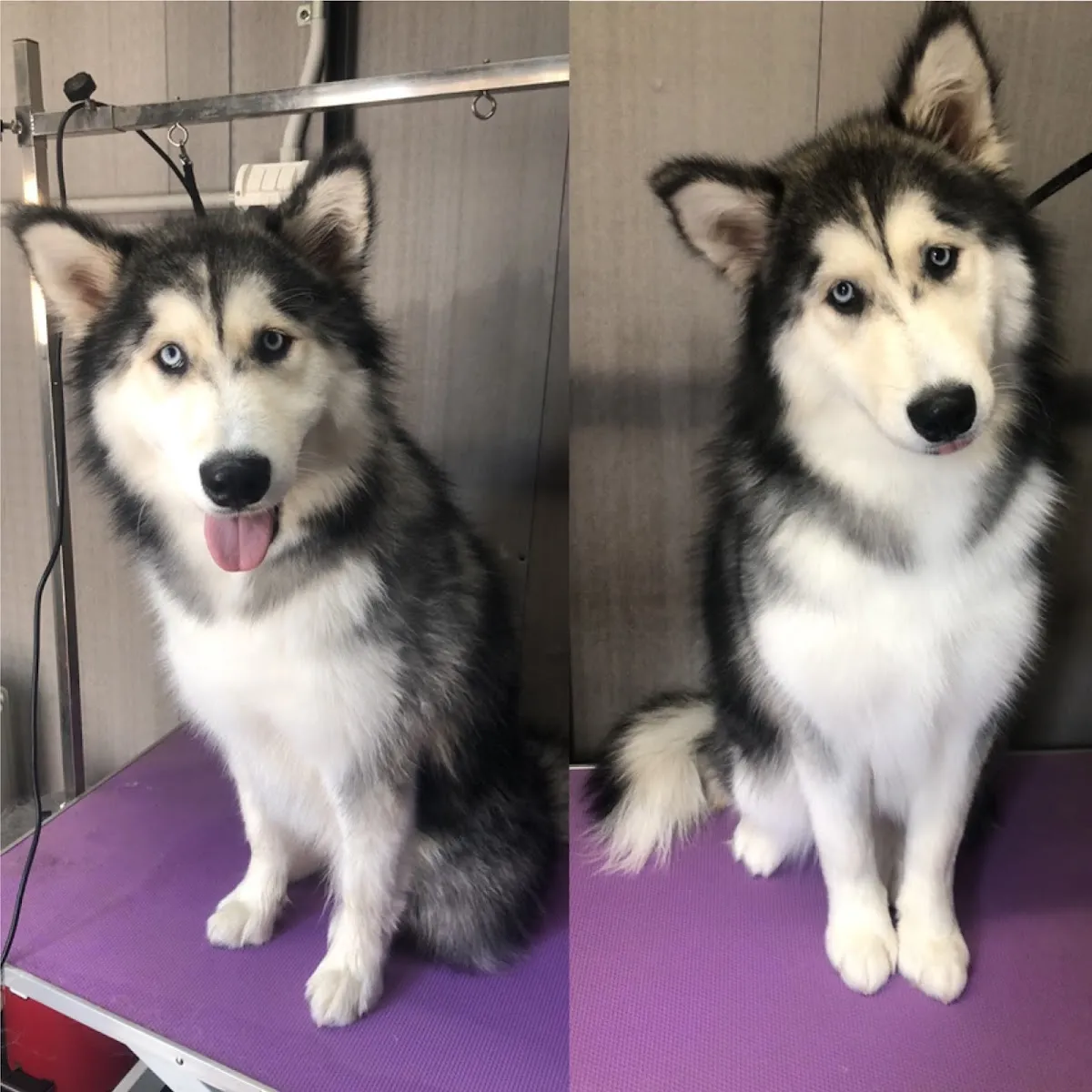 Photo: Nikki’s Dog Grooming, Clyde North VIC — via Groomably
The trims a husky does get
Nothing on the body is touched. A handful of small trims are normal and none of them alter the outline:
- Between the pads. Hair growing past the pads collects grass seeds, mats into painful clumps and turns floorboards and tiles into a skating rink. This is a safety trim and every husky should have it. It is the one place a groomer will reliably use clippers on the breed.
- Sanitary trim. A neatening around the rear, most relevant on very plush-coated dogs and on seniors.
- Nails. Every 4–6 weeks — see nail trimming, which shows up on 6.2% of tagged husky photos.
Whiskers stay. The tail plume stays. The ruff absolutely stays.
How often does a husky need grooming?
Professionally:
- Twice a year, minimum — a full bath, blow-out and de-shed timed to each coat blow. These two appointments are the ones that matter, and booking them as the coat starts to lift rather than after it has covered the house makes a large difference.
- Every 8–12 weeks is a comfortable routine for most pet huskies and keeps the between-blow shedding manageable.
- Every 4–6 weeks for dogs that swim, dig, live mostly outdoors, or have an unusually plush coat.
At home:
- Once or twice a week normally, with an undercoat rake and a slicker.
- Daily during a coat blow — this is not optional if you want the dog comfortable and the house liveable.
- A steel comb for behind the ears, the ruff and the britches. A slicker skates over the top of a forming mat; a comb finds it.
- Never use a de-shedding blade that cuts (the ones with a serrated edge) on a husky. They shear guard hairs along with undercoat and damage the outer coat over time. A rake pulls loose undercoat without cutting anything.
Huskies mat far less than a coated breed, but they do mat, and always in the same three places: behind the ears, in the ruff where a collar rubs, and on the britches at the back of the thighs. Check those weekly and you will essentially never have a problem.
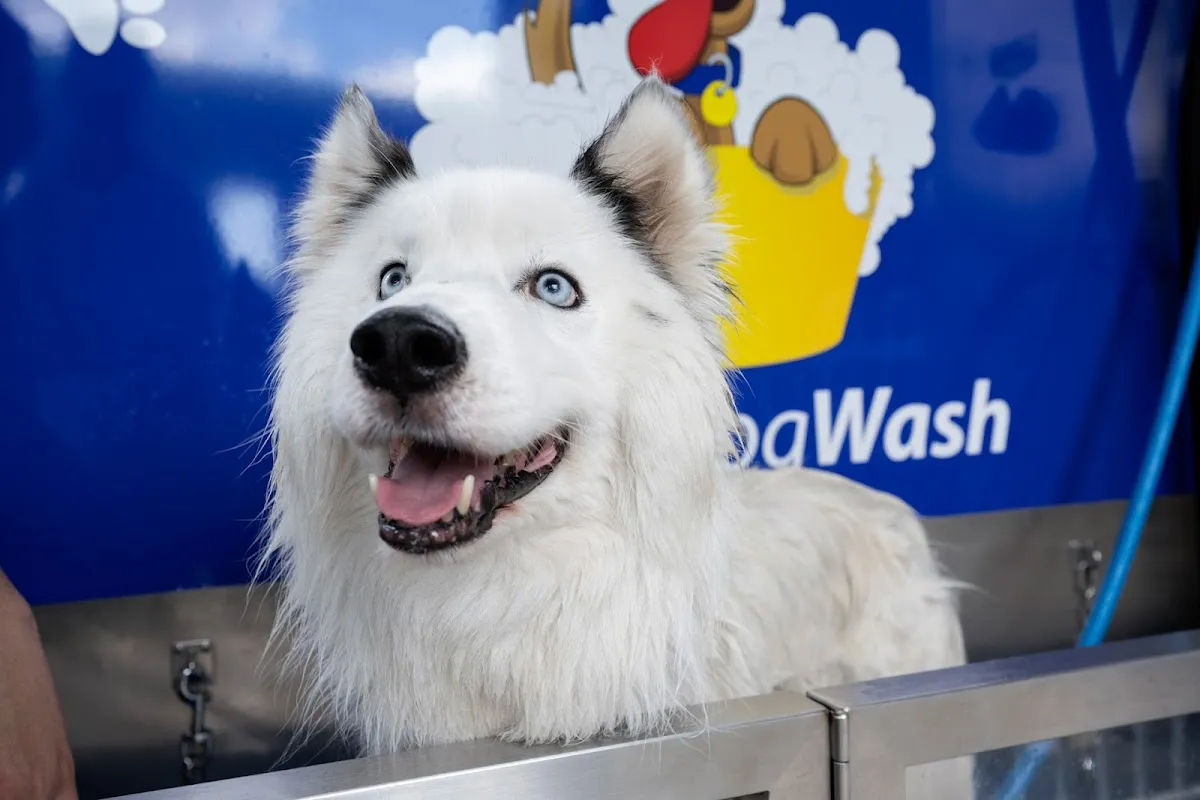 Bath-and-dry appears on 62.5% of tagged husky photos — the most common husky service in the library. Photo: OTR Dog Wash Golden Grove, Golden Grove SA — via Groomably
What to ask for at the salon
Husky owners often book the wrong service because the menu is written for coated breeds. Say this instead:
“A bath, a full blow-out and a de-shed. No clipping — pads and nails only.”
That sentence gets you exactly the right appointment anywhere in the country, and it heads off the rare but real misunderstanding where “full groom” is read as “tidy it up”.
Two practical notes when you ring around:
- Say the word husky when you enquire. A de-shed on a blown-coat husky takes far longer than the standard slot, and salons that do a lot of them will price and book accordingly. Turning up unannounced with a dog mid-blow is how appointments run over.
- Ask whether they have a high-velocity dryer. Nearly all professional salons do, but it is the piece of equipment the entire service depends on, and mobile operators vary.
Cost is priced as a large-breed bath and de-shed, not as a haircut, and it moves with how much coat is coming out — the same dog can be a routine appointment in July and a long one in October. Our dog grooming cost guide covers how salons build the price.
Frequently asked questions
How much do huskies shed? Continuously at a low level, and enormously twice a year. Our data reflects it: de-shedding appears on 52.1% of tagged husky photos against a library baseline of 8.5% — the highest rate of any breed we hold.
Should I shave my husky in summer? No. The undercoat that insulates stays behind under any normal clipper guard; what you remove is the guard coat that was providing sun protection. It does not reduce shedding either. Shade, water, a fan and a proper de-shed are what actually help. Of 241 husky photos in our library, two show a clipped dog.
Do huskies need professional grooming at all, or can I just brush? You can manage a husky at home between blows, but the high-velocity dryer that drives loose undercoat out of the coat has no home equivalent. Two professional de-sheds a year, timed to the coat blows, outperform months of casual brushing.
How often should a husky be bathed? Every 8–12 weeks suits most, and always as the first step of a de-shed — clean, conditioned undercoat releases; dry undercoat grips. Over-bathing without conditioning strips the coat, so more often than about every six weeks is rarely useful.
Why is my husky shedding in the middle of winter? Indoor dogs under artificial light and climate control often lose the sharp seasonal trigger and shed moderately year-round instead of blowing twice. It is normal. Sudden shedding paired with bald patches, scratching or skin changes is not, and is a vet visit rather than a groomer visit.
Do Alaskan malamutes and Japanese Akitas groom the same way? Broadly yes — same double-coat biology, same de-shed-not-clip rule, same coat blows. Malamutes carry more coat again and take longer, and both breeds mat behind the ears and in the ruff just as huskies do.
Find a husky groomer
Browse Australian salons with real husky work in their galleries on our husky page, see husky grooming photos, or search the full directory by suburb. Every photo above is a real Australian dog at a real salon, credited to the business that groomed it.


